
Taupe kitchen cabinets offer more warmth than white and more flexibility than many darker cabinet colors, but choosing the right undertone can be difficult.
Some taupes lean beige or brown, while others appear closer to gray or mushroom.
The ideas below compare light and dark shades, cabinet styles, kitchen layouts, hardware, countertops, and backsplash combinations.
Use them to identify which version of taupe suits your room’s lighting, existing finishes, and preferred design style.
1. Light Taupe Shaker Cabinets With White Quartz
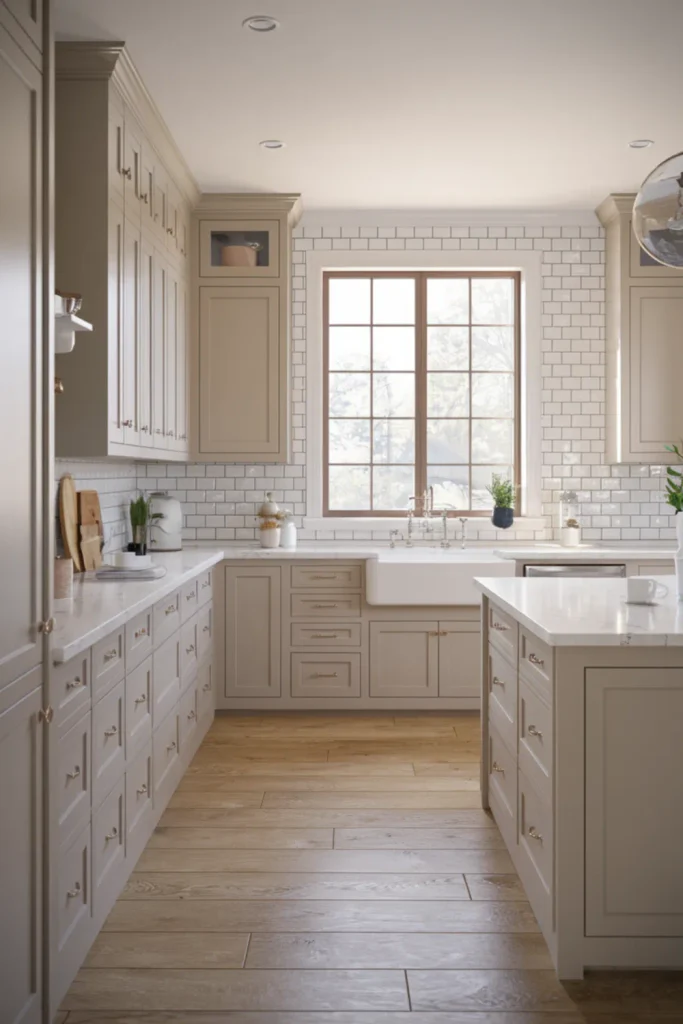
Brightness is often the main concern when choosing taupe kitchen cabinets, and this light Shaker combination handles it well.
White quartz reflects daylight, while pale oak flooring keeps the room warm rather than stark.
The simple door profile also gives the color enough structure to read clearly.
Before selecting paint, compare samples beside the countertop at several times of day because taupe can shift toward gray, beige, or pink.
A washable satin or semi-gloss cabinet finish will also stand up better to grease and frequent wiping around the range.
2. Mushroom Taupe Cabinets With Cream Zellige Tile
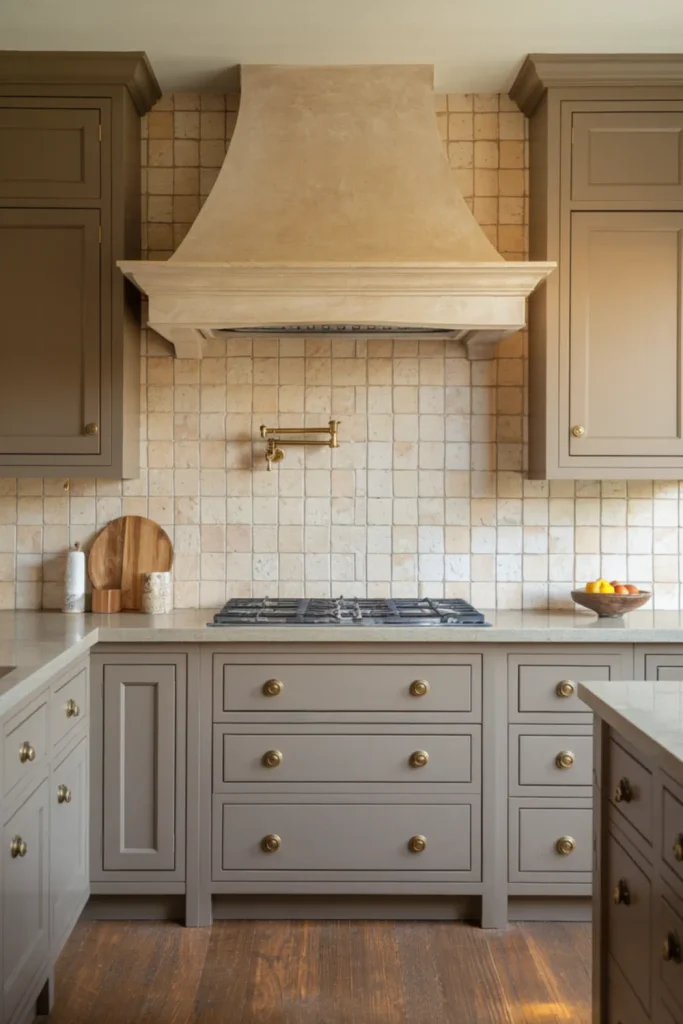
The uneven sheen of cream zellige makes mushroom taupe cabinets feel layered instead of flat.
Both finishes share warm undertones, but the tile reflects more light and gives the range wall a handcrafted texture.
Keep the grout close to the tile color so the backsplash does not become a busy grid.
Because authentic zellige has irregular edges and thickness, use an experienced installer and expect small variations.
A warm white countertop can connect the two surfaces without competing with either one, while aged brass hardware reinforces the earthy palette.
3. Warm Greige Flat-Panel Cabinets With White Oak
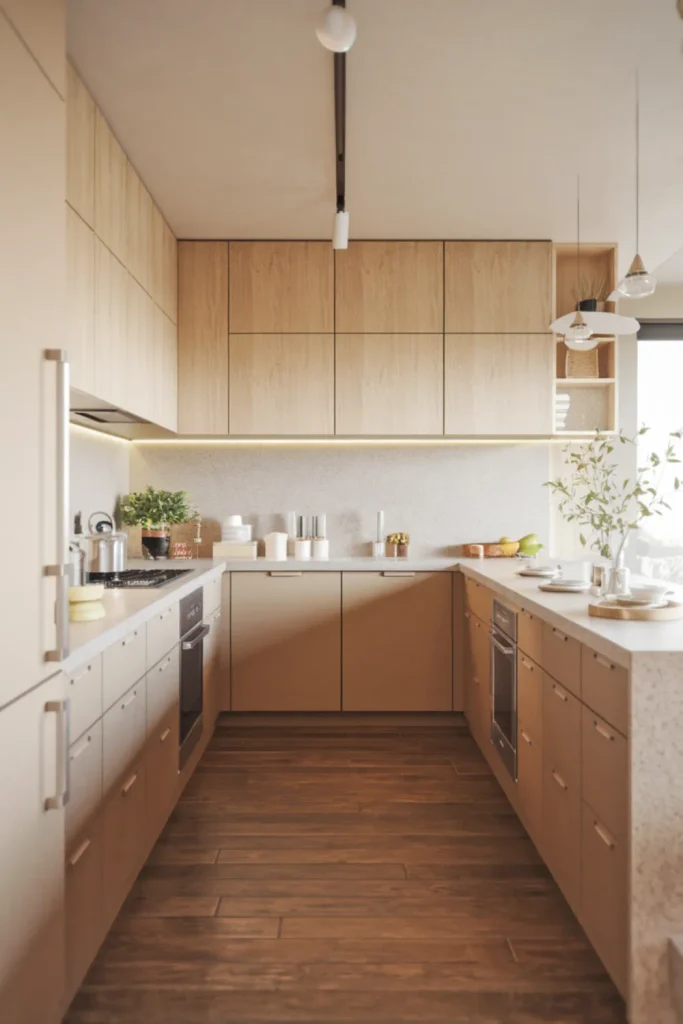
Mixing warm greige cabinets with white oak breaks up a modern kitchen without interrupting its clean lines.
The painted cabinetry provides a calm background, while oak uppers or island panels introduce visible grain and a lighter tone.
Limit the wood to a few connected areas so the kitchen still feels composed.
Flat-panel doors show fingerprints more readily than detailed doors, so choose a durable matte finish that can be wiped clean.
Carrying the same oak into the flooring is optional; a slightly different wood tone often looks more natural than an exact match.
4. Brown-Taupe Cabinets With Veined Quartzite
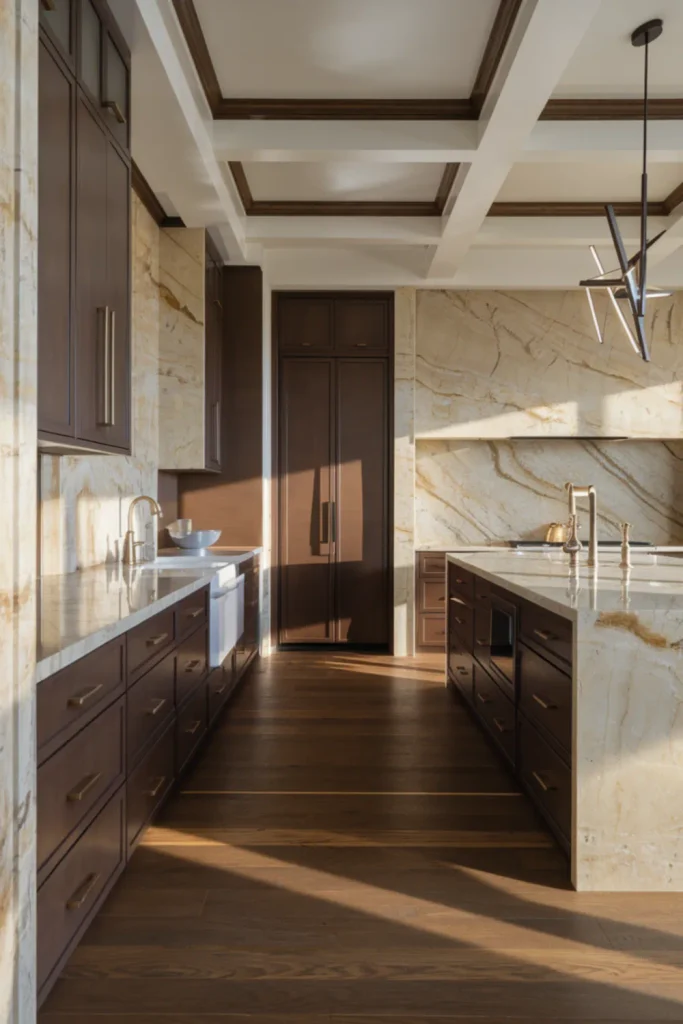
Veined quartzite needs a supporting cabinet color that will not compete with its movement.
Brown-taupe cabinets pick up the stone’s warmer lines, allowing the countertop and full-height backsplash to remain the focal surfaces.
This richer combination suits larger kitchens or rooms with strong natural light.
Select the quartzite slab before finalizing the cabinet paint because undertones vary considerably from one piece to another.
Ask whether the chosen stone needs sealing, and wipe acidic spills quickly to reduce staining or etching around food-preparation areas.
5. Dark Taupe Cabinets With Crisp White Counters
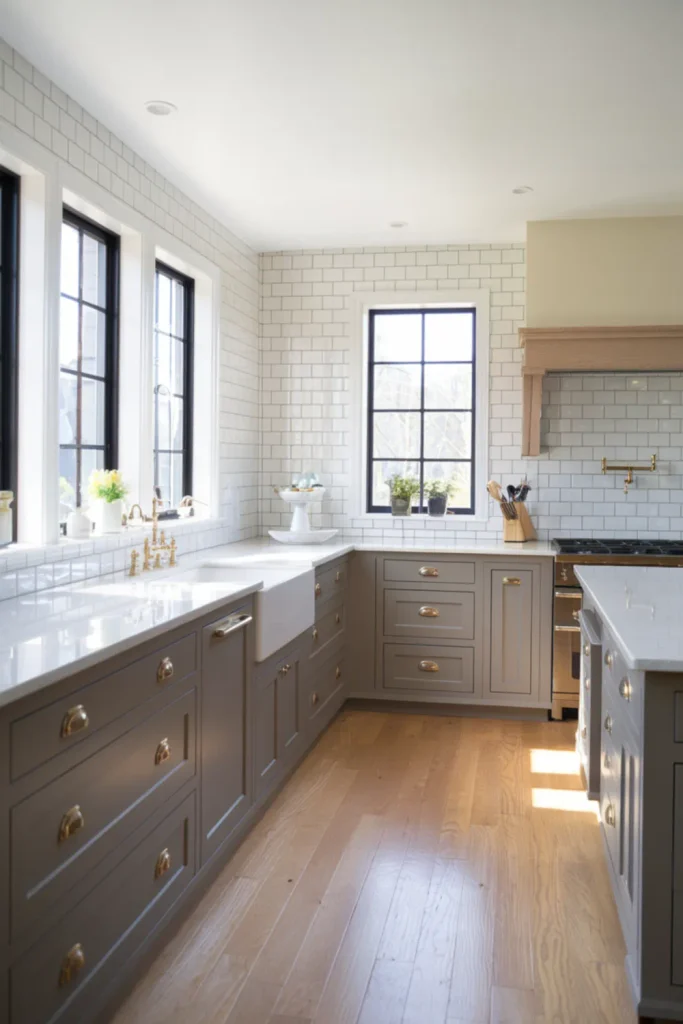
Dark cabinetry feels less imposing when crisp white countertops establish a clear horizontal break.
Here, dark taupe painted kitchen cabinets provide depth, while the white quartz and pale backsplash keep the work area bright.
Light flooring further prevents the lower half of the room from becoming visually heavy.
Test the cabinet color on several doors rather than relying on one small swatch, especially if the kitchen faces north.
Under-cabinet lighting is also worth including because dark uppers can cast deeper shadows across the countertop during evening use.
6. Taupe Lower Cabinets With White Uppers
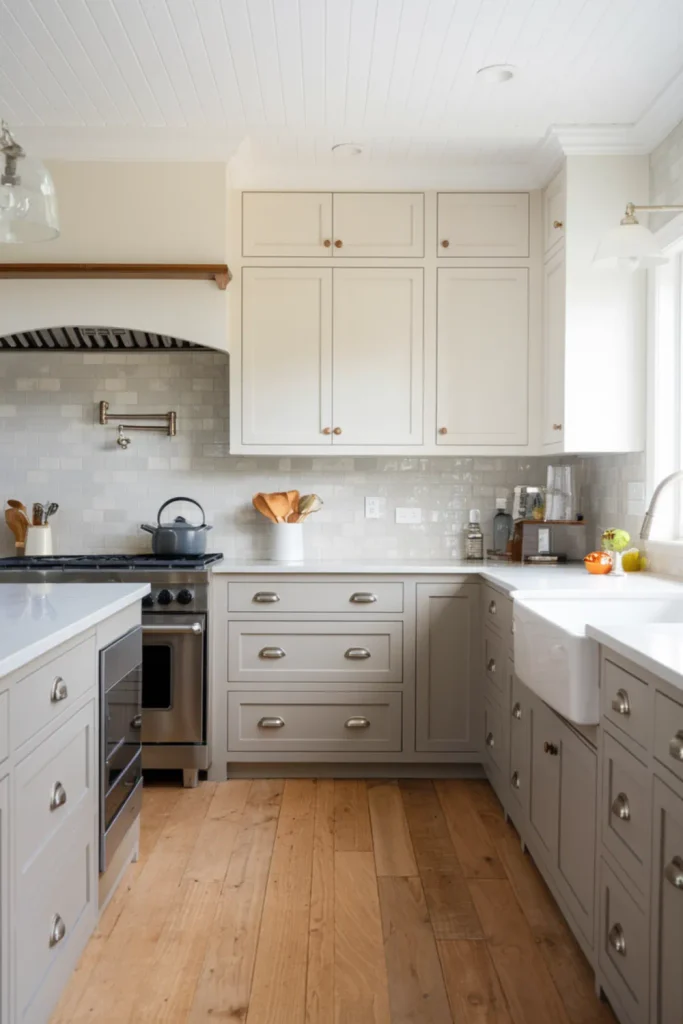
Keeping taupe below eye level is a practical way to introduce color without making a compact kitchen feel enclosed.
White upper cabinets recede against light walls, while the taupe lower cabinets ground the sink, range, and work surfaces.
Use the same door style and hardware across both colors so the room still reads as one kitchen.
The dividing line usually looks cleanest at countertop height rather than shifting colors between unrelated cabinets.
Before painting, compare both colors together to make sure the white does not emphasize an unwanted pink or purple undertone in the taupe.
7. Taupe Island With Cream Perimeter Cabinets
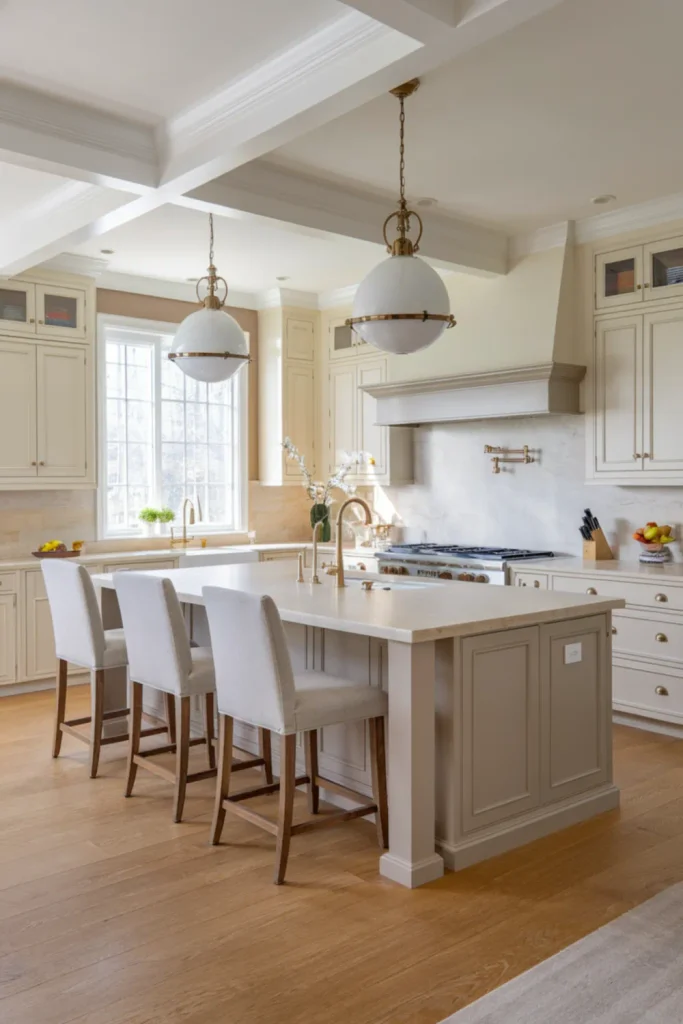
Using taupe only on the island gives a neutral kitchen a defined center without committing the entire room to one painted finish.
Cream perimeter cabinets keep the walls light, while the darker island can handle daily scuffs more discreetly.
Repeat the taupe in one or two small details, such as upholstery or a window treatment, rather than matching every accessory.
Homeowners should also preserve at least 42 inches of clearance around the island where possible.
A beautiful color combination will still feel inconvenient if appliance doors and walkways continually conflict.
8. Ceiling-Height Taupe Cabinets With Crown Molding
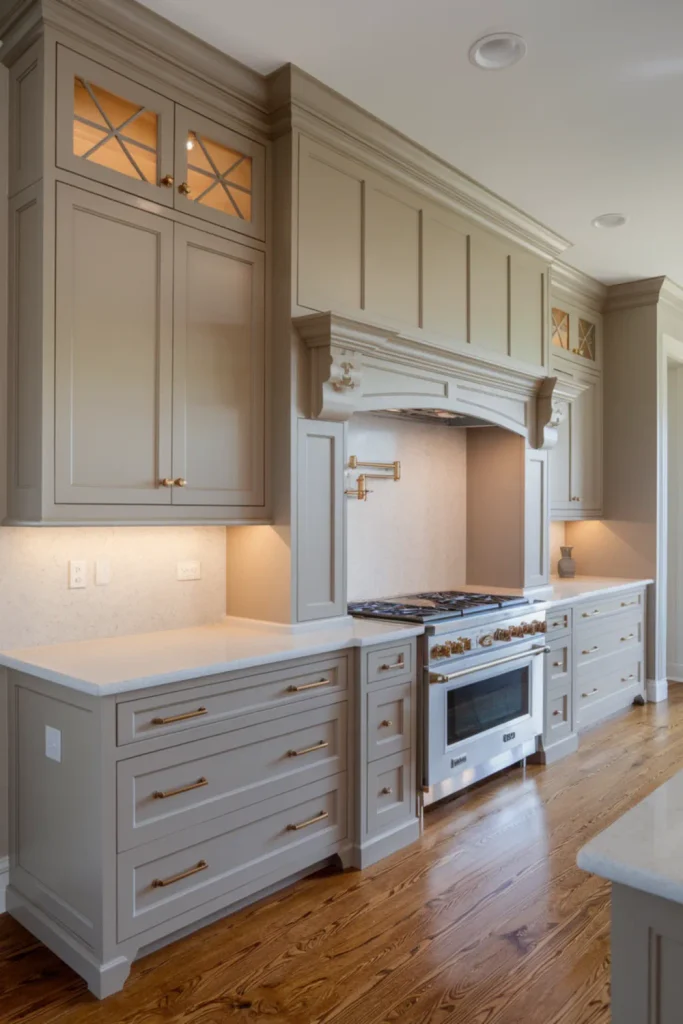
Storage gains are significant when taupe cabinets extend all the way to the ceiling.
The upper sections can hold serving pieces and seasonal items, while crown molding closes the gap where dust often collects.
Glass doors on selected top cabinets lighten the installation and provide a display area for pale ceramics.
Plan how those highest shelves will be reached before ordering the cabinetry; a stable library ladder or stored step stool may be needed.
In rooms with eight-foot ceilings, simpler trim usually looks better than oversized molding that reduces the apparent cabinet height.
9. Taupe Cabinets With Matte Black Handles
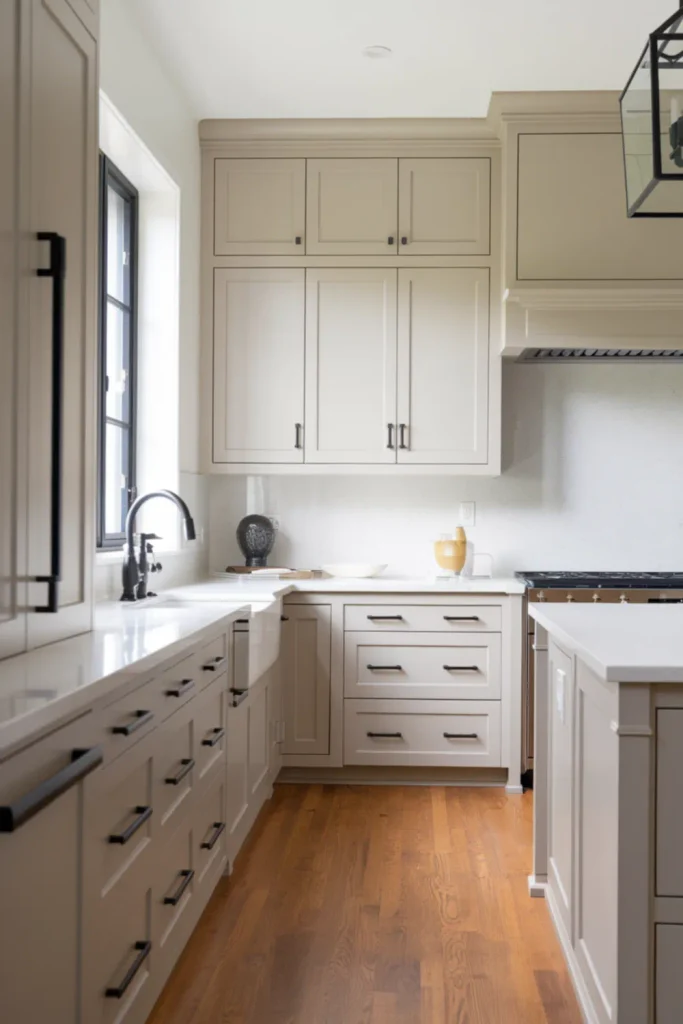
Matte black handles give medium taupe kitchen cabinets a sharper, more contemporary outline.
Repeating black on the faucet, window frame, or pendant light makes the hardware feel connected rather than randomly selected.
Long pulls suit wide drawers, but oversized hardware can overwhelm narrow Shaker doors, so compare pull length with each door dimension.
Black finishes also show flour and dusty fingerprints more easily than brushed metal.
Choosing a textured or softly brushed black coating can reduce visible marks and make routine cleaning less demanding.
10. Taupe Cabinets With Aged Brass Hardware
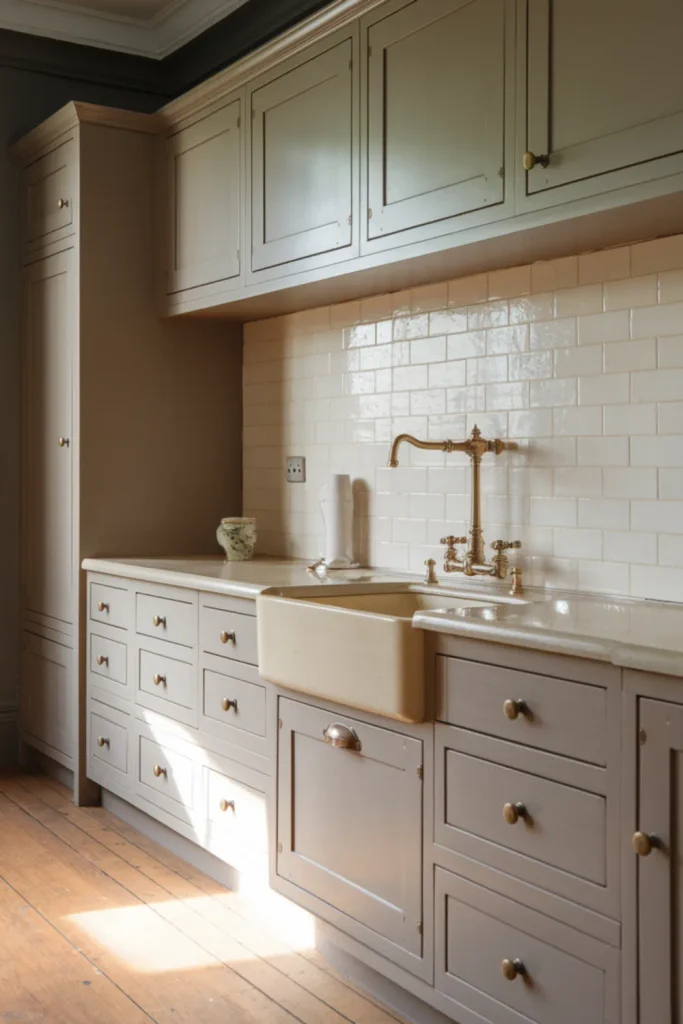
Warm metal is a natural partner for taupe because it draws out the cabinet color’s beige and brown undertones.
Aged brass knobs and cup pulls feel softer than polished brass, especially beside cream countertops and traditional inset doors.
Keep the metal finish consistent on frequently grouped fixtures, but it does not need to match every light or appliance exactly.
Unlacquered brass will darken and develop patina over time, while lacquered hardware stays more uniform.
Decide which appearance you prefer before buying pieces for the full kitchen.
11. Taupe Cabinets With Stainless Steel Appliances
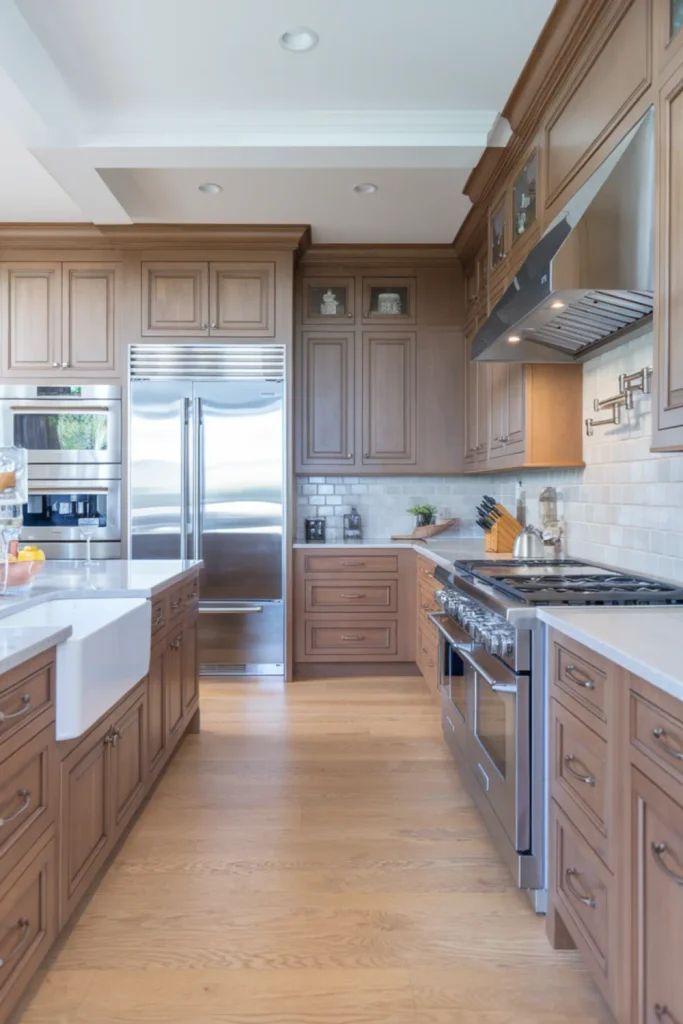
Stainless steel appliances introduce a cooler surface, but taupe cabinets keep the overall kitchen from feeling industrial.
Brushed nickel or muted chrome hardware can bridge the two finishes without forcing an exact metallic match.
Framing the refrigerator and ovens with cabinetry also gives the appliance wall a more integrated appearance.
Check manufacturer clearance requirements before designing tight cabinet openings, since ventilation gaps and door swing still matter.
Fingerprint-resistant stainless finishes are worth considering in family kitchens where refrigerator doors receive constant use.
12. Taupe Cabinets Framed With Walnut Accents
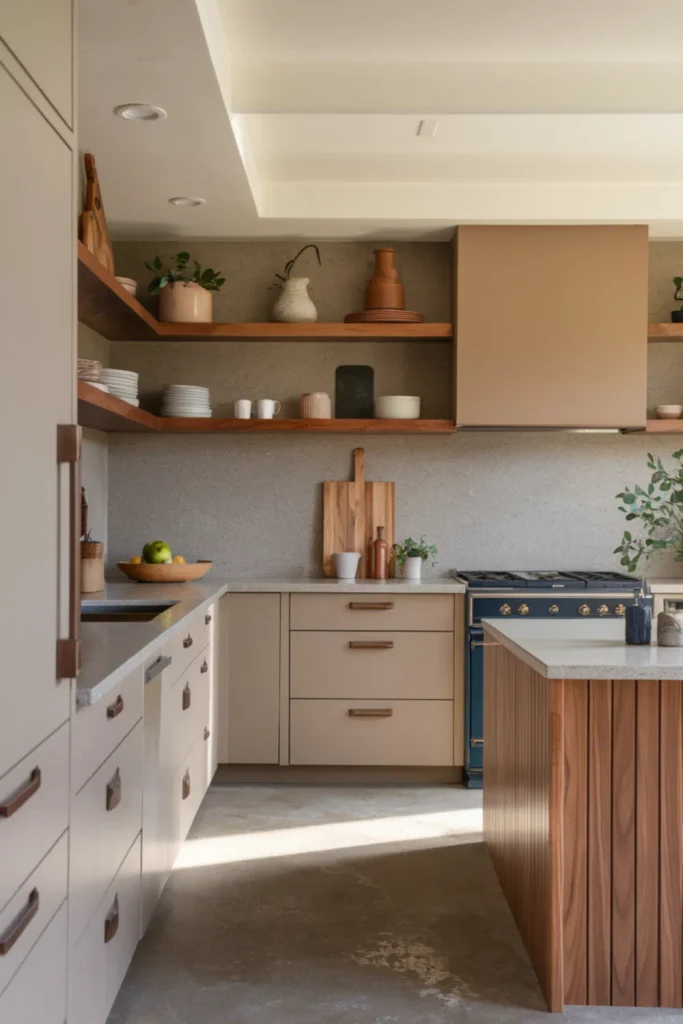
Compared with an entirely painted kitchen, walnut accents give taupe cabinetry more depth and natural variation.
Open shelves, island end panels, or a recessed coffee station are enough to introduce the darker grain without fragmenting the room.
Keep walnut away from direct sink splashes unless it has a durable protective finish.
Because natural wood changes color with age and sunlight, expect modest differences between new sections and older pieces.
Warm lighting around the wood details helps the taupe and walnut read as a deliberate pairing after sunset.
13. Taupe Cabinets With Black Soapstone Surfaces
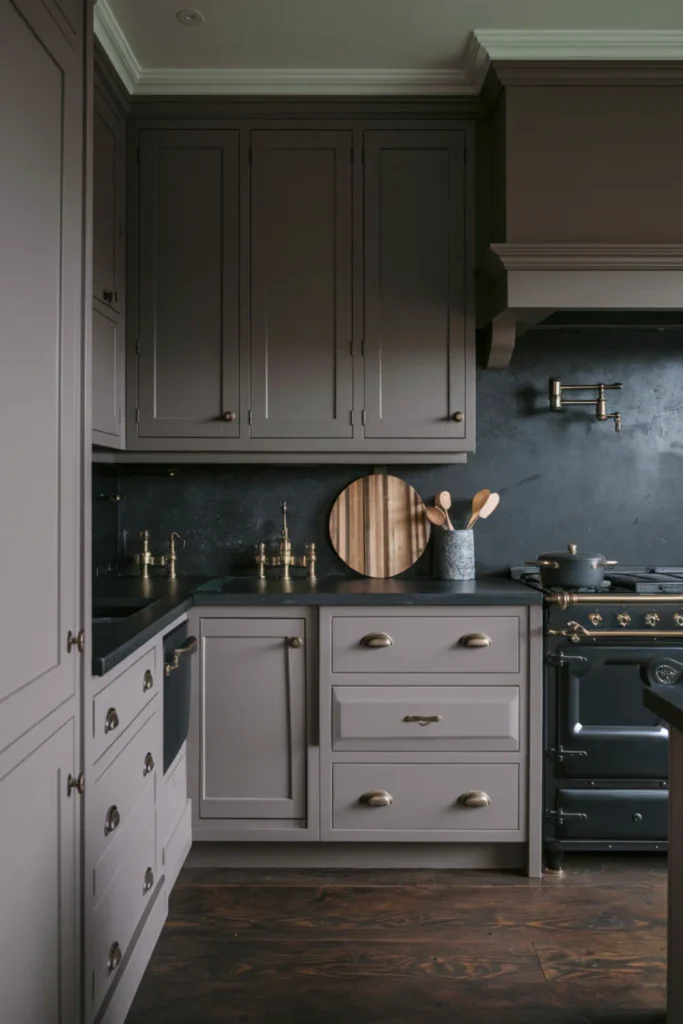
Few combinations feel as grounded as muted taupe cabinets beside honed black soapstone.
The dark surface defines the work area, while its soft matte texture avoids the hard contrast produced by glossy black stone.
Soapstone tolerates heat well, but scratches and wear will become part of its appearance.
Mineral oil can deepen the color and help marks blend more evenly, although leaving it untreated is also possible.
Homeowners who prefer a pristine, unchanging counter should examine aged samples before choosing this material.
14. Taupe Cabinets Above Dark Wood Floors
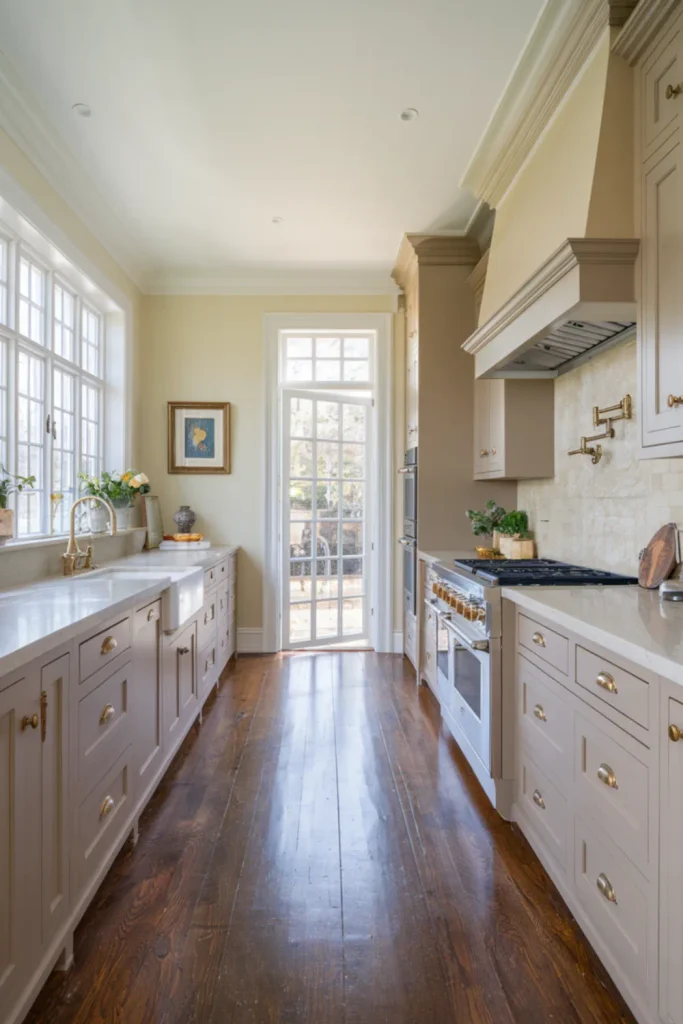
Dark wood floors can make lower cabinetry disappear unless there is enough difference between the two tones.
Choosing medium-light taupe kitchen cabinets preserves separation while still relating to the floor’s warm brown color.
Pale counters and backsplash materials lift the center of the room and keep the combination balanced.
View cabinet samples vertically beside the actual flooring rather than laying both flat under showroom lights.
A washable runner near the sink can protect dark boards from water spots without covering too much of their finish.
15. Pale Taupe Cabinets With White Oak Flooring
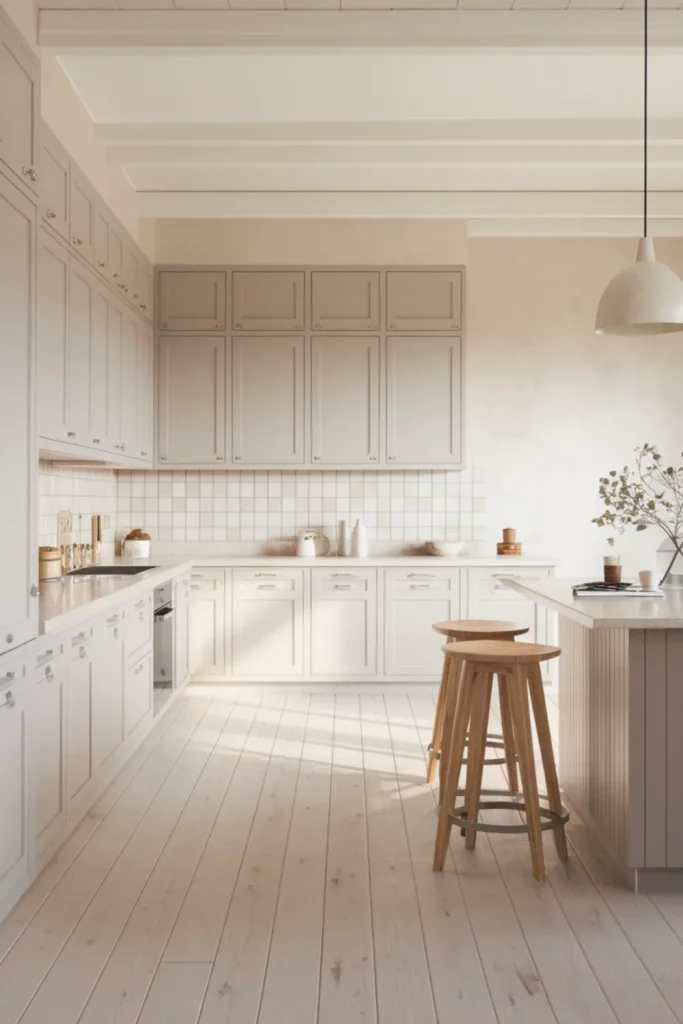
Pale finishes allow cabinet shape and wood grain to carry more of the design.
Light taupe cabinets sit gently beside white oak flooring, producing a warm neutral kitchen that still feels bright and open.
Slight contrast is helpful, so avoid choosing cabinet paint that matches the floor too closely.
Use matte doors with washable surfaces and consider a subtle stone or tile backsplash to separate the cabinetry from the countertop.
Oak flooring near sinks and dishwashers also needs prompt spill cleanup to prevent water from settling into seams.
16. Stone Taupe Cabinets With Limestone Backsplash
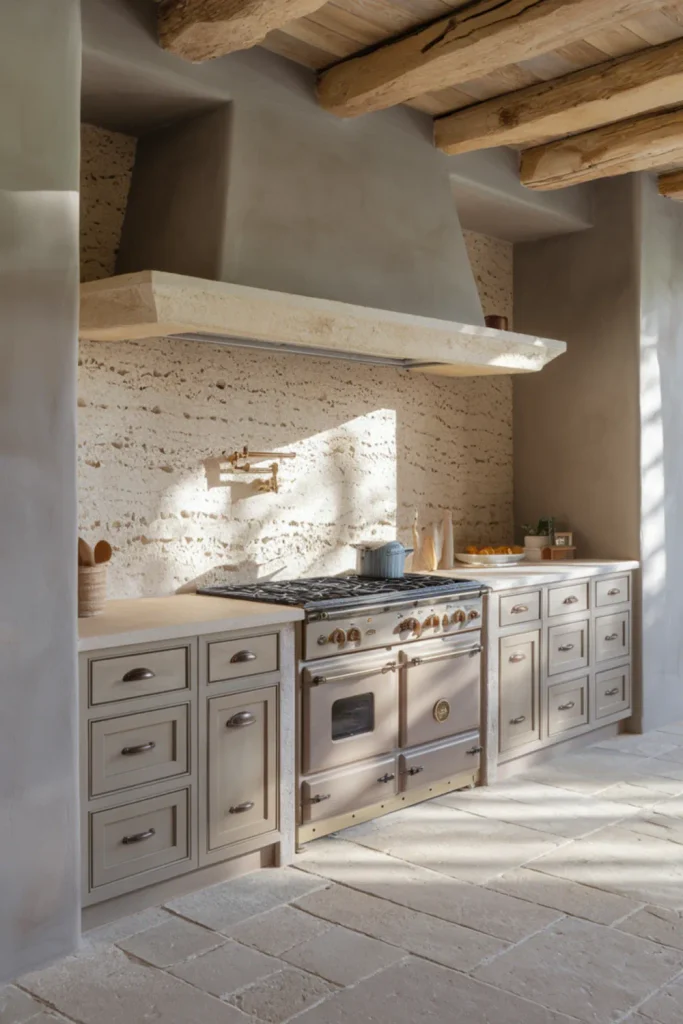
Natural stone gives stone-colored kitchen cabinets a material connection that paint alone cannot provide.
A limestone backsplash introduces quiet texture and tonal movement, while the taupe-gray cabinetry keeps the palette cohesive.
Since limestone is porous, confirm whether the selected product needs sealing before installation and how often that treatment should be renewed.
A slab or large-format tile reduces grout lines behind the range, but cooking splatter will still require regular cleaning.
Bronze hardware and oak details can warm the scheme if it begins to feel too gray.
17. Light Taupe Cabinets in a Small Galley Kitchen
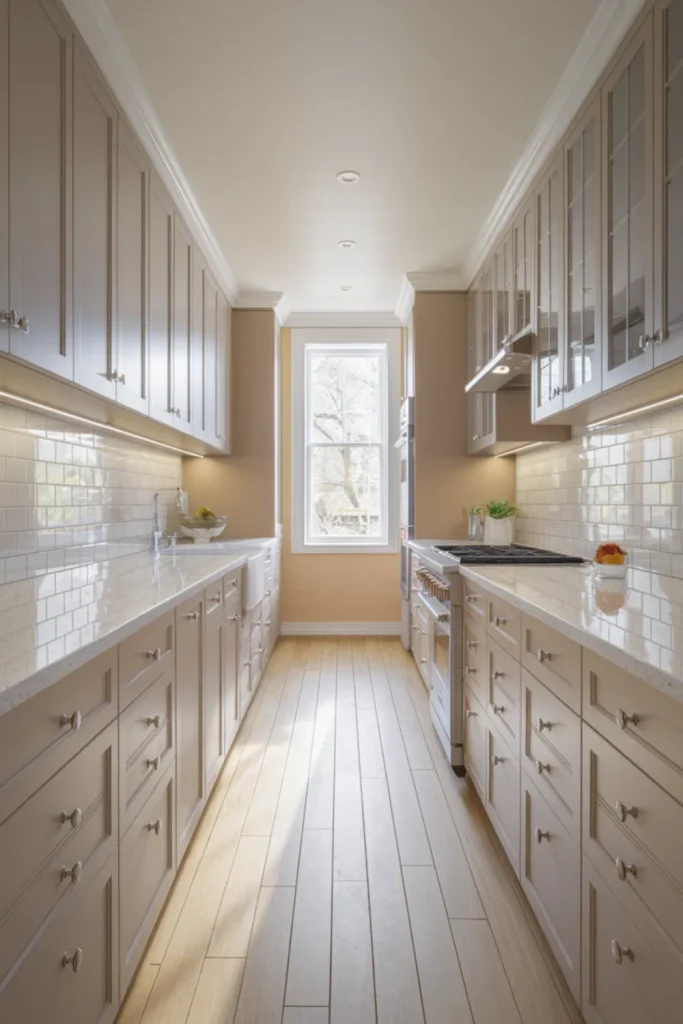
In a narrow galley, uninterrupted sightlines matter more than squeezing in decorative features.
Light taupe kitchen cabinets provide warmth on both walls without creating the tunnel effect that darker colors sometimes cause.
Running the flooring lengthwise reinforces the room’s longer dimension, while glossy cream tile reflects light across the counters.
Keep upper cabinet depth standard and avoid bulky handles that catch clothing in the walkway.
Under-cabinet lighting is particularly useful here because people working on opposite sides may otherwise block the main ceiling light.
18. Taupe Cabinets in a Compact L-Shaped Kitchen
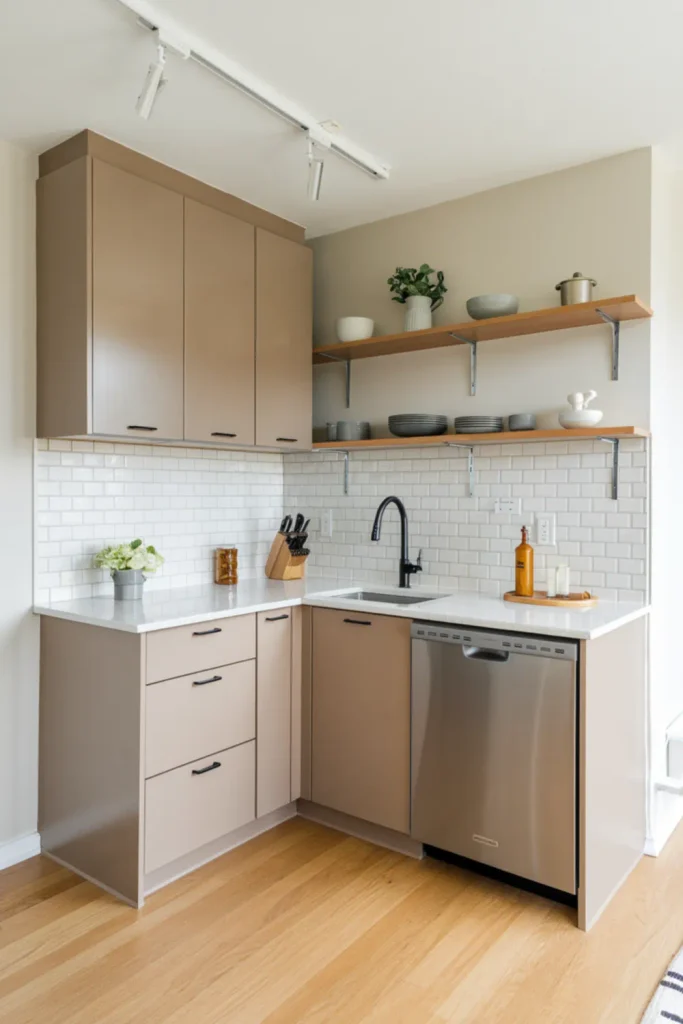
Corner layouts leave valuable floor space open, but the cabinet junction needs careful planning.
Warm taupe cabinets can wrap an L-shaped kitchen neatly, with open shelving at one end to prevent the shorter wall from feeling crowded.
Position drawers away from the corner so neighboring handles and doors do not collide.
A corner sink may free up longer counter runs, though plumbing access should be checked first.
In apartments or townhouses, compact appliances can preserve more cabinet storage without changing the overall taupe kitchen design.
19. U-Shaped Taupe Kitchen With Maximum Storage
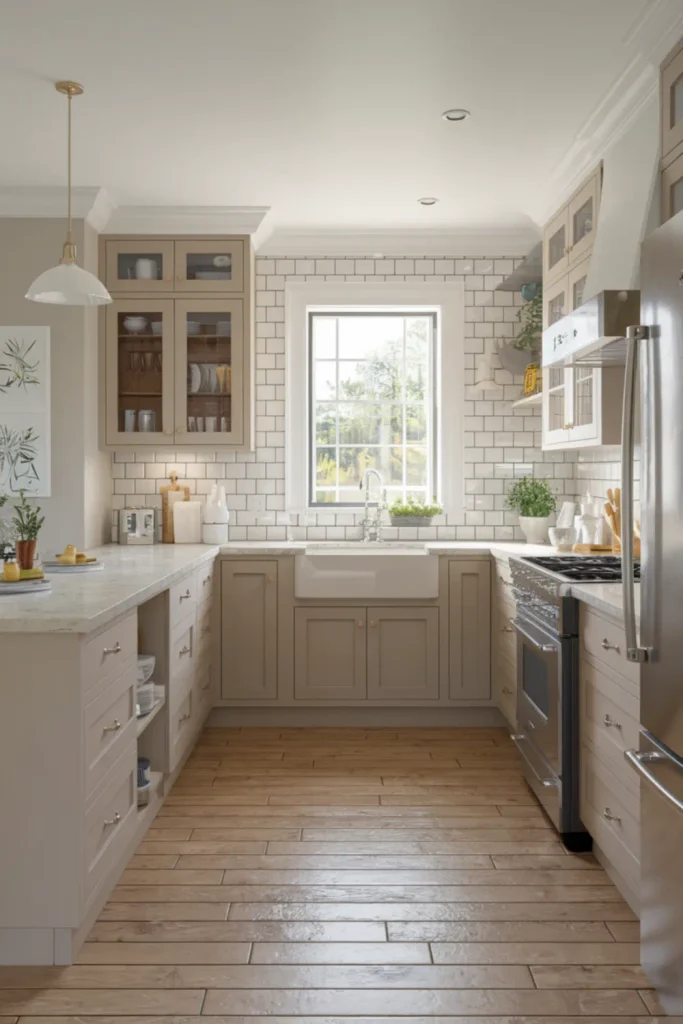
When cabinetry occupies three full walls, color balance becomes just as important as storage.
Medium-light taupe cabinets keep a U-shaped kitchen grounded, while pale counters and a central window prevent the layout from feeling closed in.
Place the refrigerator, sink, and range on separate runs where possible to support an efficient work triangle.
Corner mechanisms such as pullout trays can recover space that would otherwise be difficult to reach.
Leave enough distance between opposing cabinets for doors, drawers, and two people to move comfortably.
20. Handleless Taupe Cabinets for a Contemporary Kitchen
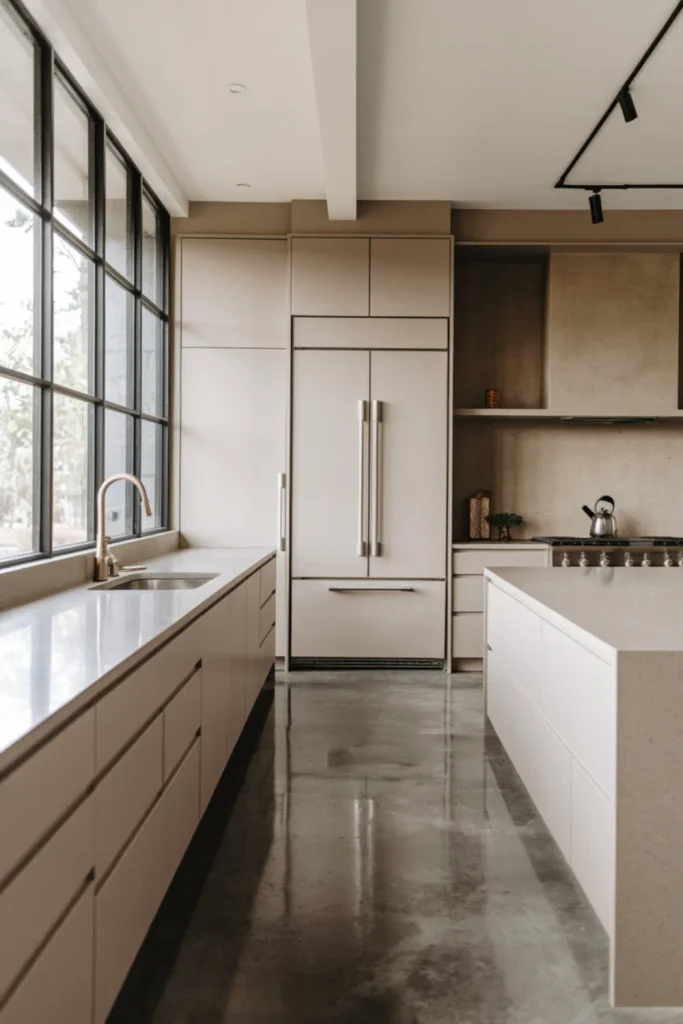
Clean lines place greater attention on color, alignment, and surface quality.
Handleless taupe cabinets produce a calm contemporary look because no hardware interrupts the long cabinet runs.
Integrated channels or recessed finger pulls are usually easier to use than push-latch doors in areas opened frequently.
Matte finishes reduce glare, but very flat coatings may retain oily marks, so request a sample and test how it cleans.
Precise installation is essential because uneven gaps become easy to notice across an otherwise minimal kitchen.
21. Traditional Inset Cabinets in Soft Taupe
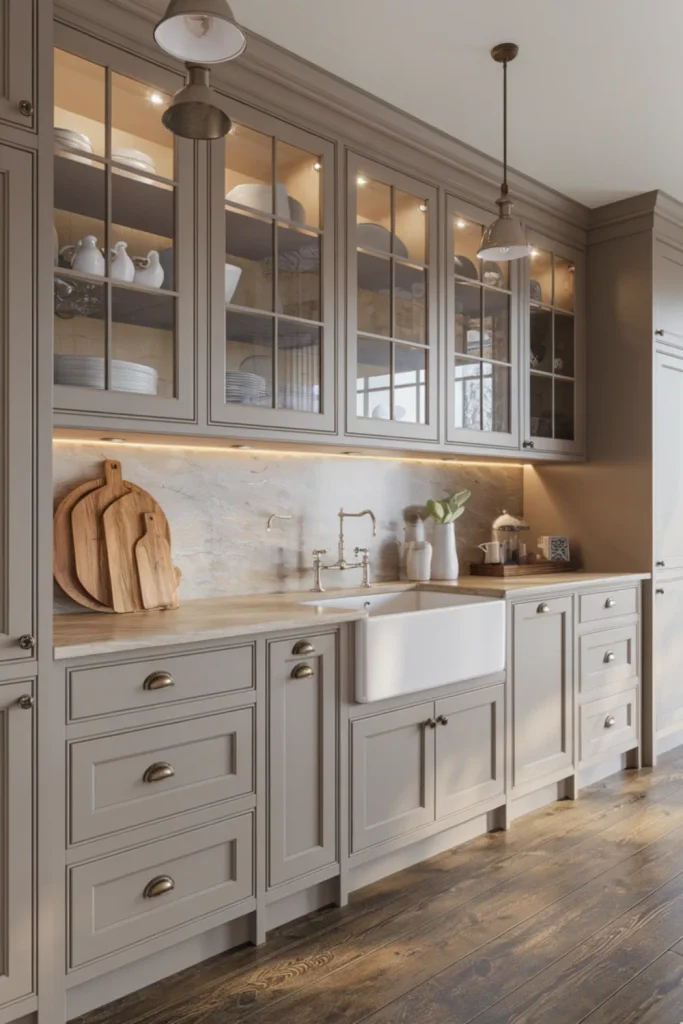
Inset doors turn soft taupe cabinetry into a more architectural feature.
The visible frames, small reveals, and traditional hardware give the neutral color enough definition without requiring a darker paint.
Because inset doors sit inside the cabinet frame, they need accurate construction and may offer slightly less interior space than overlay styles.
Wood movement can also affect tight gaps in humid conditions.
Pairing the cabinets with pale counters and glass-front uppers keeps the detailed millwork from making the kitchen feel overly formal or heavy.
22. Taupe Shaker Cabinets in a Modern Farmhouse Kitchen
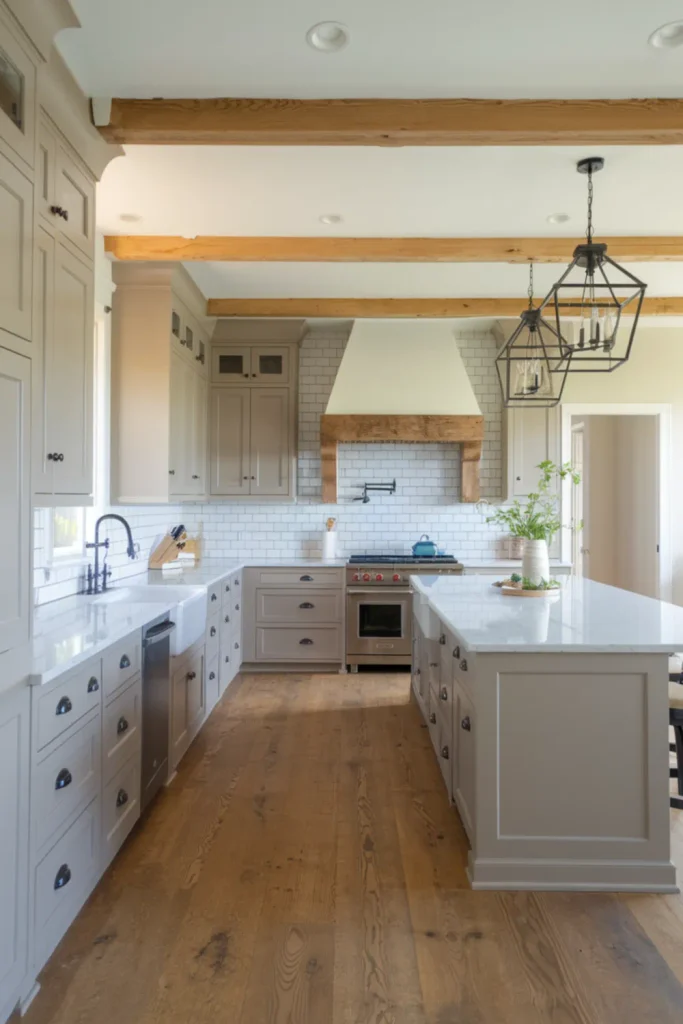
Modern farmhouse kitchens do not need to rely on bright white cabinetry.
Taupe Shaker cabinets provide a warmer foundation for oak beams, black pendants, and an apron-front sink while retaining the style’s simple lines.
Limit rustic elements to a few structural details so the room does not feel themed.
White quartz is easier to maintain than many pale marbles, which may suit a busy family kitchen better.
Black hardware should repeat selectively, since too many dark accents can overpower a softer taupe cabinet color.
23. Pale Taupe Cabinets for a Coastal Kitchen
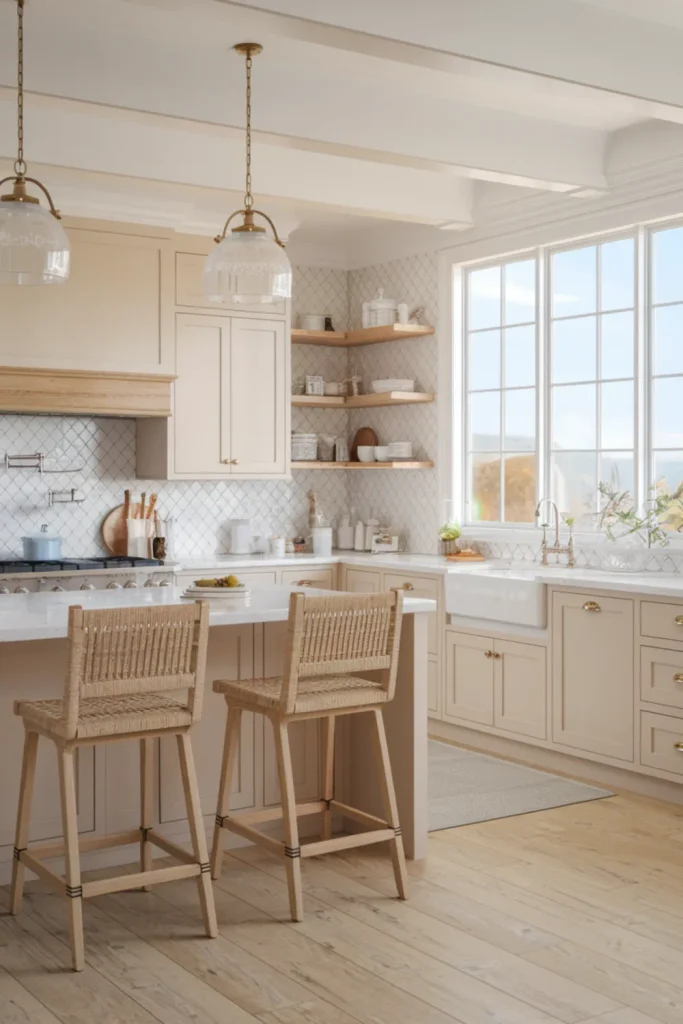
Coastal style reads more naturally through light, texture, and color than through nautical decorations.
Pale sandy taupe cabinets pair well with white quartz, pearly tile, woven stools, and light oak flooring.
The result suggests an airy coastal kitchen without filling the room with shells or blue-striped accessories.
Choose moisture-resistant seating materials if the kitchen opens directly to a pool or patio.
Brushed nickel fixtures also handle the pale palette quietly, allowing the soft cabinet color and natural textures to remain the main focus.
24. Moody Dark Taupe Cabinets With Plaster Walls
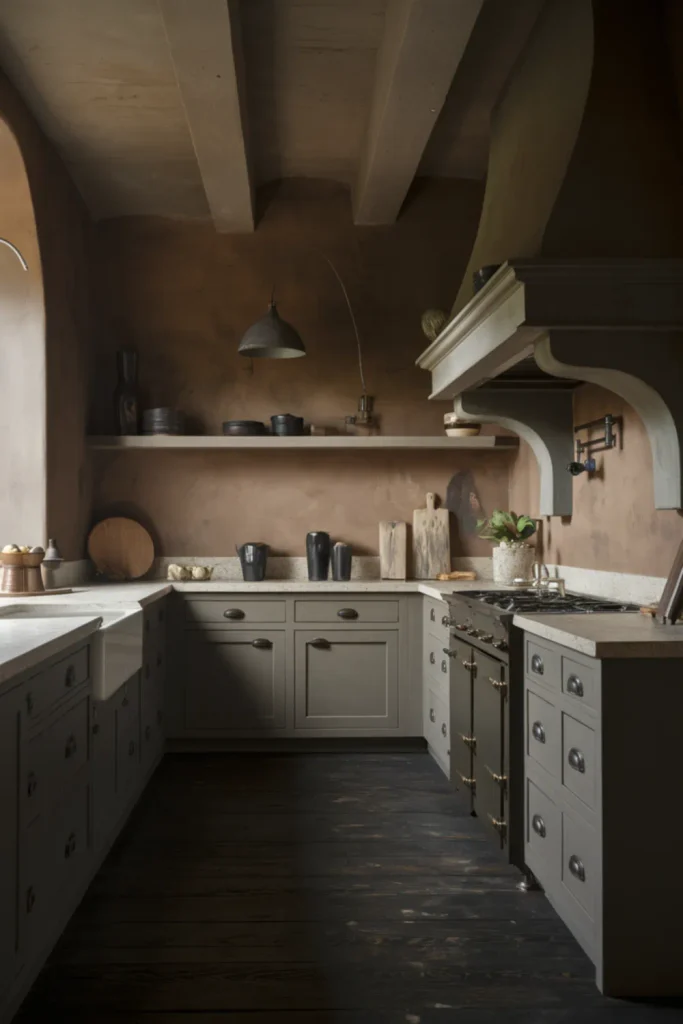
Low-contrast color does not have to mean a pale room.
Dark taupe cabinets against putty-colored plaster walls produce a layered, enveloping kitchen, especially when cream stone and bronze details soften the deeper tones.
Lighting needs careful planning because similar colors can merge after sunset.
Combine under-cabinet lights, focused pendants, and general ceiling illumination rather than relying on one central fixture.
Washable plaster-look paint may be more practical than traditional unsealed plaster near sinks and cooking surfaces where splashes are common.
25. Taupe Cabinets With Glass-Front Display Storage
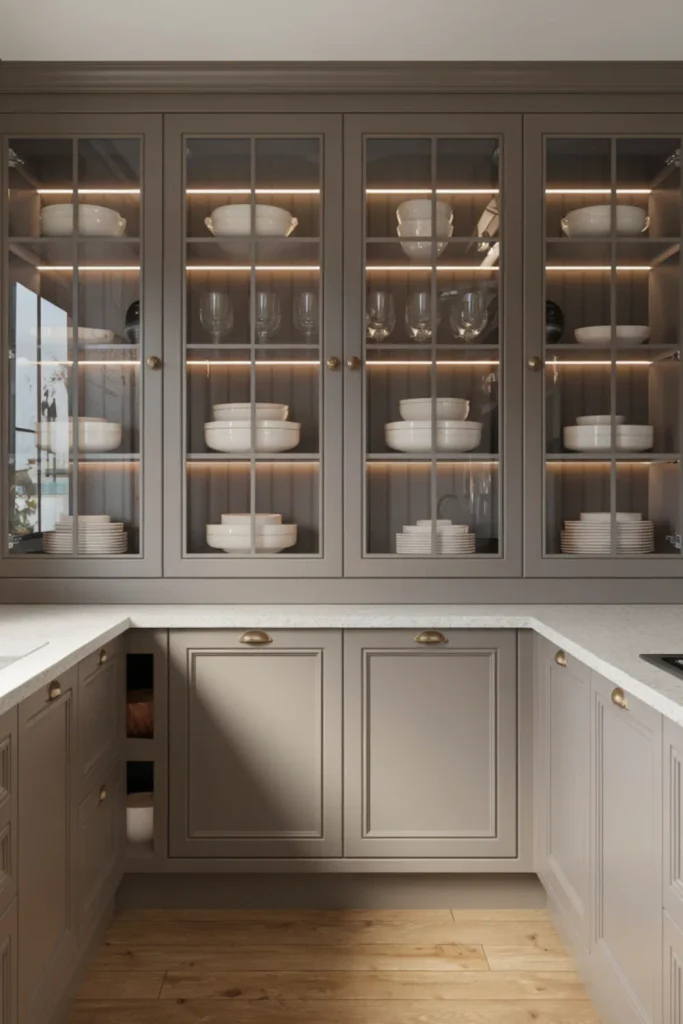
Glass-front uppers relieve a long wall of solid taupe cabinets and make frequently used dishes easier to locate.
Cream ceramics and clear glassware keep the display light, while interior cabinet lighting adds depth in the evening.
Reserve these doors for sections that can remain orderly; everyday food packages are usually better behind solid fronts.
Reeded or lightly textured glass offers more concealment than clear panes while retaining the visual break.
Shelves should also be rated for the weight of stacked dishes, especially across wider cabinet spans.
26. Taupe Cabinet Coffee Station With an Appliance Garage
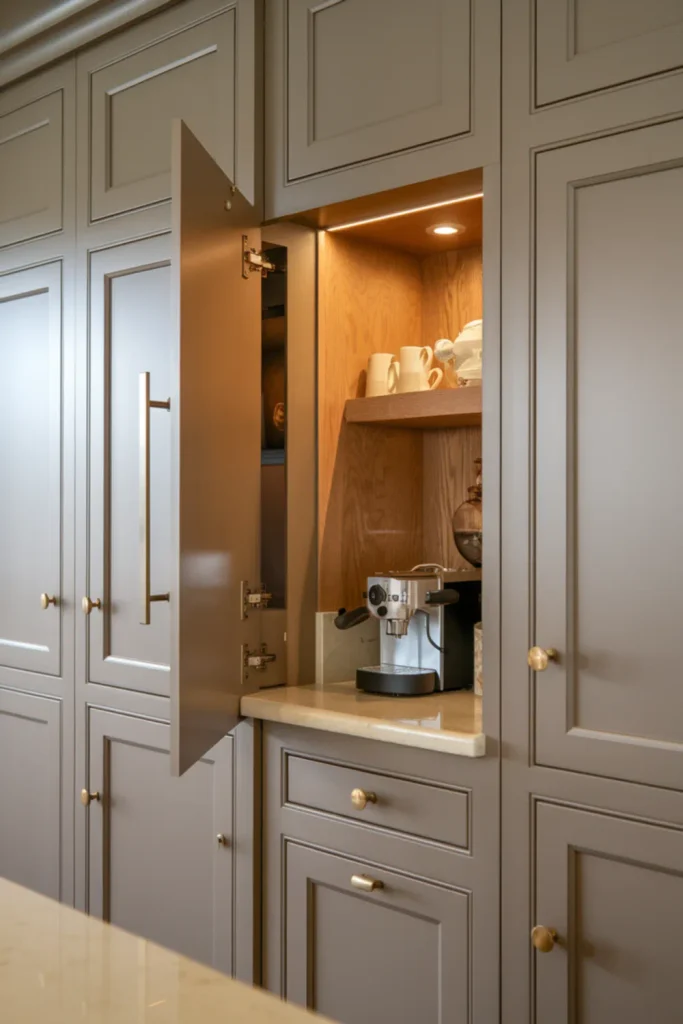
Coffee equipment often crowds the main preparation area even when it is used only briefly each day.
Building an appliance garage into taupe cabinetry gives the machine, cups, and supplies a dedicated zone that can be closed afterward.
Include an outlet inside the cabinet and confirm that heat and steam can escape safely while appliances operate.
A stone work surface will handle spills more reliably than an unfinished wood shelf.
Retractable or pocket doors are useful because they remain out of the walkway when the station is open.
27. Floor-to-Ceiling Taupe Pantry Cabinet Wall
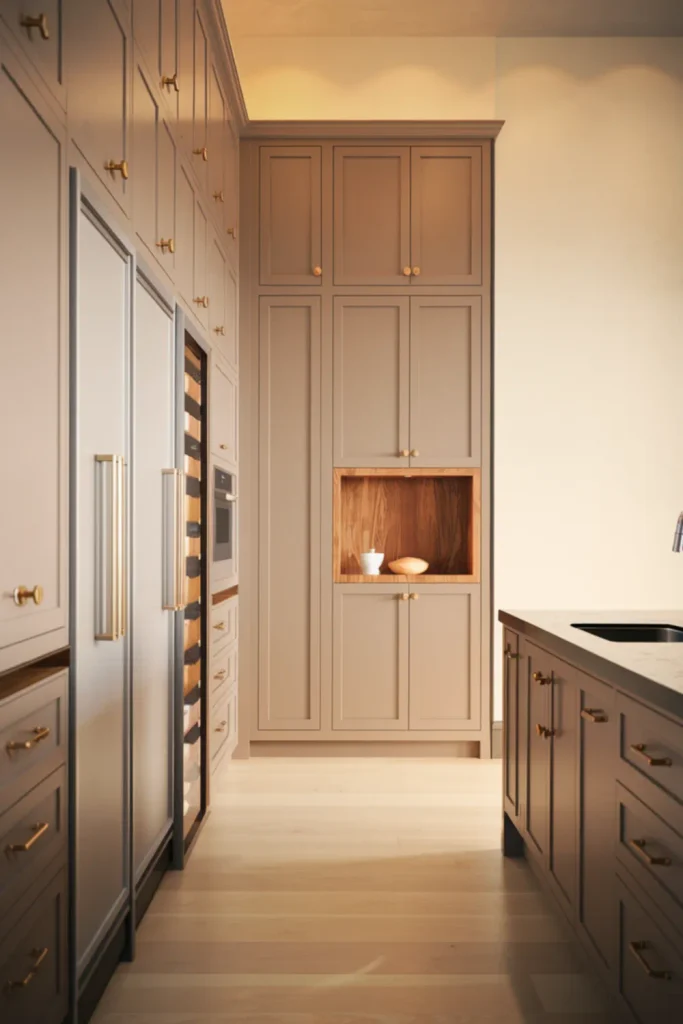
Tall pantry walls consolidate storage and appliances into one orderly run of cabinetry.
Taupe softens the scale of the installation, while an oak niche can break up the broad painted surface and hold items used every day.
Plan the interior before ordering doors: shallow shelves suit cans and jars, while deeper pullouts handle appliances and bulk goods more efficiently.
Heavy pantry drawers need quality runners and enough clearance to open fully.
Keep frequently used items between waist and eye level rather than filling those shelves with occasional serving pieces.
28. Taupe Cabinets Around an Arched Plaster Hood
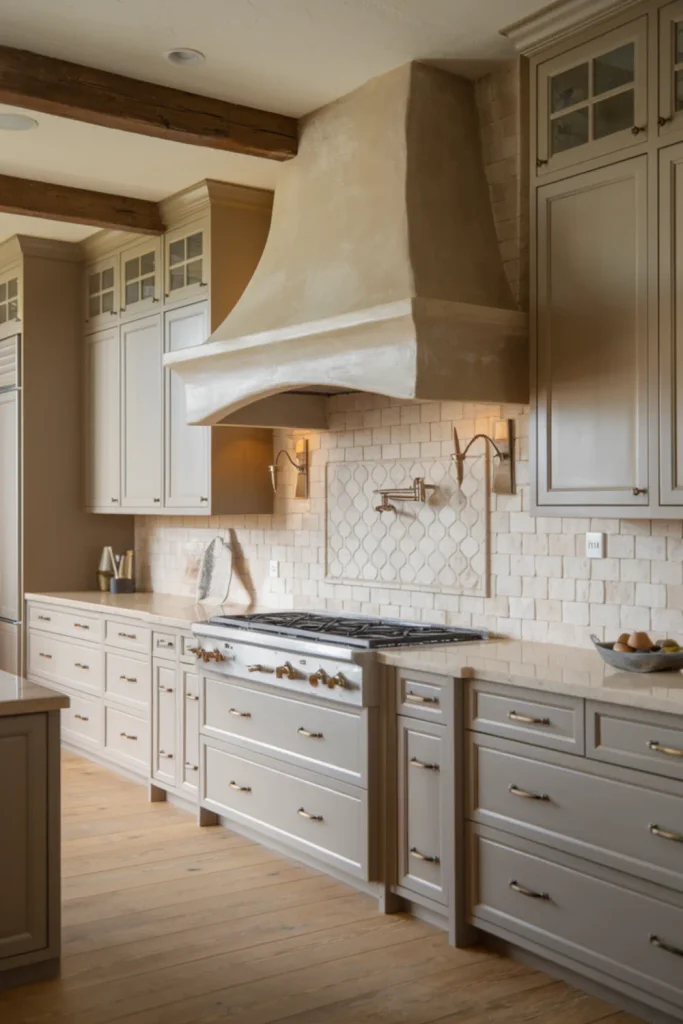
The curve of an arched plaster hood gives rectangular cabinet doors a clear architectural counterpoint.
Taupe cabinets frame the range, while cream tile and a similarly toned hood keep the wall from becoming high contrast.
Center the hood carefully over the cooking surface and allow enough width to meet ventilation requirements.
Decorative plaster should not obstruct access to filters or mechanical components.
Small sconces can provide balanced light on either side, though they need adequate distance from heat, steam, and cooking residue.
29. Budget-Friendly Taupe Painted Cabinet Refresh
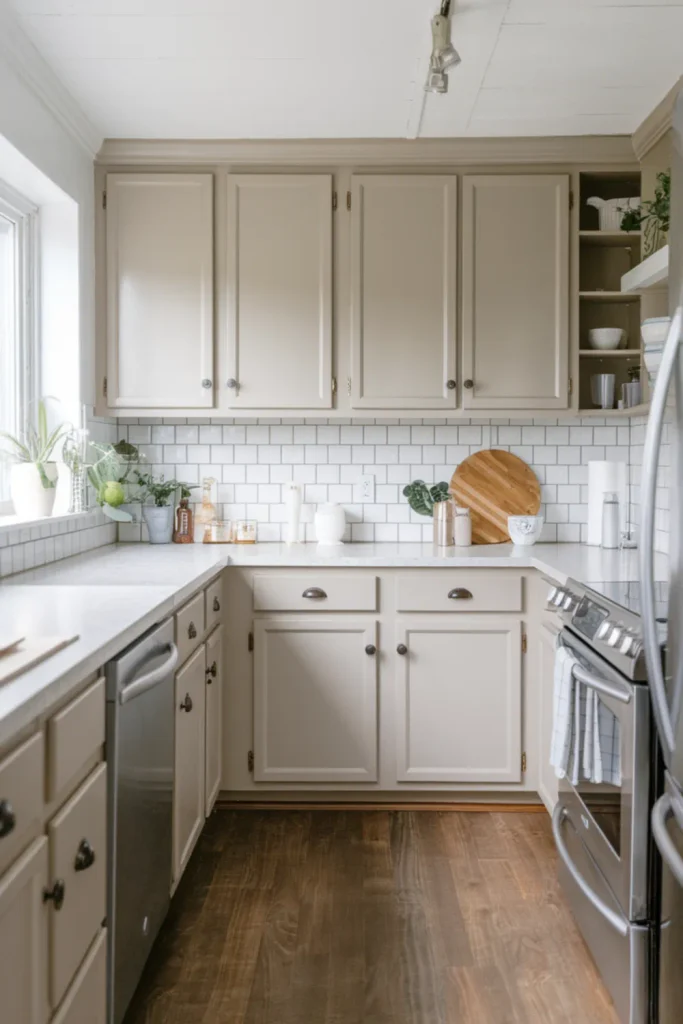
Before repainting builder-grade cabinets, inspect the boxes, hinges, and door alignment.
Paint improves color and surface appearance, but it will not correct damaged cabinet construction or a frustrating layout.
Medium-light taupe painted kitchen cabinets can make existing oak or dated brown finishes feel current without requiring new counters.
Degrease every surface, sand or degloss as directed, and use a bonding primer suited to the cabinet material.
Labeling doors and hardware during removal will also make reassembly faster and prevent pieces from returning to the wrong openings.
30. Tonal Taupe Kitchen With Coordinating Walls
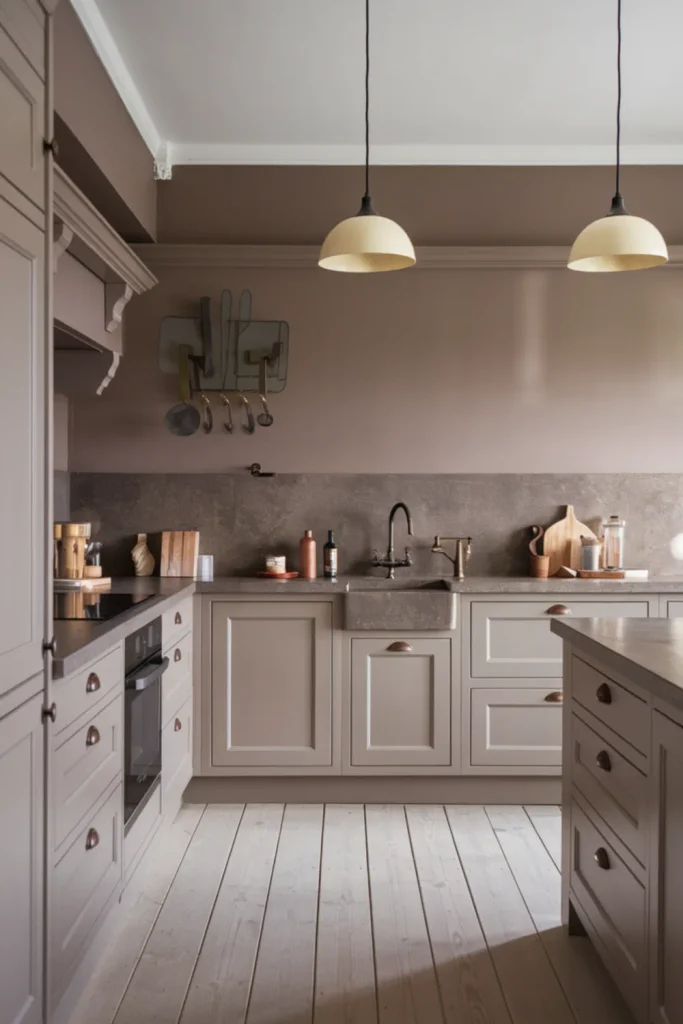
Matching taupe walls and cabinets requires variation rather than one identical color across every surface.
A slightly lighter wall tone separates the room’s architecture from the cabinetry, while stone counters and pale oak flooring introduce changes in texture.
Test all finishes together because neighboring taupes can reveal unexpected green, pink, or violet undertones.
Varying the sheen also helps: durable satin works well on cabinets, while a softer washable finish suits walls.
Cream lighting is preferable to very cool bulbs, which may flatten the warmth of the overall palette.
Conclusion
Narrow your options by deciding whether your kitchen needs more brightness, warmth, contrast, or depth.
Light taupe kitchen cabinets suit smaller rooms, while mushroom and brown-taupe shades support richer materials and larger layouts.
Before committing, test the cabinet color beside every fixed finish under daytime and evening light.
That simple comparison is more reliable than selecting a shade from an isolated sample.