
Dark cabinets can make a kitchen feel warm and grounded, but the surrounding finishes make a big difference. A pale countertop changes the mood in one direction; green tile, textured plaster, or dark stone takes it somewhere else. With dark wood kitchen cabinets, you also have the grain itself to work with, from the long lines of walnut to the more pronounced texture of oak.
These 13 ideas show different ways to balance that richness through materials, cabinet details, lighting, and layout. Use them as visual starting points, then adapt the combinations to your own room and the finishes you want to keep.
1. Pair Walnut Cabinets With Warm White Countertops
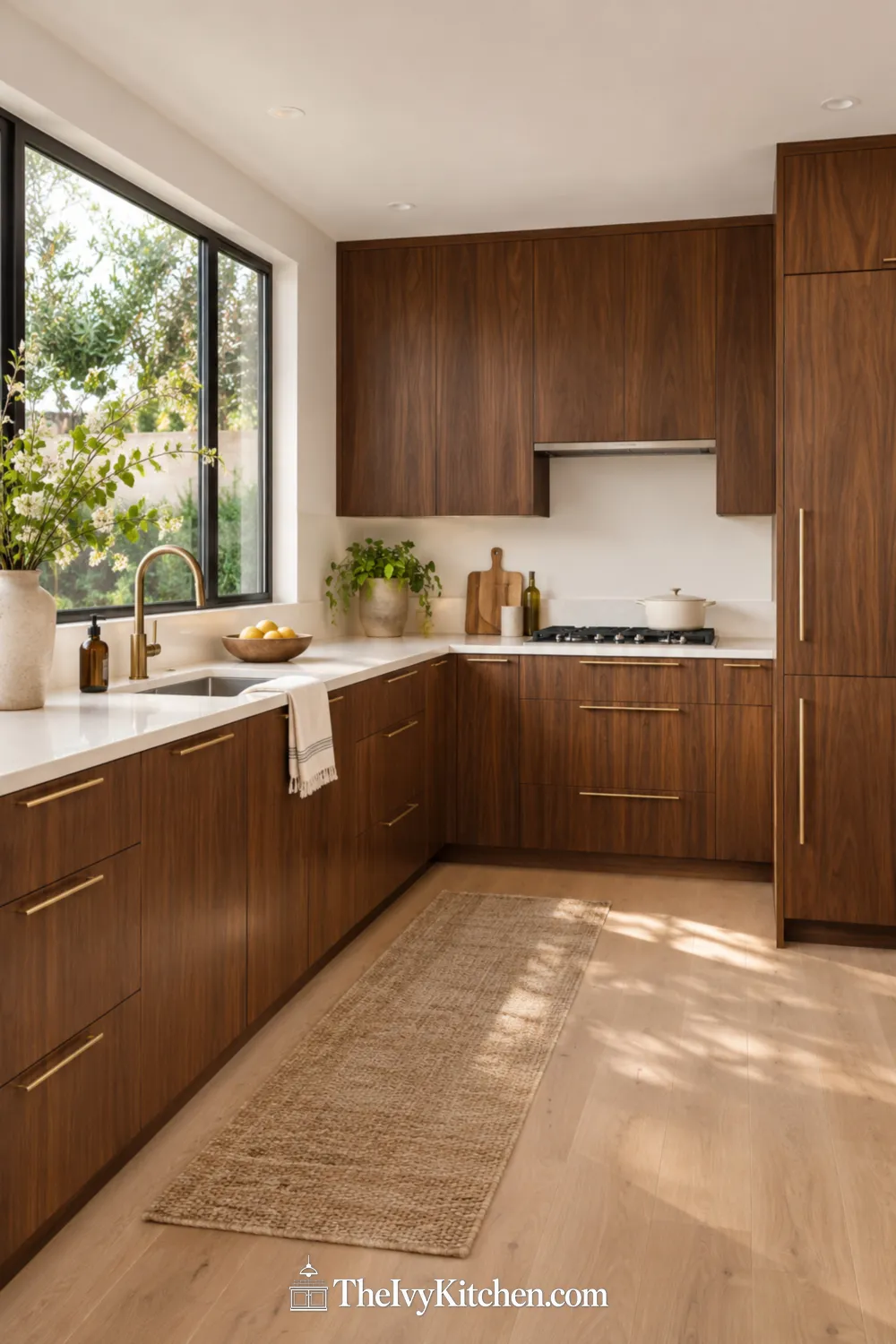
Start with a pairing that lets the wood do most of the talking. Flat-front walnut cabinets and warm white countertops create a clear contrast without introducing another strong color. Choose a white with a creamy undertone, then carry that tone into the walls or backsplash so the room feels connected.
You can keep the cabinet fronts simple and use slim brass pulls for a little definition. Before selecting finishes, place a wood sample beside the countertop in your actual kitchen light. The combination should feel balanced in both daylight and evening lighting, especially across a long run of cabinetry.
2. Bring in a Green Tile Backsplash
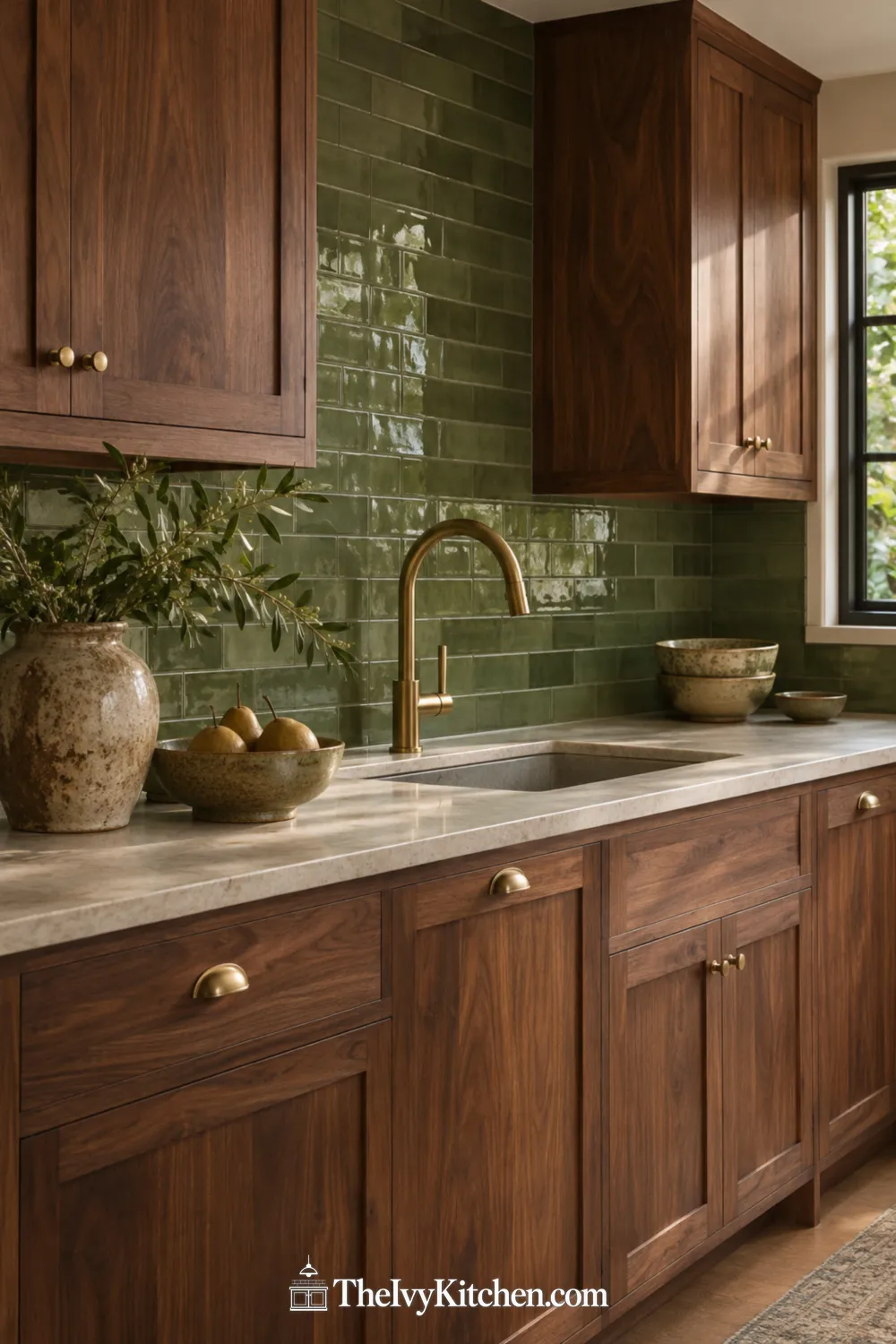
Green tile gives dark walnut a richer backdrop while keeping the palette tied to natural colors. Try a muted moss or olive shade rather than a very bright green, especially when your wood already has a strong reddish undertone. A simple stacked or running-bond layout leaves room for the grain to stand out.
For a more layered organic modern kitchen, add a few earthy ceramics on the counter and keep the remaining surfaces quiet. Take tile samples home and look at them beside the cabinet finish. Glossy tile will catch highlights differently from a matte sample, which can change how the whole wall reads.
3. Balance Dark Cabinets With Light Floors
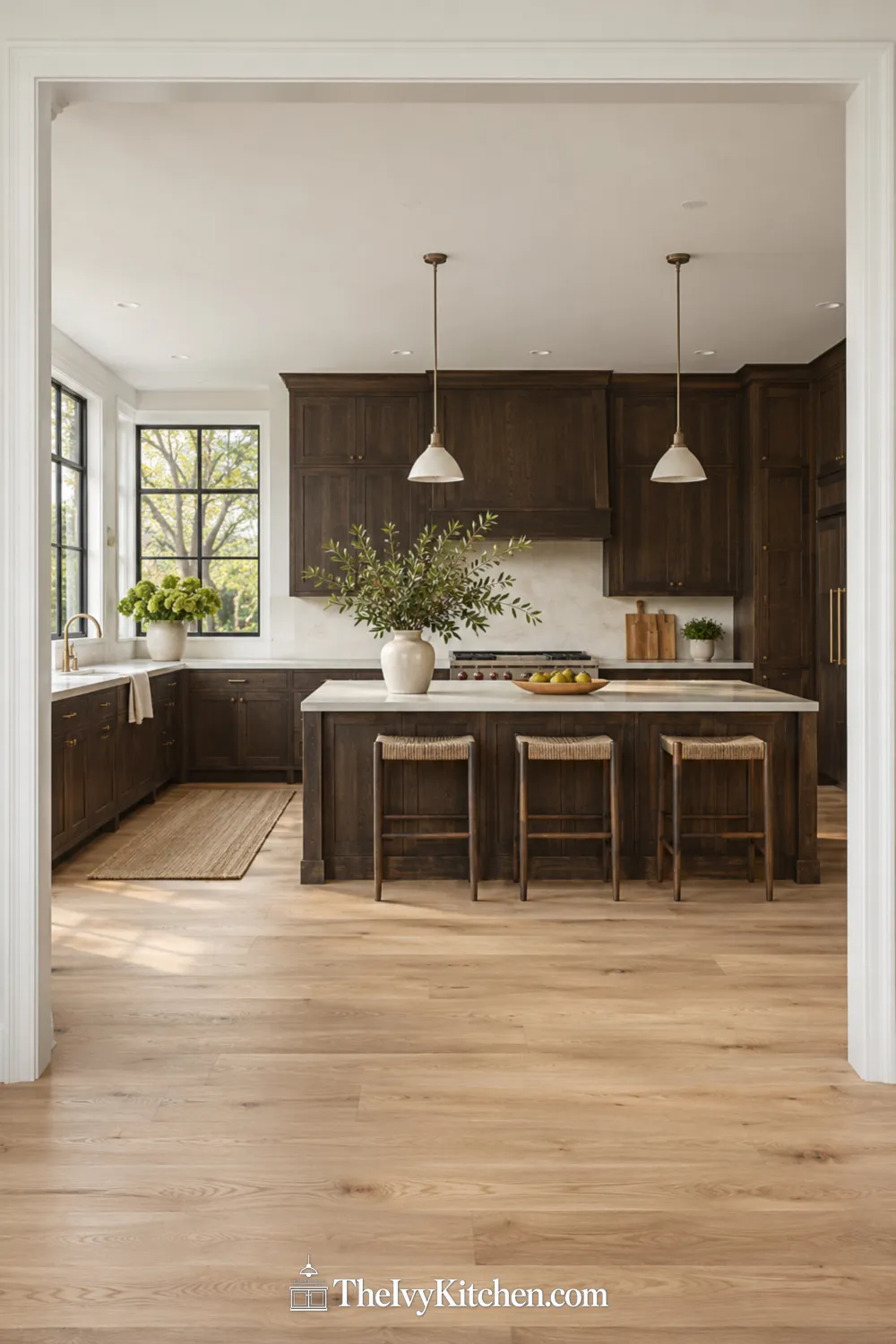
Light flooring can give a kitchen with dark cabinetry a more open visual base. Consider pale oak, a light neutral tile, or another finish that creates a clear separation from the cabinet color. The contrast helps you see the outline of the cabinetry instead of having the whole lower half of the room blend together.
Aim for compatible undertones rather than an exact wood match. A dark oak cabinet can sit comfortably above a lighter floor when both lean warm or neutral. Keep a larger flooring sample near the cabinet sample, since a tiny swatch may not show enough variation to judge the pairing.
4. Use Black Countertops for a Moody Palette
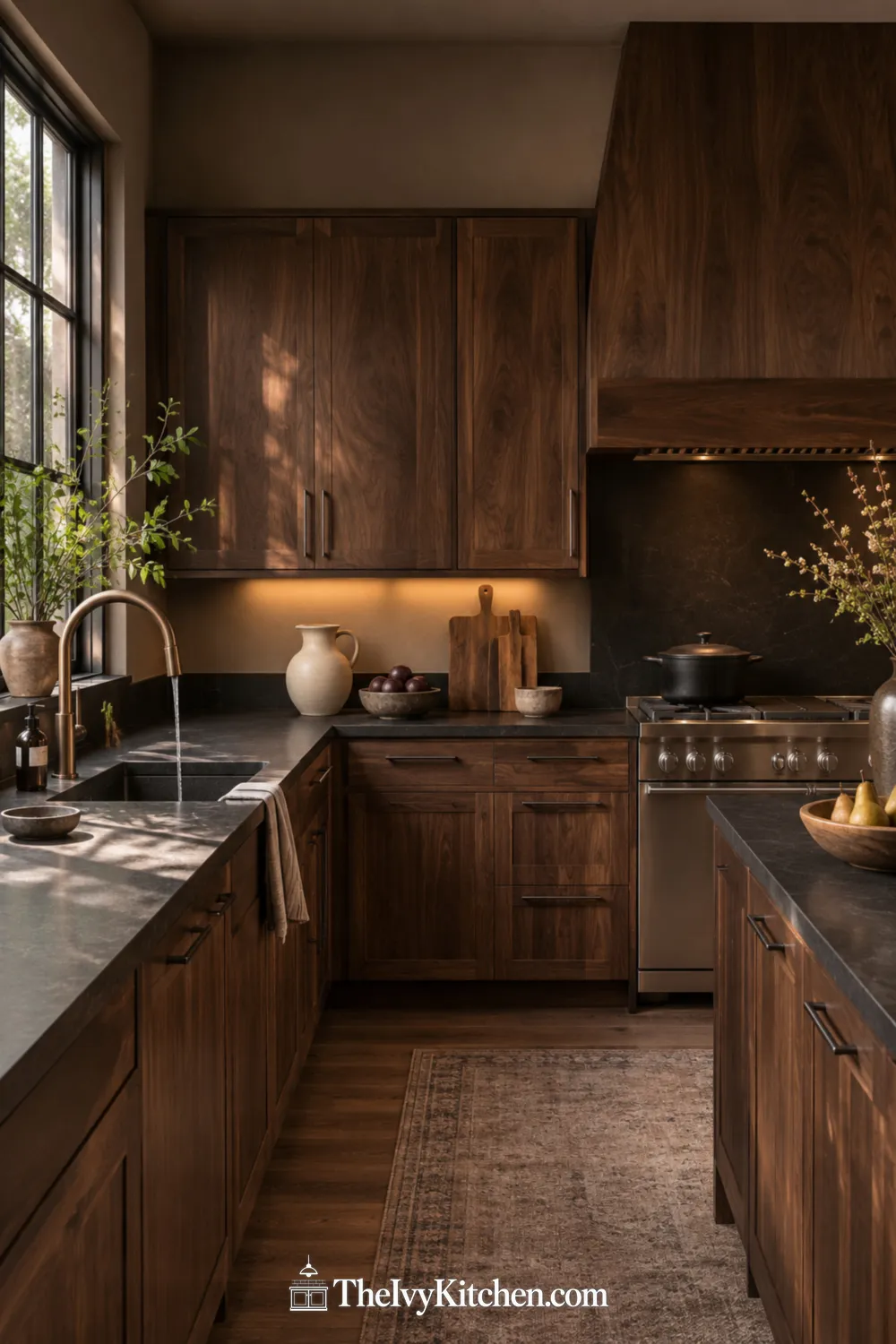
For a dark moody kitchen, pair deep brown cabinets with black countertops and let subtle differences in texture provide the contrast. Visible wood grain, a softly finished stone surface, and a slightly lighter wall can keep the combination from reading as one flat block. You do not need every finish to be glossy for the room to have depth.
Leave some counter space clear so the material changes remain visible. A small group of pale ceramics or a wood cutting board can break up the darker surfaces. Check countertop samples under your planned lighting before committing, particularly if the room gets limited daylight.
5. Add a Painted Island to an All-Wood Perimeter
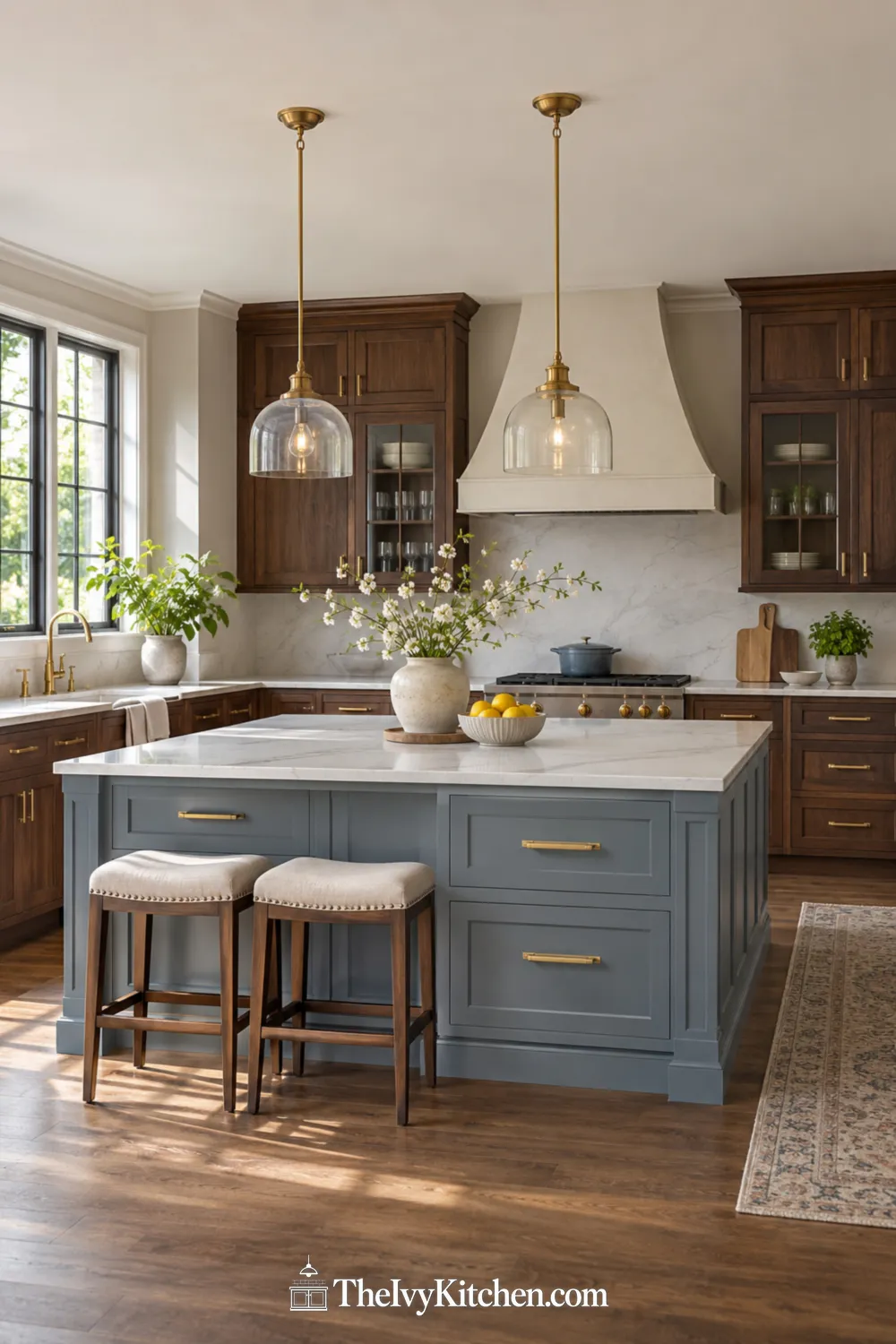
A painted kitchen island creates a pause between long stretches of dark wood. Muted putty, dusty blue, or a soft olive can work as a second cabinet color while leaving the perimeter cabinetry as the main material. Repeat a small detail, such as hardware or countertop color, to connect the two finishes.
Choose the island shade after considering the wood, flooring, and surrounding walls together. It should feel related to the room rather than like an isolated accent. If you are planning a new layout, confirm the island size and clearances with your kitchen designer before using an inspiration image as a floor plan.
6. Frame a Plaster Hood With Dark Wood Cabinetry
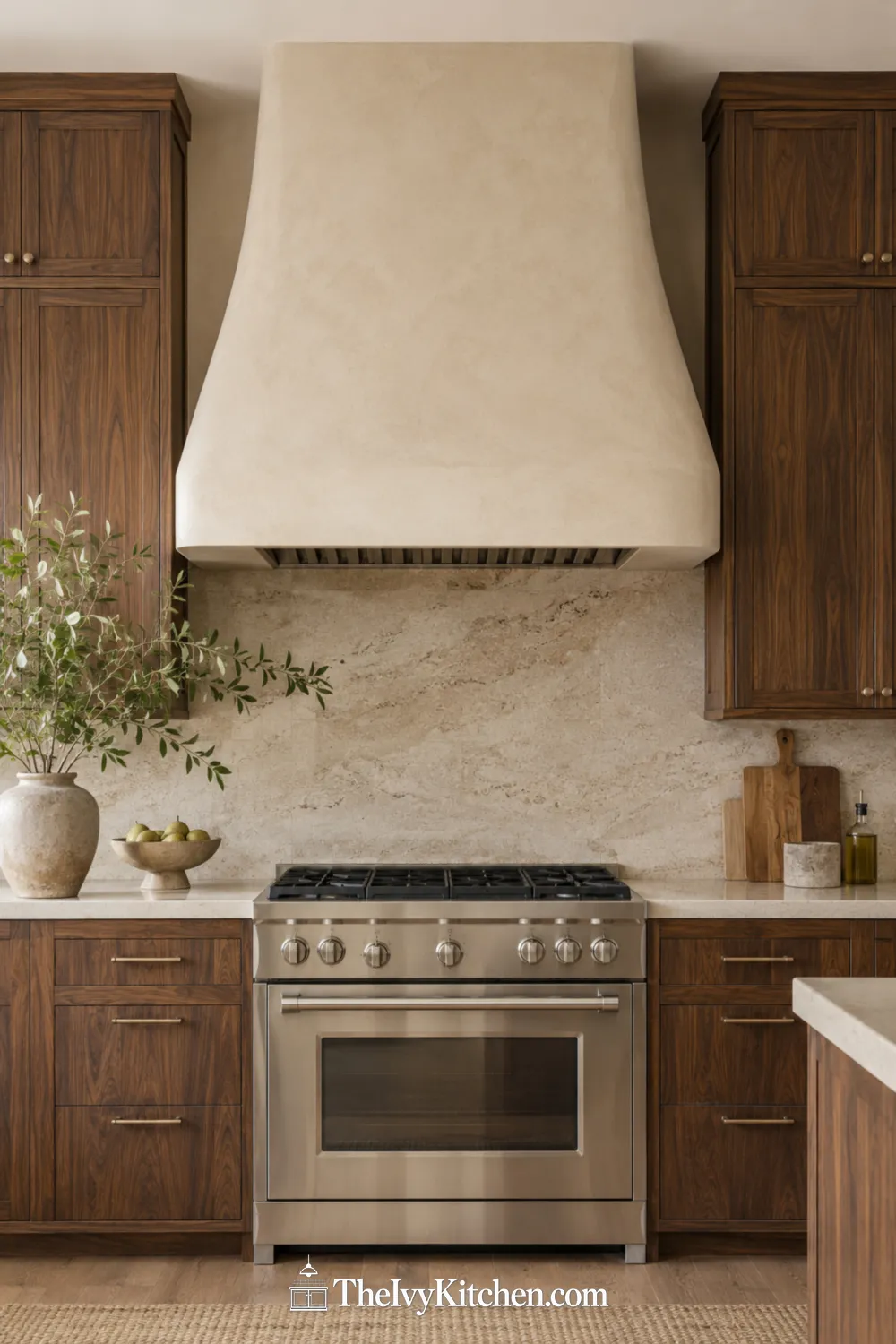
A plaster-look range hood introduces a broad, quiet shape between richly grained cabinets. Its pale surface gives your eye somewhere to rest, making the dark wood feel more deliberate. Keep the hood profile simple if you want the room to lean organic modern, or add a restrained curve for a softer traditional reference.
Use the same warm white family on nearby walls to avoid a patchwork of competing neutrals. The image is a styling reference, so the actual hood enclosure and ventilation system still need to suit your appliance and installation requirements. A qualified installer can help translate the look into an appropriate working setup.
7. Give Dark Oak Cabinets a Furniture-Like Detail
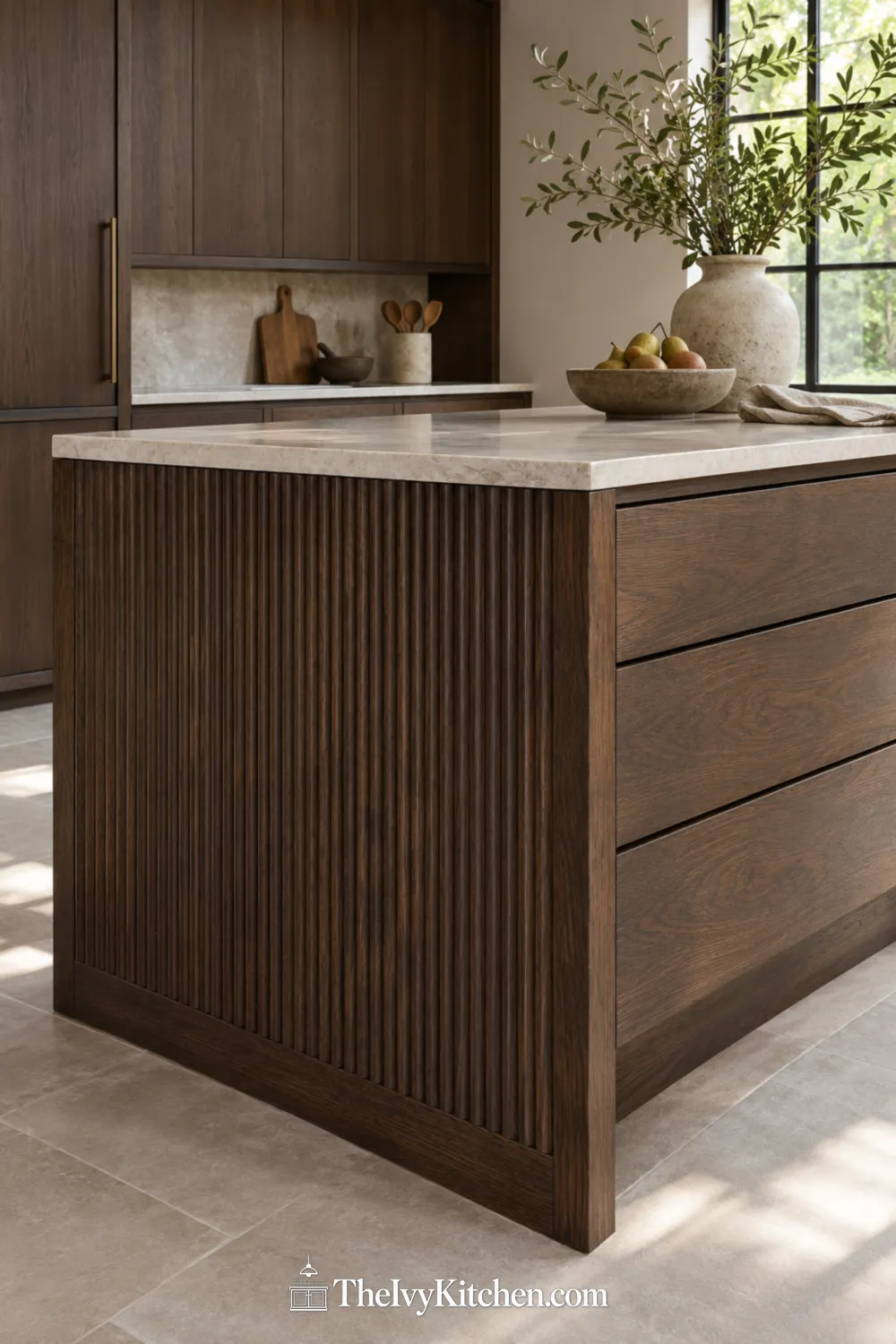
Reeded panels can make a cabinet run feel more like a piece of furniture. Instead of applying the detail everywhere, use it on an island end or a short section facing the living area. Against dark-stained oak, the narrow vertical grooves add shadow and texture without needing a contrasting paint color.
Balance that detail with simpler drawer fronts elsewhere so the room has a clear focal point. When reviewing samples, look at the groove depth and finish from a few steps away. You want the pattern to register as texture, while the overall shape of the cabinet or island remains easy to read.
8. Use Glass-Front Uppers to Break Up a Dark Wall
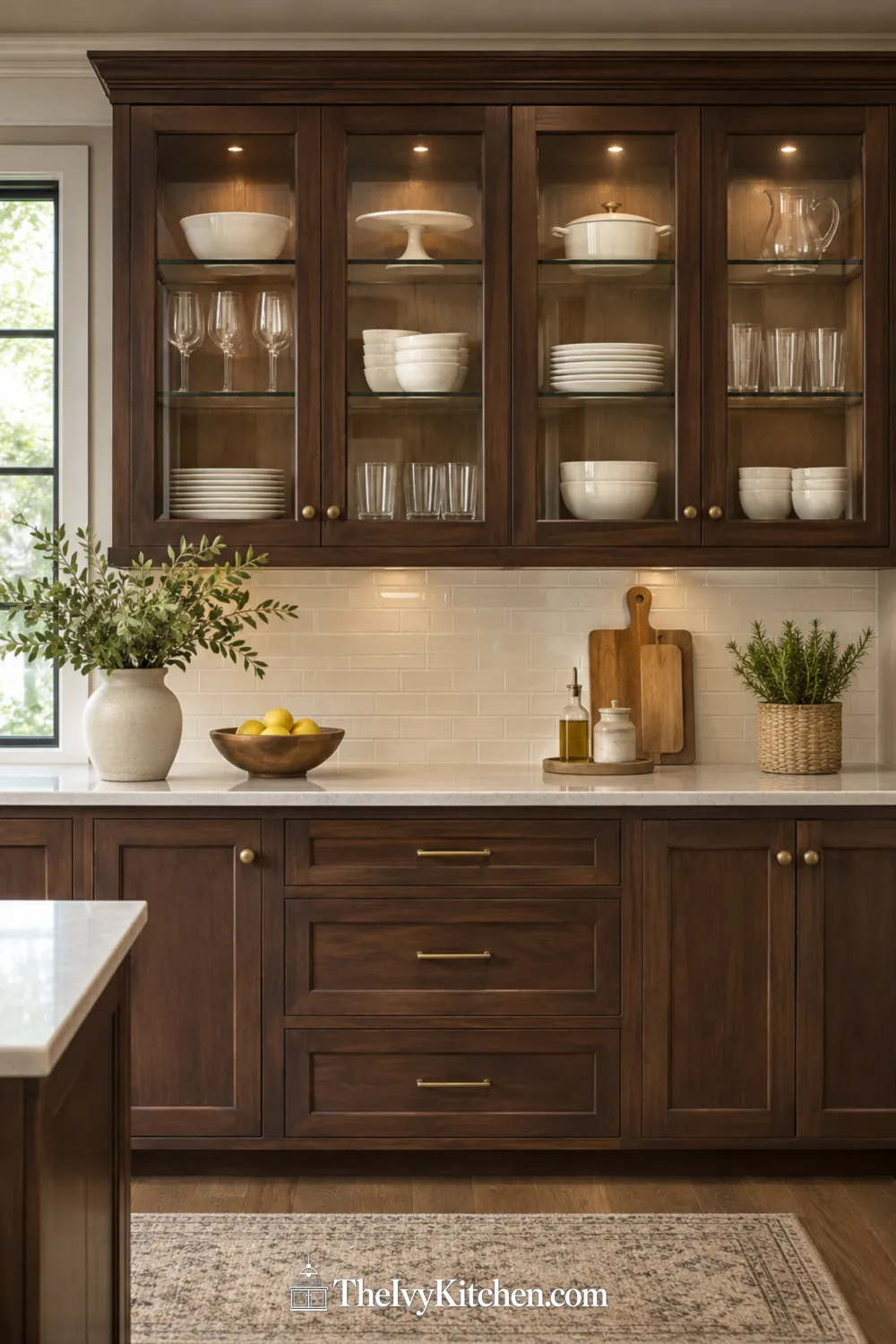
Glass-front upper cabinets bring a different rhythm to a wall of dark wood. A pair of glazed doors can reveal dishes and shelf lines, giving the eye more to read than a continuous row of solid fronts. Keep the dark wood frame to maintain the connection with the lower cabinets.
Choose a few everyday pieces to display rather than filling every shelf edge to edge. Clear glass keeps the contents visible, while textured glass gives them a softer outline. If you include cabinet lighting, plan it with the cabinet supplier and electrician so the fittings and wiring work with the actual cabinet construction.
9. Open Up One Section With Oak Floating Shelves
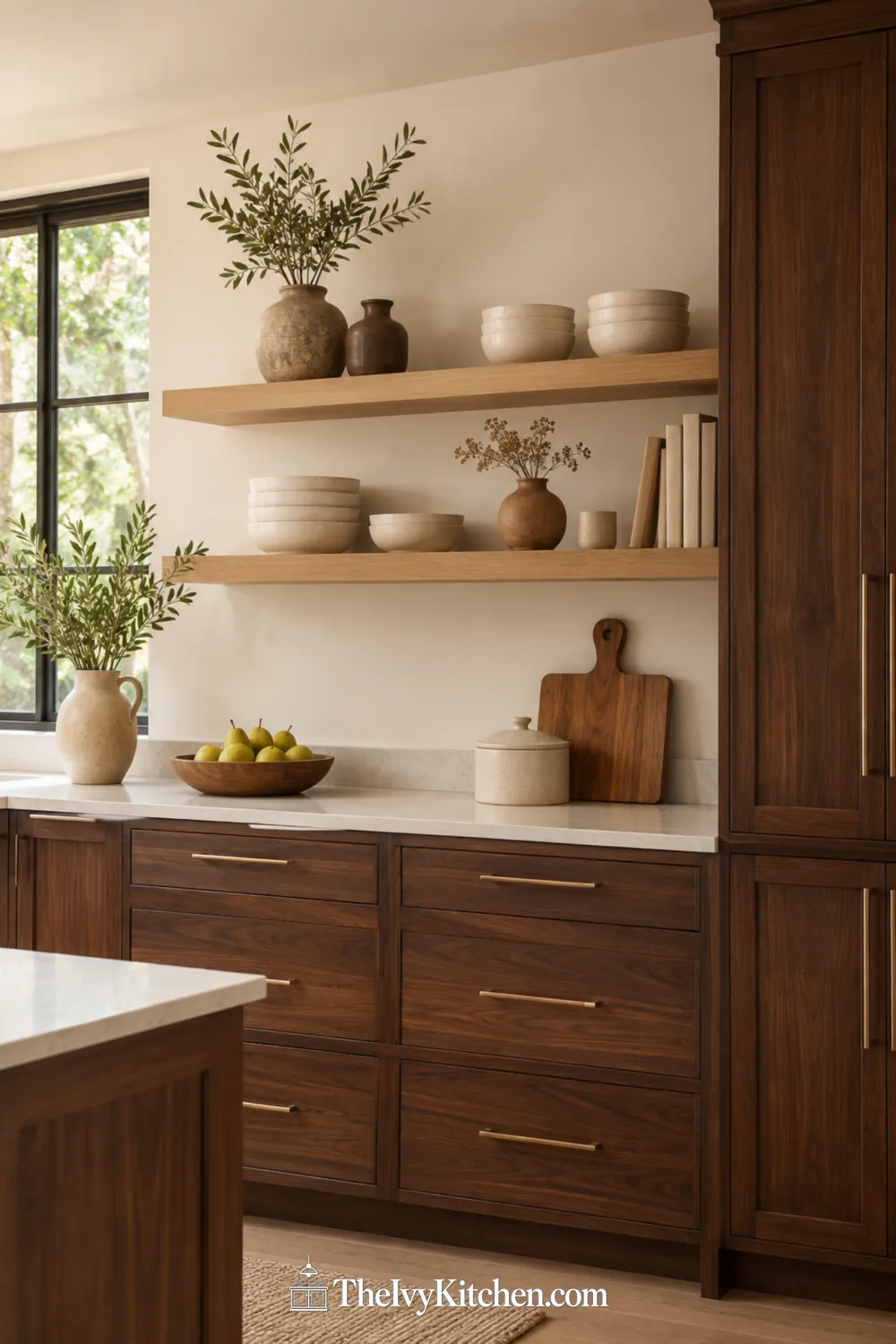
Replacing one small section of upper cabinetry with oak floating shelves changes the balance of a dark wood kitchen. The lighter shelves create a transition between the deeper cabinet color and a pale wall, while leaving space for frequently used bowls or a few decorative pieces.
Keep this an intentional section rather than scattering shelves across every available wall. Repeat the lighter wood in a stool or cutting board if you want the contrast to feel connected. Before installation, check the wall construction, shelf hardware, and intended load with your installer. The finished styling should follow what the shelves can actually support.
10. Run Tall Cabinets Along One Side of a Galley
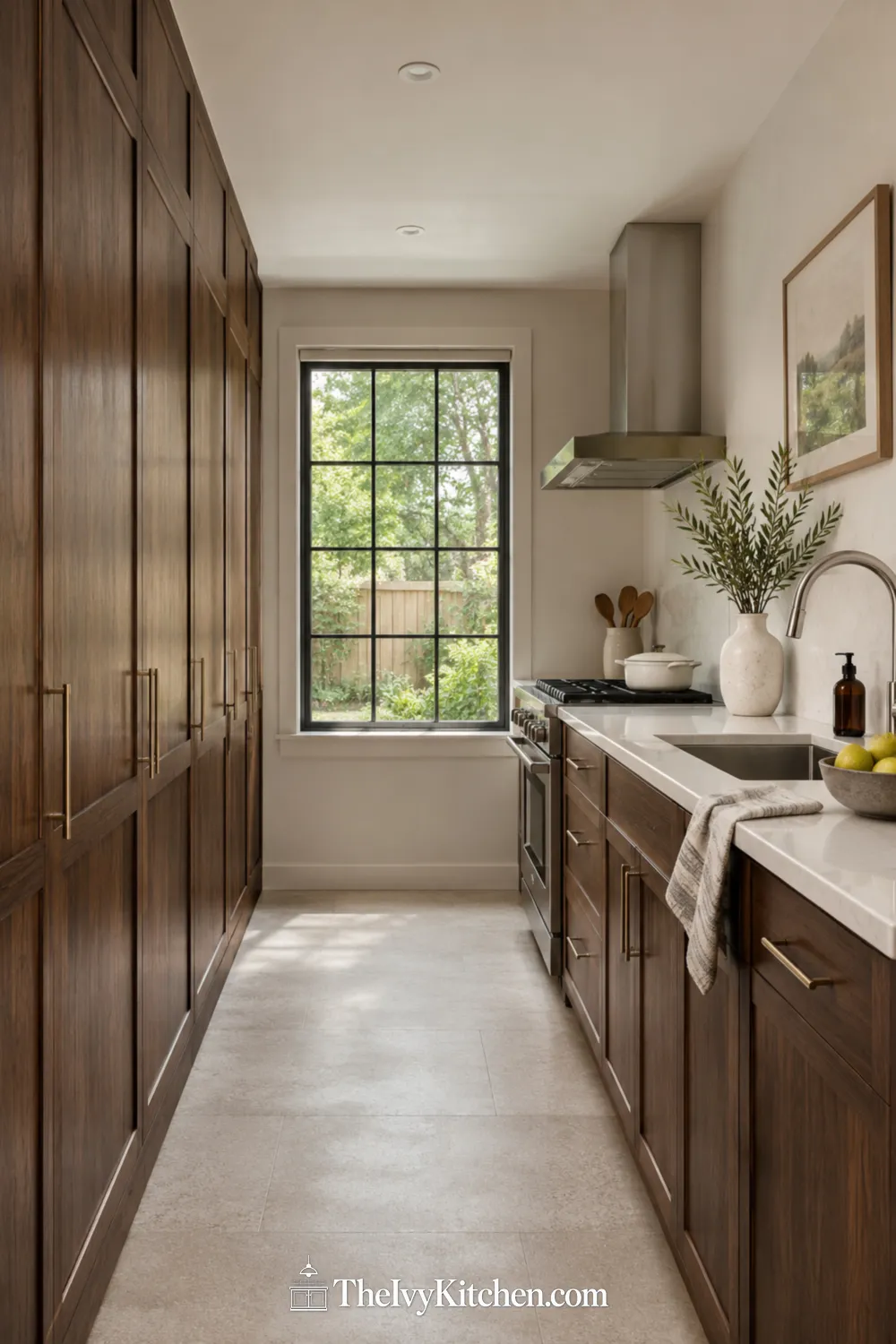
In a narrow kitchen, concentrating tall dark cabinets along one side can create a more organized visual line. Keep the opposite side lighter, with a pale backsplash and fewer upper elements, so the two walls do not compete equally. A window at the end gives the layout a natural focal point.
This approach works best when the storage plan follows how you use the room. Place everyday items near the relevant work area, and check appliance door swings against the walkway before finalizing cabinetry. Use the contrast as a design guide, while basing the actual layout on measured dimensions and your household’s needs.
11. Mix Mahogany Tones With Creamy Stone
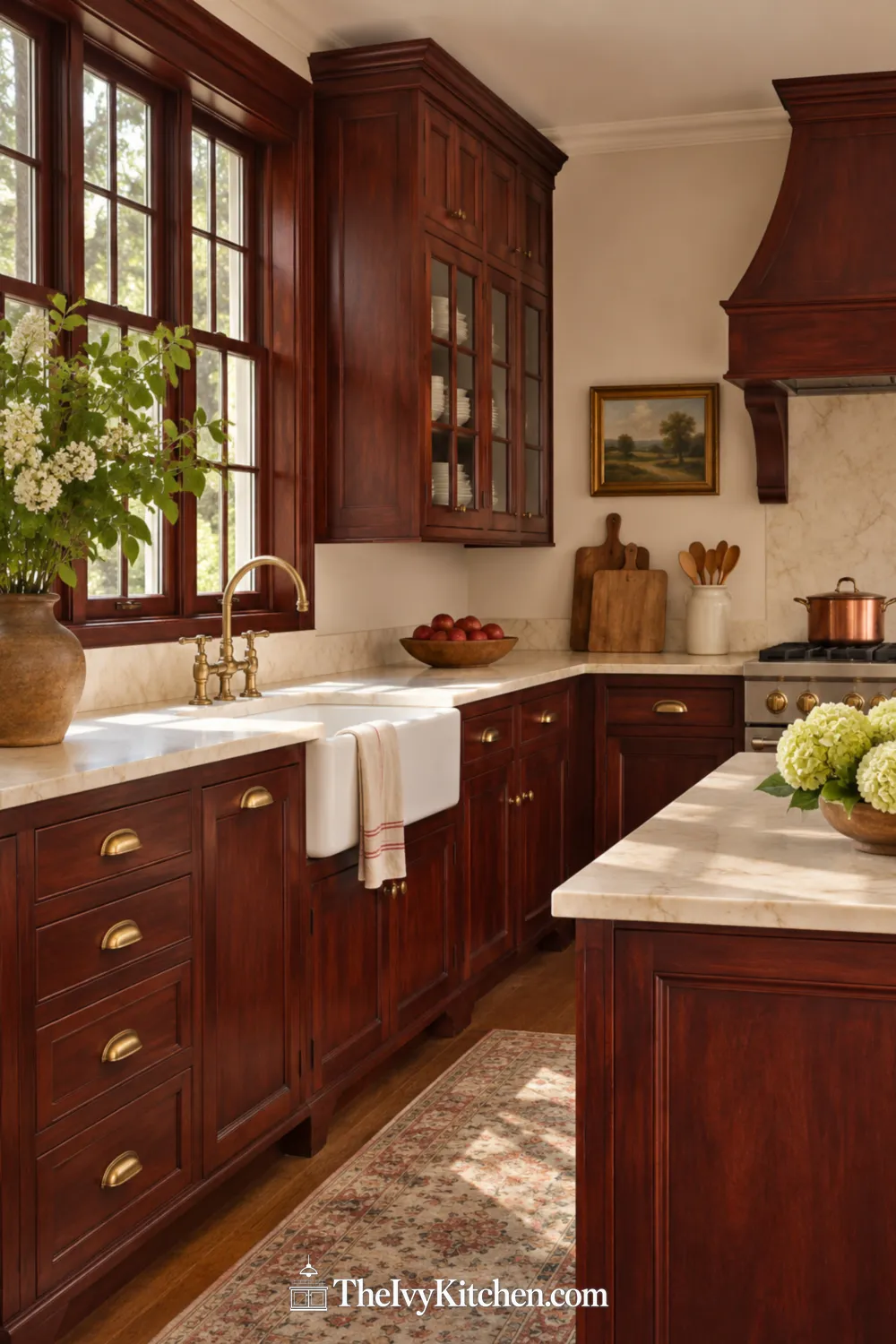
Mahogany-toned cabinetry brings a reddish warmth that reads differently from the cooler brown of some walnut finishes. Creamy stone and soft off-white walls can give that color enough room without adding another strong hue. Keep the stone pattern restrained if the wood already has a lively grain.
Warm metal hardware can reinforce the palette, but use samples to check the combination rather than relying on a screen image. Red-toned wood looks different beside pinkish beige, yellow cream, and neutral white. A larger finish sample makes those relationships easier to compare before you choose the surrounding surfaces for the whole kitchen.
12. Let Knotty Alder Bring a Rustic Note
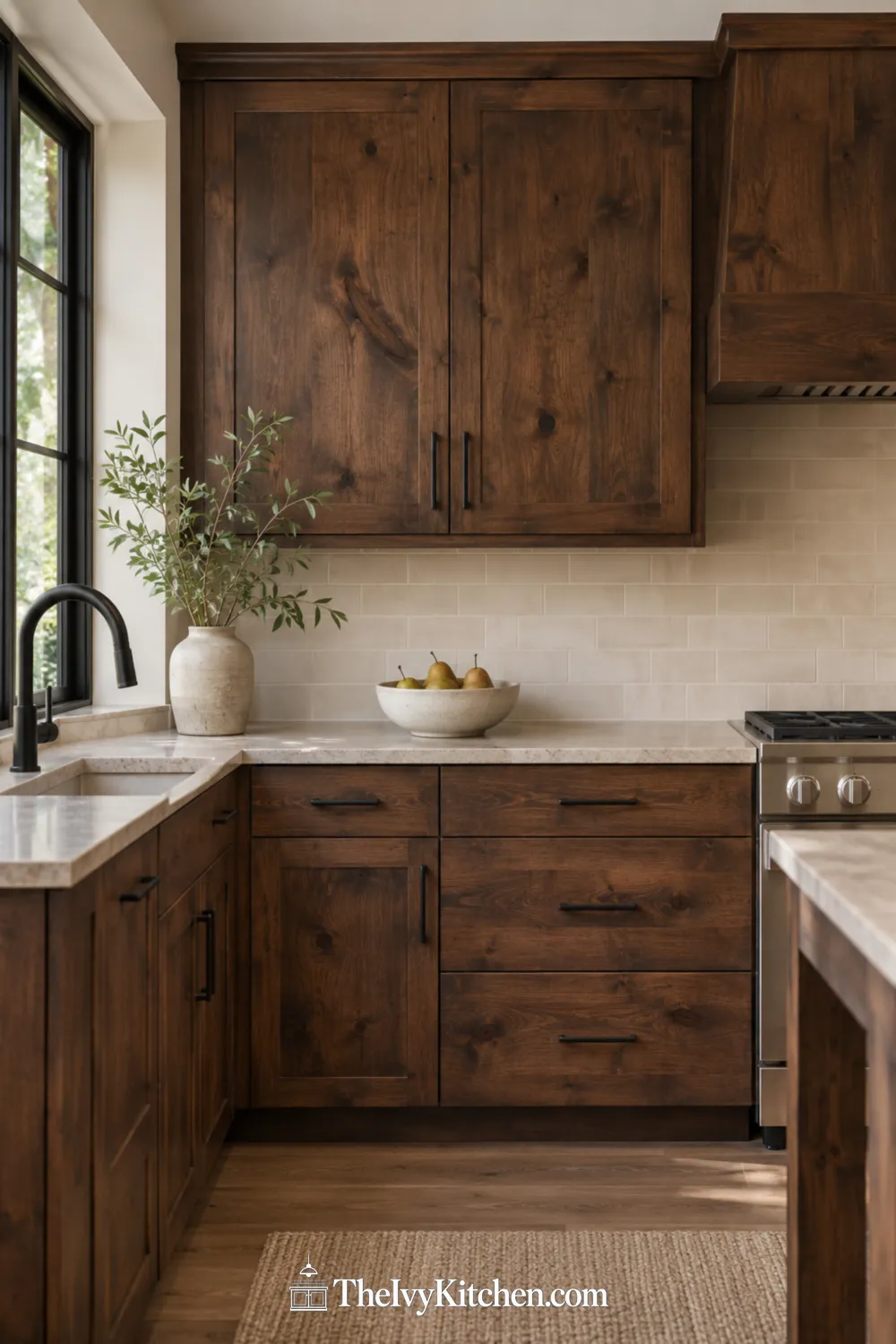
Dark-stained knotty alder gives cabinetry a more irregular, lived-in appearance through its visible knots and varied grain. Pair it with uncomplicated cabinet profiles and a restrained backsplash so those natural markings stay part of the design. A few darker metal accents can support a rustic direction without turning every surface into a feature.
Ask to see representative finished samples, since the distribution of knots will vary across real doors and panels. If you prefer a quieter result, discuss that preference before ordering rather than expecting every piece to match a single sample. Keep nearby accessories simple enough to let the wood remain the main texture.
13. Wrap the Island in a Matching Wood Waterfall
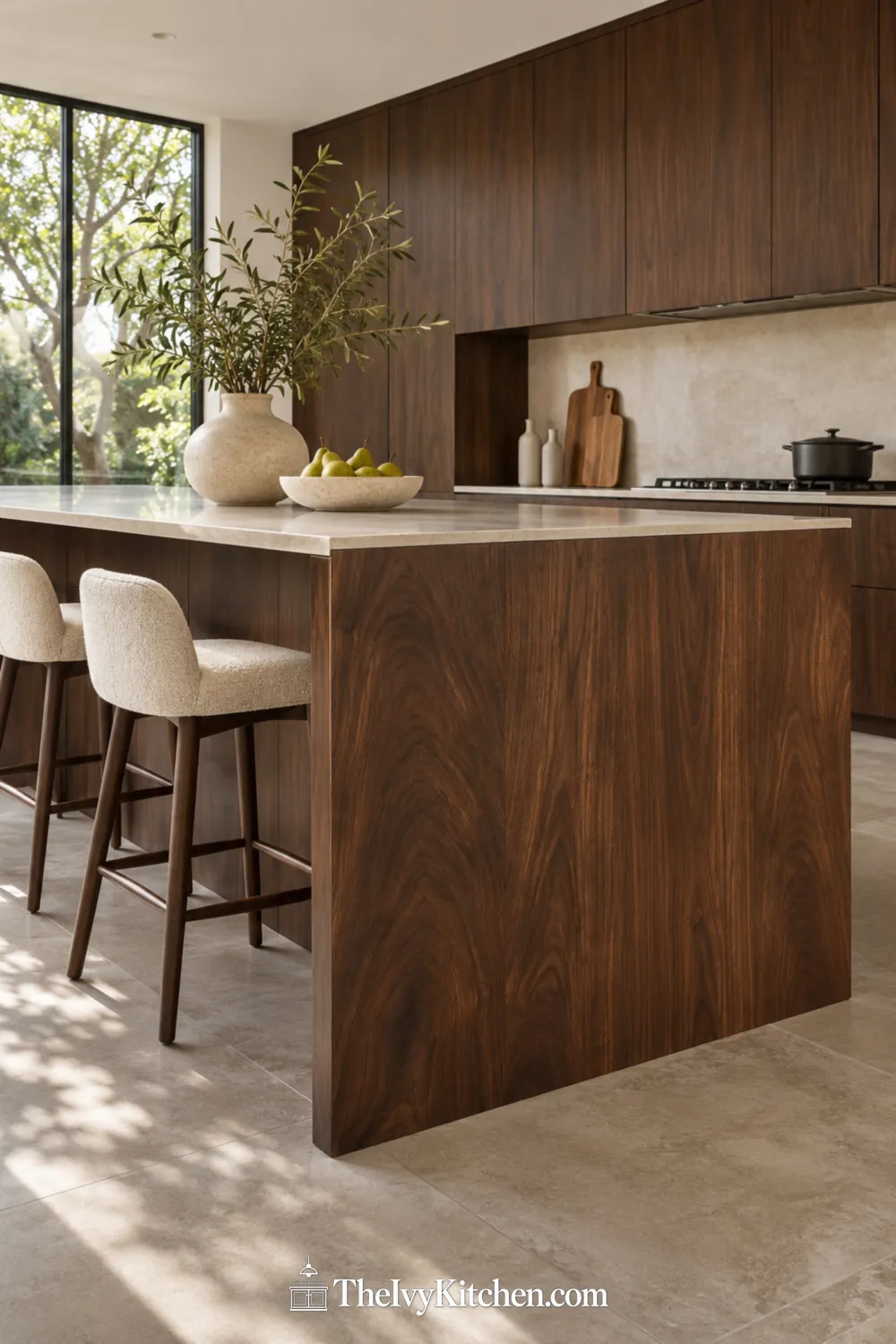
A matching wood waterfall end gives a dark cabinet kitchen a sculptural focal point. The vertical panel carries the cabinet material down to the floor at the island end, while a light countertop keeps the upper surface distinct. This works especially well when the surrounding cabinet fronts are simple and the grain remains the main decorative element.
Treat the island end as a visible furniture surface when choosing the veneer layout or panel finish. Ask your cabinetmaker how the edges and grain direction will meet in the actual construction. Leave the nearby styling restrained so the shape and material remain easy to appreciate.
Choose the relationship you want to emphasize first: dark wood against pale surfaces, wood beside a second cabinet color, or a deeper palette with layers of texture. Then build the other finishes around that decision. Save the ideas that suit your room, and compare real material samples before committing to a full cabinet and countertop combination.