
A kitchen corner can hold far more than a stack of cans you can barely reach. The challenge is choosing storage that fits the space and lets you see what you already have. These corner pantry ideas cover step-in layouts, tall cabinets, door options, and smaller upgrades for existing shelves.
Some suit a kitchen remodel, while others start with the pantry you use today. As you browse, think about your grocery habits, the room needed to open doors, and the items that keep getting lost at the back. A useful pantry should make everyday cooking feel less scattered.
1. Wrap Two Walls With L-Shaped Shelves
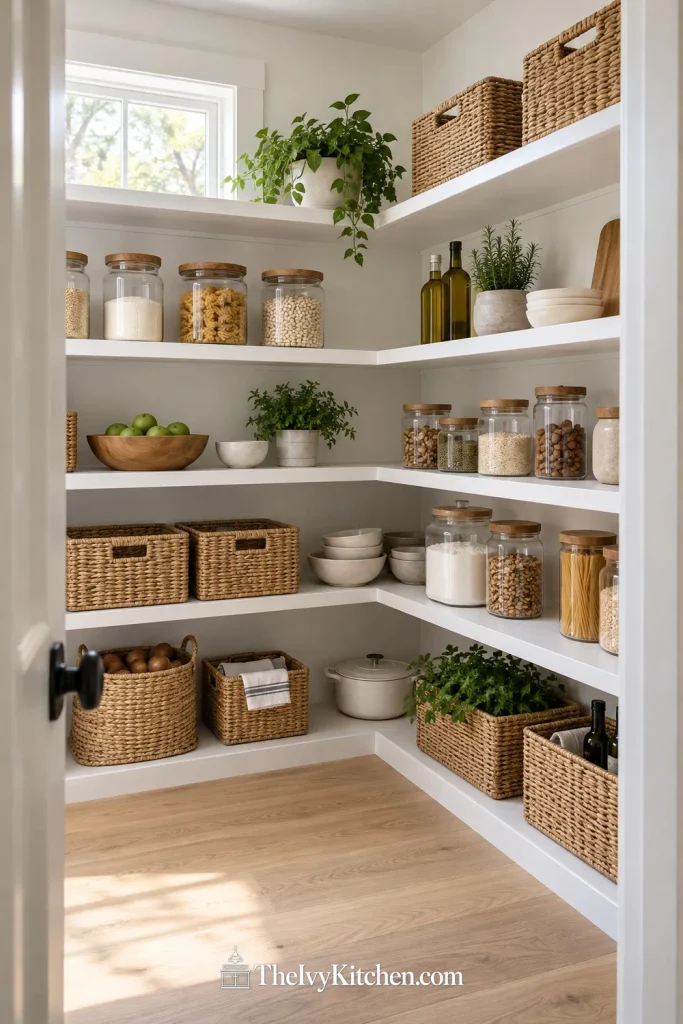
An L-shaped pantry uses two adjoining walls while leaving the middle open for you to step inside. It is a straightforward starting point when you want more storage without surrounding yourself with shelves on every side. White shelving and a light wood floor keep this compact layout visually calm.
Give the inside corner a job, such as holding a basket of baking supplies, rather than letting loose packets collect there. Before planning shelf depth, place your largest everyday containers against the wall and check how comfortably you can reach them. Keep frequently used ingredients near the entrance.
2. Use a U-Shaped Layout in a Wider Pantry
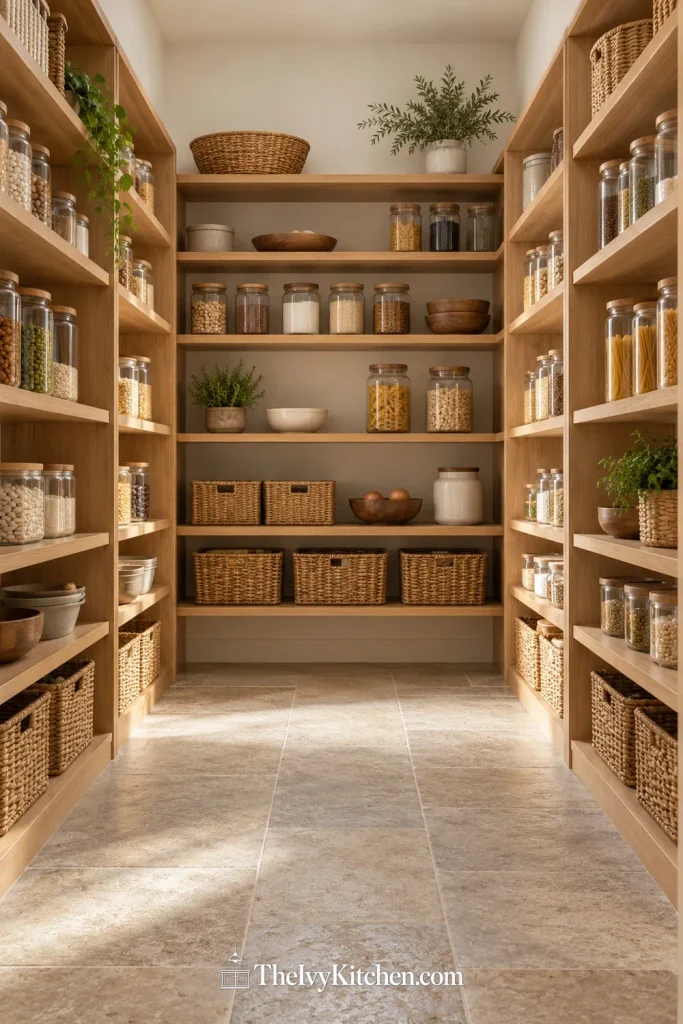
If your corner pantry has enough interior room, shelves on three walls create separate zones for breakfast, baking, and dinner staples. The U-shaped arrangement works best when the center remains comfortable to stand in and the shelving does not make the entrance feel pinched.
Warm oak shelves can give the room a finished look without adding much decoration. Start by taping the proposed shelf edges on the floor, then walk through the space with a grocery bag. If the middle feels cramped, use a shallower shelf on one side or return to an L-shaped plan.
3. Create an Angled Entrance Between Cabinet Runs
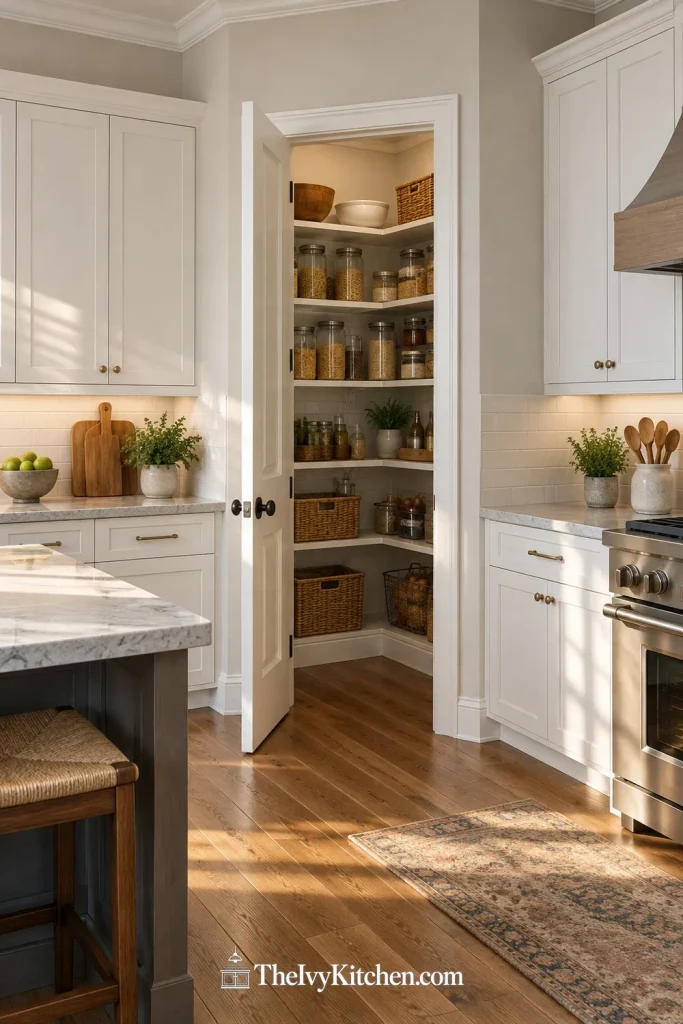
An angled pantry places its doorway across the kitchen corner, between two perpendicular cabinet runs. This layout can make a corner storage room feel connected to the kitchen rather than tucked behind one bank of cabinets. Matching the trim and door finish to nearby cabinetry helps the entrance settle into the room.
The diagonal wall takes up real floor space, so sketch its footprint before committing. Check the refrigerator, nearby drawers, and pantry door in their open positions. Inside, use shelving along the back walls and avoid filling the entry with bins that interrupt your first step.
4. Choose a Reach-In Pantry With Bifold Doors
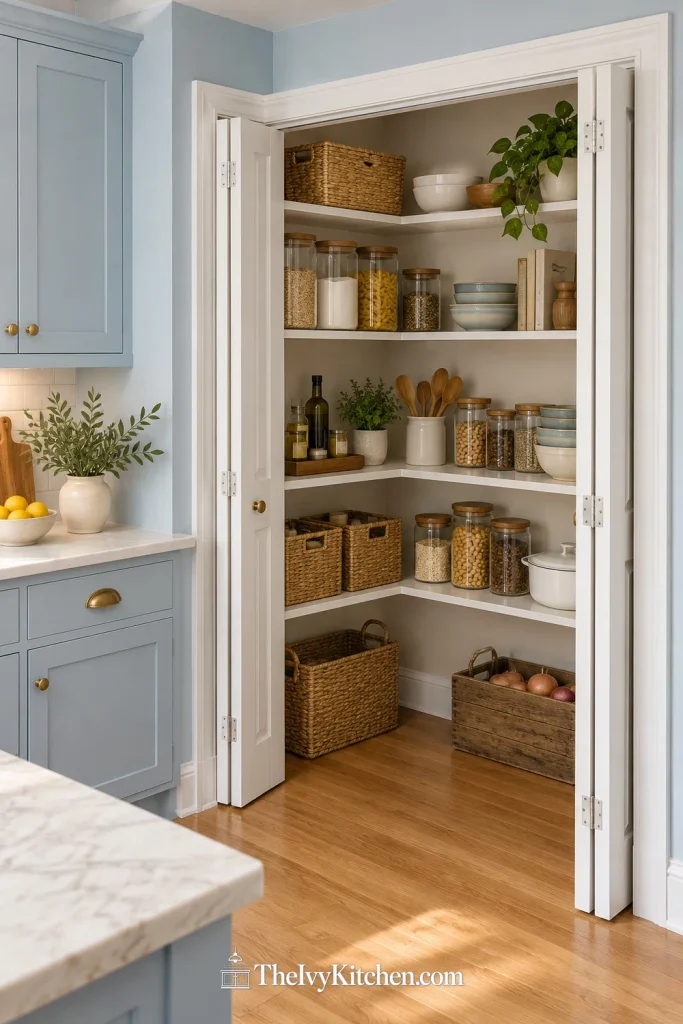
A reach-in corner pantry gives you storage without reserving floor area for standing inside. Bifold doors fold toward the sides, exposing the shelves from the kitchen. This approach suits a shallow corner closet where a conventional swinging door would feel cumbersome.
Keep the most-used shelves within a comfortable reach from the opening. Large baskets may look tidy, but check that they slide past the folded doors and hinges without catching. A few shallow shelves wrapping the corner are often easier to use than a deep cavity. Plan an unobstructed spot to stand while choosing ingredients.
5. Fit a Tall Pantry Cabinet Into the Corner
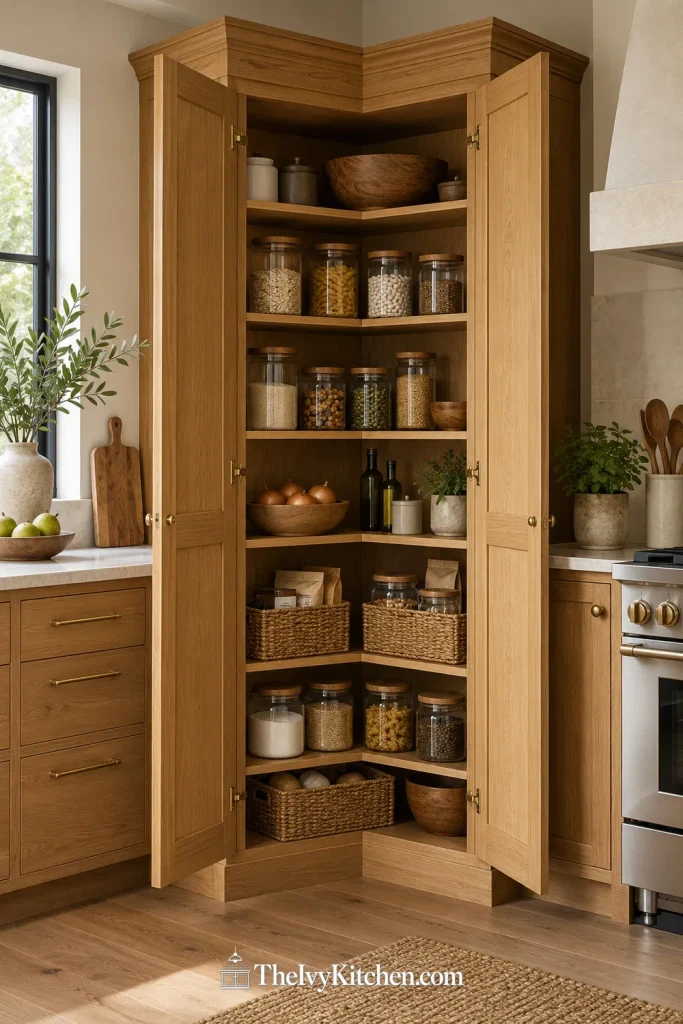
A tall corner cabinet offers enclosed food storage when a separate pantry room is not part of the plan. Doors conceal mixed packaging, while shelves can hold dry groceries, serving pieces, and larger containers. An oak cabinet adds warmth and can become a clear focal point in a neutral kitchen.
The cabinet’s shape matters as much as its height. Ask to see the usable interior and door opening before choosing a design. Deep corners can still hide ingredients, so reserve the farthest section for a removable bin of backup supplies. Keep everyday items closer to the front.
6. Add a Slim Pull-Out Pantry Beside the Corner
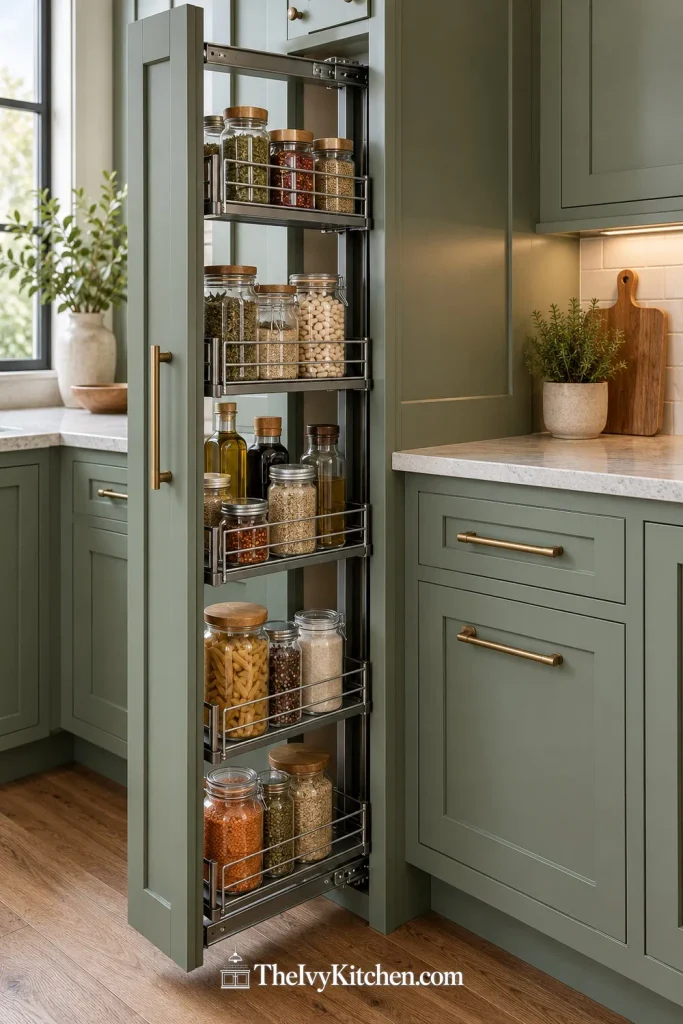
A narrow pull-out tower can complement corner cabinetry when a slim vertical space remains beside it. Instead of reaching into a deep cabinet, you pull the stored groceries outward and view them from the side. This is especially useful for small jars and bottles that disappear behind taller packages.
Choose the hardware around the actual cabinet opening and the weight of the contents, following the manufacturer’s specifications. Check that the extended unit will not meet an island or appliance handle. Arrange heavier items lower down, and avoid overfilling the baskets so containers stay within their edges.
7. Bring Blind-Corner Storage Out With Swing-Out Trays
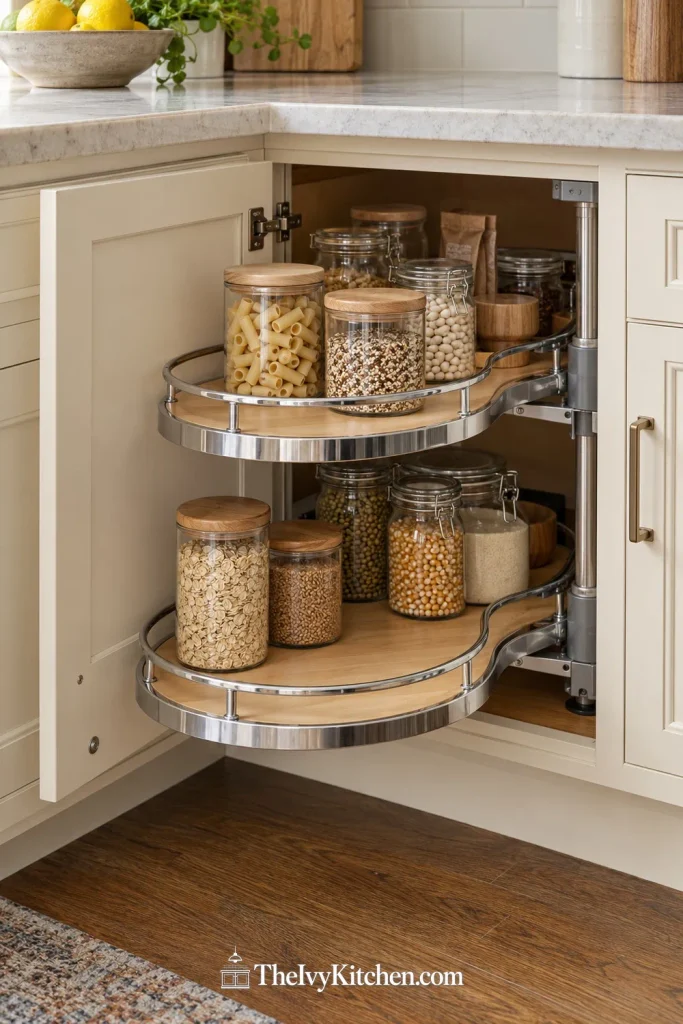
If your pantry storage lives in a lower blind-corner cabinet, swing-out trays offer a different way to reach the back. Shaped trays pivot through the opening, bringing groceries toward you. They can be useful when the corner cannot become a walk-in pantry and fixed shelves leave too much hidden space.
These systems need compatible cabinet dimensions, hinges, and clearances. Use the hardware maker’s fitting information rather than guessing from the door width alone. Store grouped dry goods on the trays and leave space around the moving edges. The mechanism may trade some storage volume for easier access.
8. Keep a Corner Pantry Open to the Kitchen
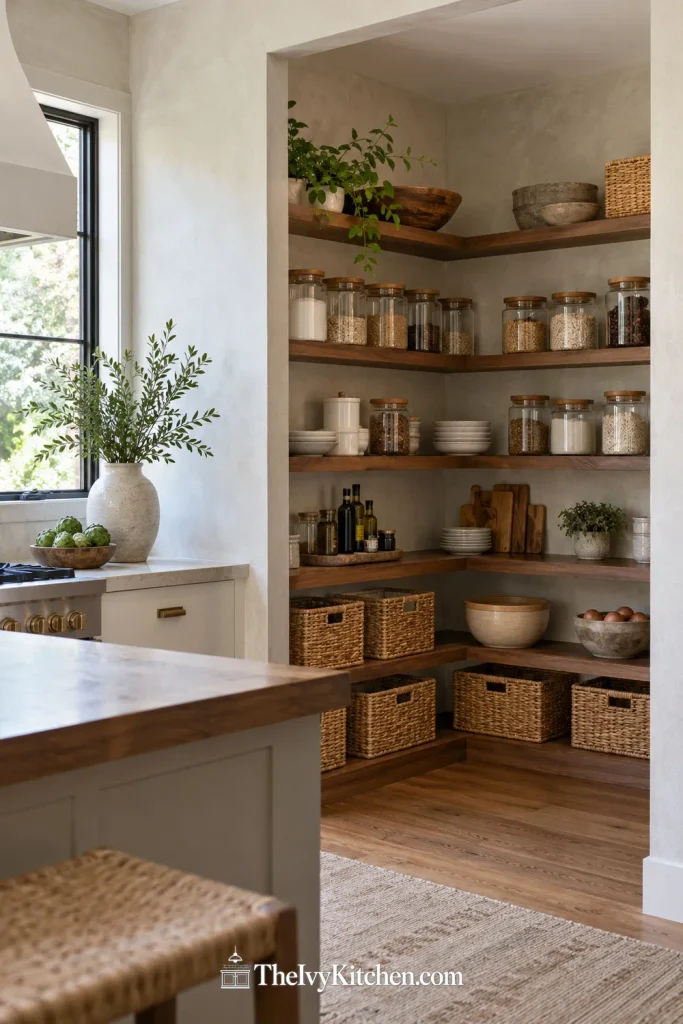
An open corner pantry removes the door entirely and makes ingredients part of the kitchen’s visible storage. Walnut shelves, plain containers, and a small group of baskets can make the nook feel intentional without hiding every grocery package. It is a useful option when you want quick access and no door swing.
Be realistic about what you enjoy seeing each day. Put visually busy packets in easy-to-lift bins and leave some space between groups. Choose a corner away from frequent cooking splashes when possible. Since the contents stay exposed, include shelf wiping in your regular kitchen cleanup.
9. Use Shallow Shelves to Keep Food in View
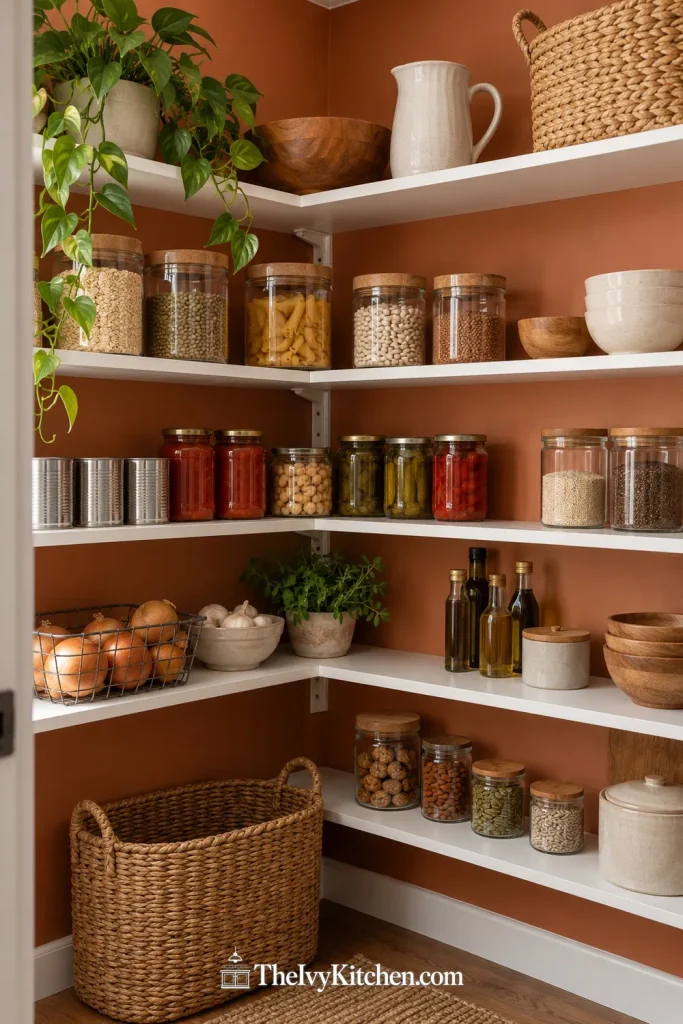
Deep shelves can look generous while hiding half the groceries behind the first row. Shallower wraparound shelving takes a different approach: fewer layers, clearer sightlines, and less searching. This can be especially helpful in a small corner pantry where every reach should feel manageable.
Measure the containers you actually buy before choosing shelf depth. A row of cans needs a different footprint than a large flour bin. Reserve a separate deeper section for bulky items if necessary. In the corner itself, avoid stacking small packages behind one another, and group related ingredients in a single removable container.
10. Install Adjustable Shelves for Changing Groceries
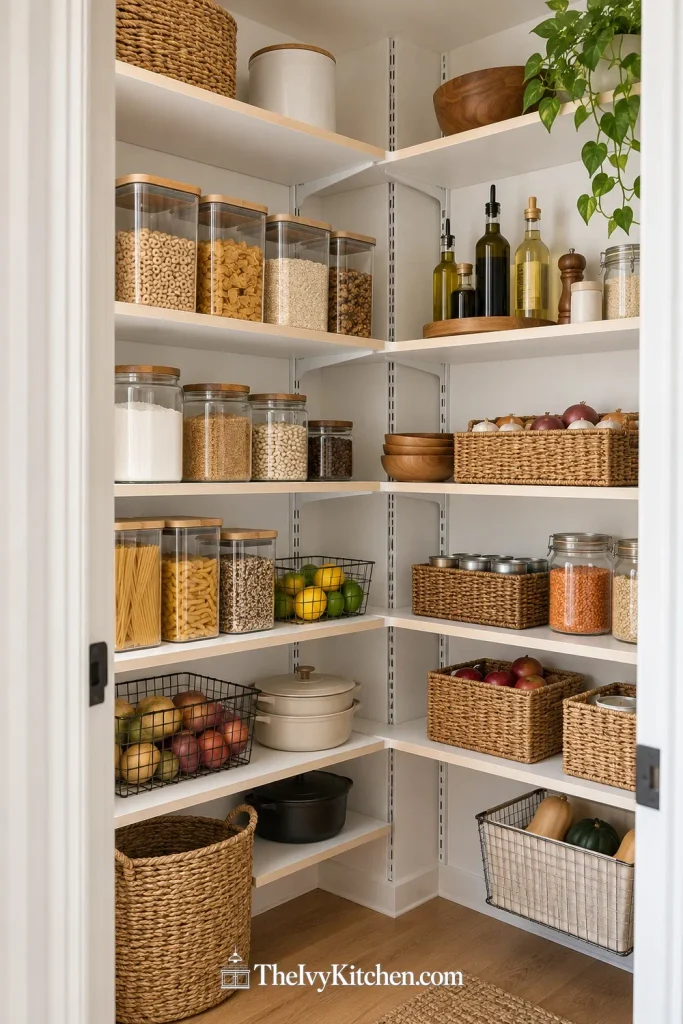
Adjustable corner pantry shelving lets the layout change when your storage needs do. Tall cereal containers can have their own space, while shorter jars sit on shelves closer together. Visible wall standards give a simple pantry a practical finish and make the shelf arrangement easy to understand.
Lay out your tallest containers first, leaving room to lift them out rather than just squeeze them in. Plan support at shelf ends and corner joints using a system suited to the wall and expected load. Check the manufacturer’s limits before filling shelves with cans or heavy countertop appliances.
11. Place Turntables in Hard-to-Reach Shelf Corners
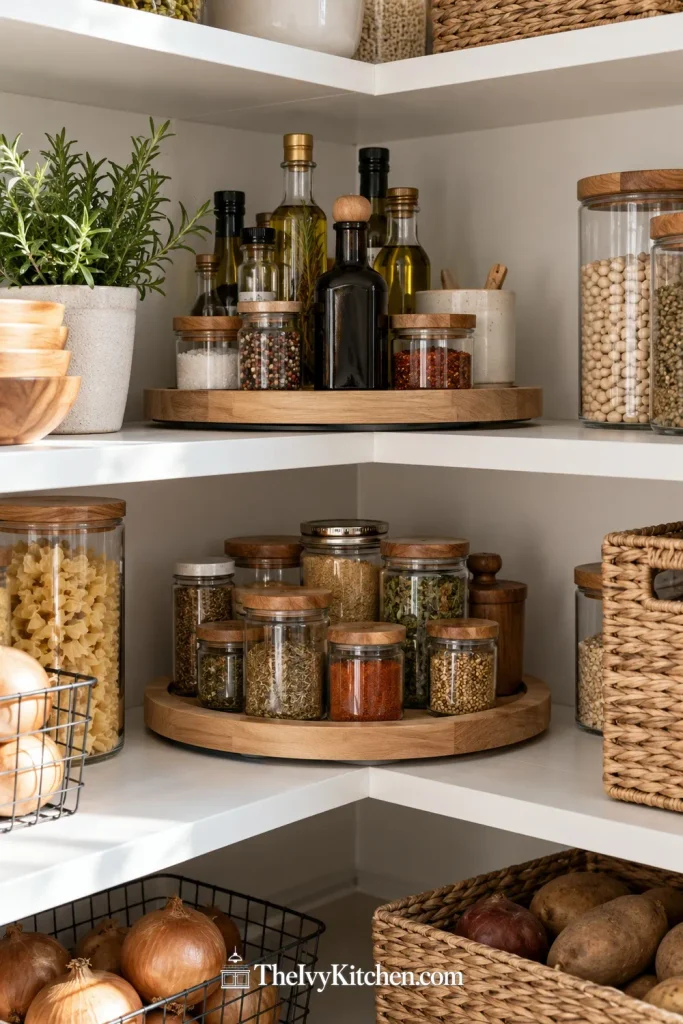
A turntable gives the inside corner of a fixed shelf a specific purpose. Instead of reaching around bottles, you rotate the group until the item you need faces you. Smaller oils, condiments, and baking extracts are good candidates when their containers fit securely on the surface.
Measure the available shelf area and test the full rotation before loading it. A turntable that rubs against the wall or nearby bins will quickly become frustrating. Keep taller bottles where you can see and lift them comfortably. You do not need one on every shelf; start with the most awkward corner.
12. Replace Lower Shelf Stacks With Drawers
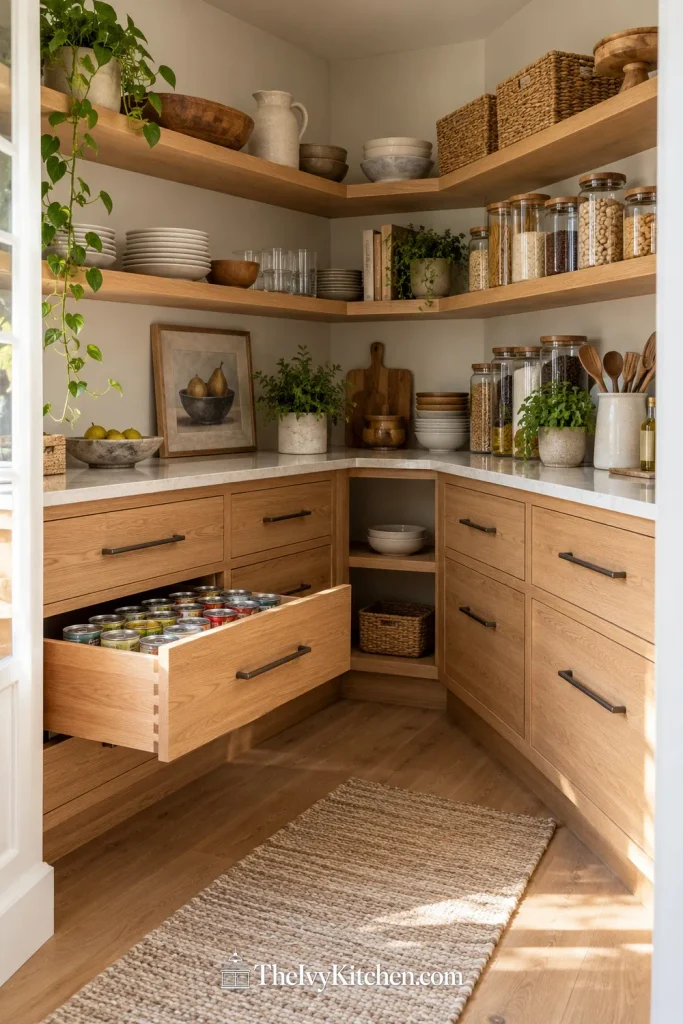
Lower pantry drawers bring stored food out into the open instead of asking you to crouch and search behind a basket. Deep drawers can hold cans upright, while dividers keep packets from collapsing into a pile. Pairing oak drawers with open upper shelves creates a useful mix of concealed and visible storage.
On an L-shaped run, keep drawers on straight sections and plan how their fronts meet near the corner. Two drawers should not need to occupy the same space when opened. Check slide ratings for your intended contents, and keep the heaviest groceries in the lower drawers.
13. Put Shallow Storage on the Pantry Door
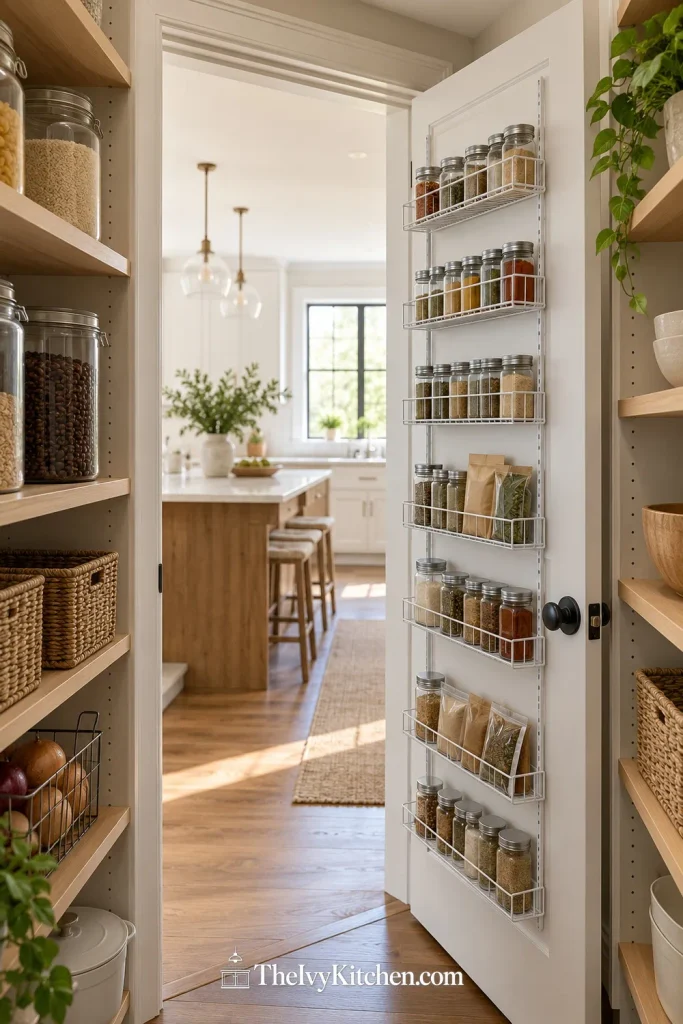
The back of a hinged pantry door can hold small items that otherwise drift across deep shelves. Shallow racks give seasoning jars, snack packets, and wraps a defined place. This upgrade is particularly useful when the pantry’s main shelves already work but small categories keep getting mixed together.
Check the gap between the closed door and the shelf fronts before buying a rack. Account for the stored contents as well as the rack itself. Use a mounting method appropriate for the door’s construction and the organizer’s instructions. Start with lighter items and confirm that the loaded door closes freely.
14. Include a Counter for Small-Appliance Storage
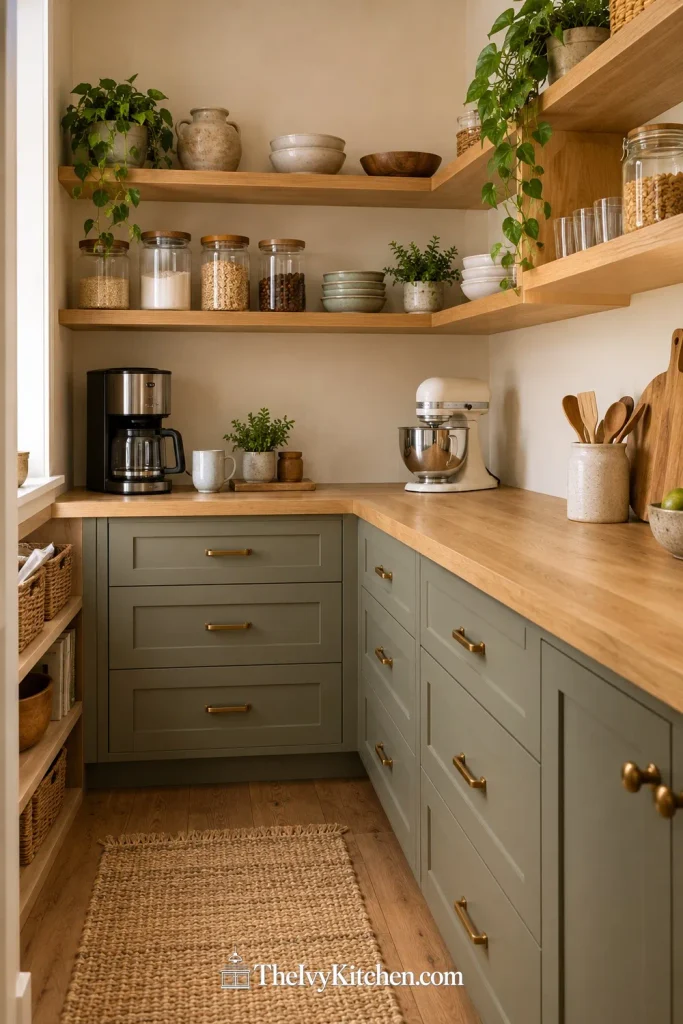
A corner appliance pantry combines food storage with a landing surface for a mixer, coffee maker, or other bulky equipment. An L-shaped counter keeps those pieces off the main kitchen worktop, while shelving above can hold ingredients and everyday dishes. Leave a usable stretch of counter rather than filling every inch.
Decide whether the appliances will simply be stored here or operated here. Operating requirements depend on the appliance, including ventilation, overhead clearance, and electrical needs. Follow its instructions and have any new electrical work assessed by a qualified professional. Avoid treating a tightly enclosed shelf as an appliance workstation.
15. Use a Sliding Door Where the Wall Allows It
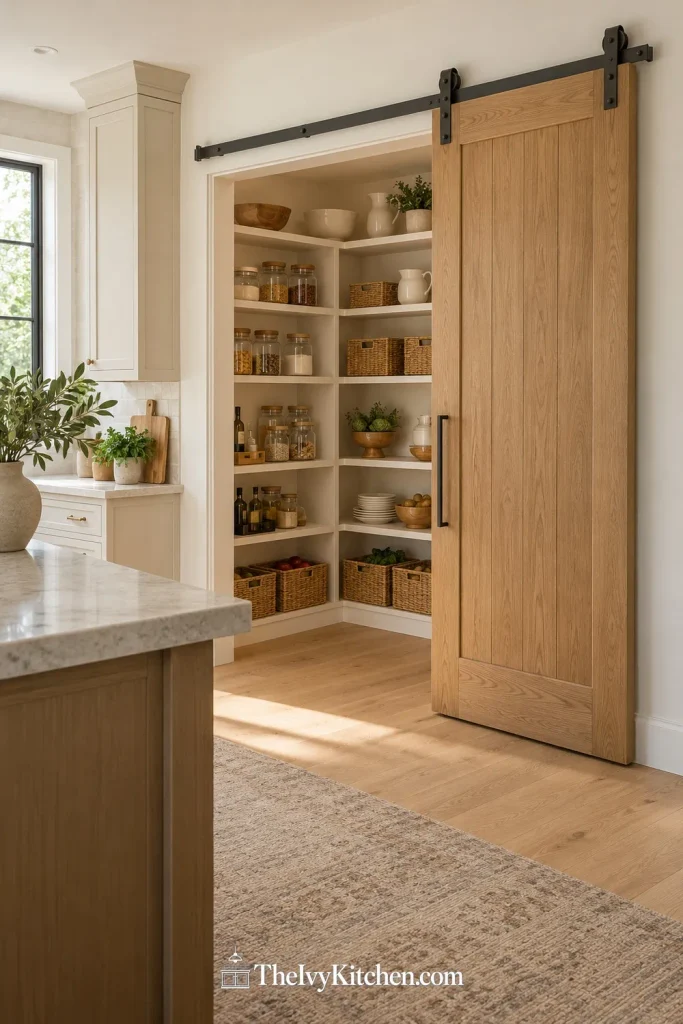
A surface-mounted sliding pantry door can free the area that a hinged door would sweep across. A simple oak panel adds warmth while leaving a wide view into the pantry when open. The useful detail is the clear stretch of wall beside the doorway, which the panel needs for travel.
Look for switches, outlets, cabinet handles, and furniture that could interfere with that path. Sliding hardware also needs suitable support and installation clearances. Unlike a hinged door that closes against a stop, many surface-mounted designs leave gaps around the edges, so consider how much concealment you want.
16. Hide the Entrance Behind Matching Cabinet Fronts
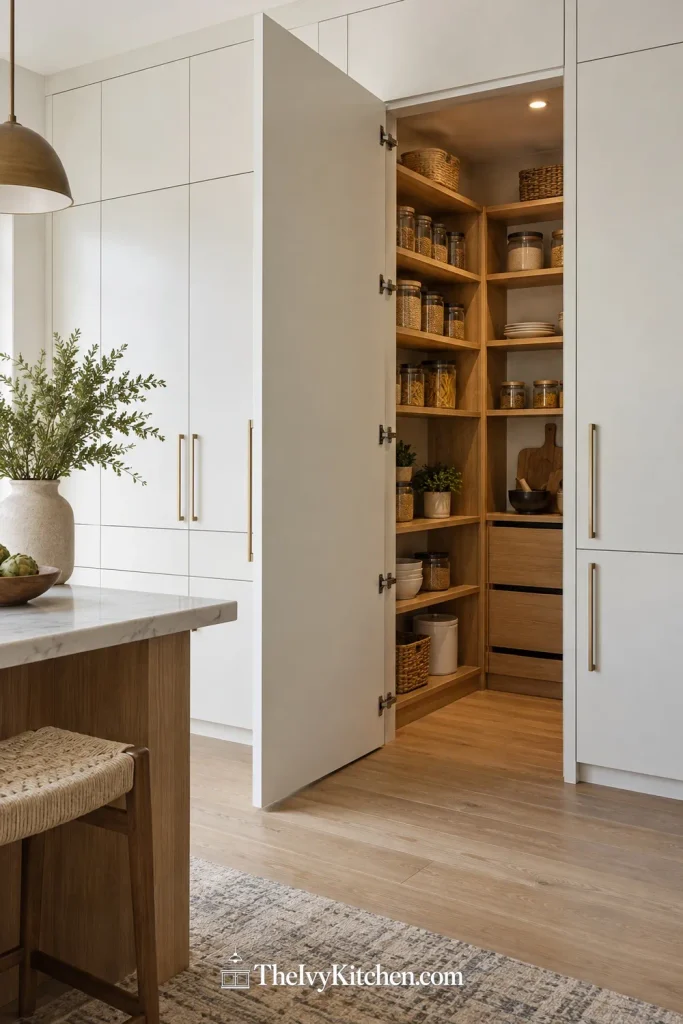
A concealed pantry entrance uses a full-height door that resembles the surrounding kitchen cabinets. This keeps a busy corner visually quiet while allowing a separate storage room behind it. White fronts and simple hardware can make the doorway read as part of one continuous cabinet wall.
Treat this as a custom door project, not just a decorative panel. The opening, hinges, handle, and door weight all need to work together. Check that the door can open comfortably without hitting an island or adjacent cabinetry. Inside, ordinary shelves can keep the pantry practical even when the exterior looks more tailored.
17. Build a Simple Corner With Modular Shelving
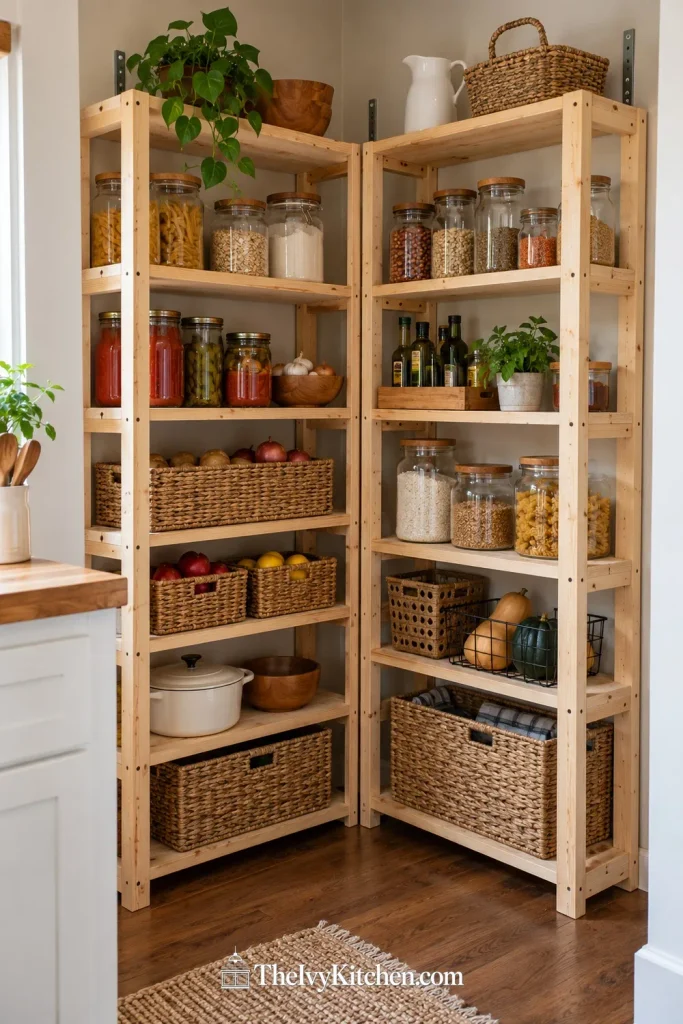
Two separate shelving units can form a corner pantry without custom cabinetry. Arrange them at right angles in an available kitchen alcove, using plain pine shelves and baskets to give the setup a consistent look. This approach lets you try a layout before investing in a permanent built-in.
Check how the units meet so one does not block access to the other’s shelves. A small gap may be more useful than a cramped overlap. Choose units rated for the intended load and secure them according to their instructions. Keep the floor route clear rather than filling the remaining corner with loose grocery bags.
Start with the part of your pantry that slows you down: the entrance, a deep corner, or shelves that no longer fit your groceries. Choose a layout or upgrade that solves that problem before adding containers and finishing touches. Save your favorite corner pantry ideas, then compare them with your kitchen measurements and the food you store every week.