
A kitchen can feel nostalgic without looking like a movie set. The most inviting vintage kitchen ideas give you something familiar, whether that’s warm wood cabinetry, a cheerful breakfast table, or everyday dishes displayed where you can reach them.
You don’t need to commit to one decade or replace everything you own. Start with the details you genuinely enjoy, then balance them with the storage and conveniences your household uses.
These ideas range from small decorating choices to larger renovation features, so you can build a room that feels collected rather than coordinated.
1. Let Warm Wood Cabinets Set the Tone
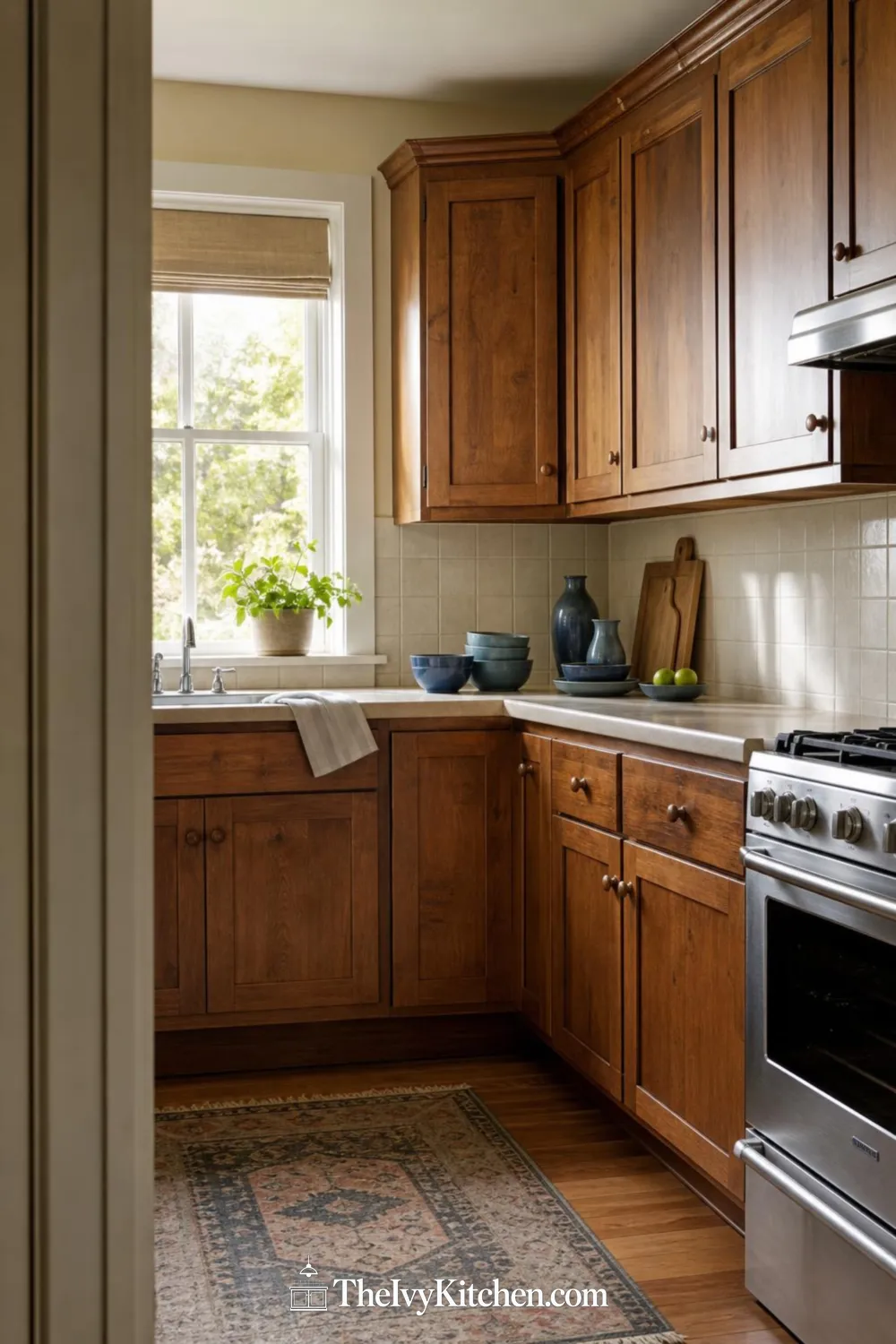
Brown cabinets can give your kitchen an established, lived-in feeling, especially when you let the wood grain remain part of the design. Rather than surrounding them with more dark finishes, pair them with creamy walls, a light backsplash, and a few colorful dishes. That contrast keeps the room warm without making every surface compete.
If you’re keeping existing cabinetry, consider its overall condition before deciding what to change. Simple knobs, restrained counter styling, and a complementary wall color may be enough to shift the mood. Aim for a timeless kitchen design rather than an exact period reproduction.
2. Give the Floor a Checkerboard Pattern
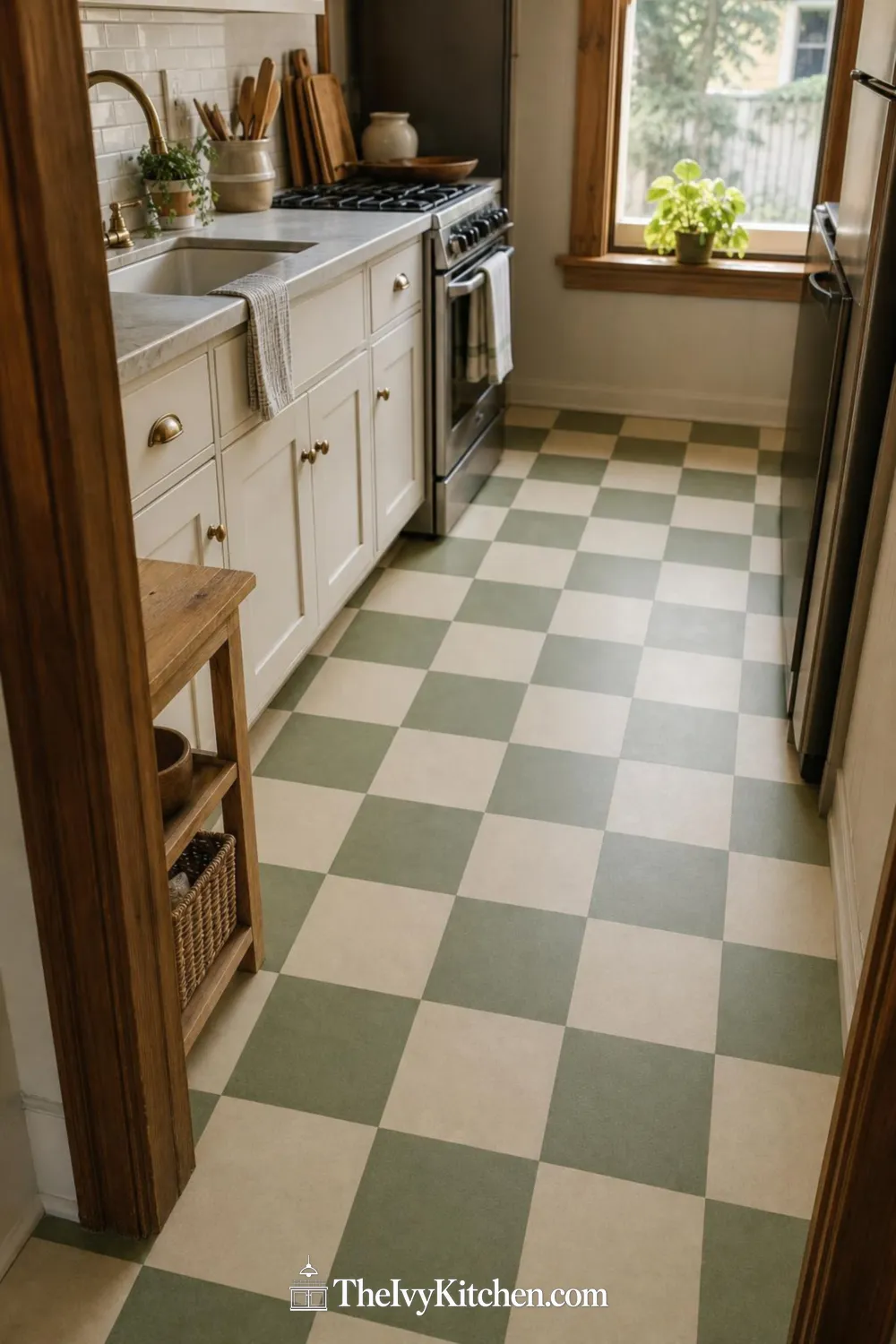
A checkerboard floor introduces a recognizable vintage note without requiring every cabinet and accessory to follow the same era. Black and cream feels graphic, while muted green and ivory offers a softer variation. Keep nearby finishes relatively quiet so the pattern has room to stand out.
Scale matters visually: a smaller room can look busy when the floor, wallpaper, and backsplash all carry strong patterns. Bring home material samples and view them beside your cabinets before committing. If you’re renting or working around existing flooring, let a checkered washable rug provide a smaller version of the look.
3. Make a Farmhouse-Style Sink the Focal Point
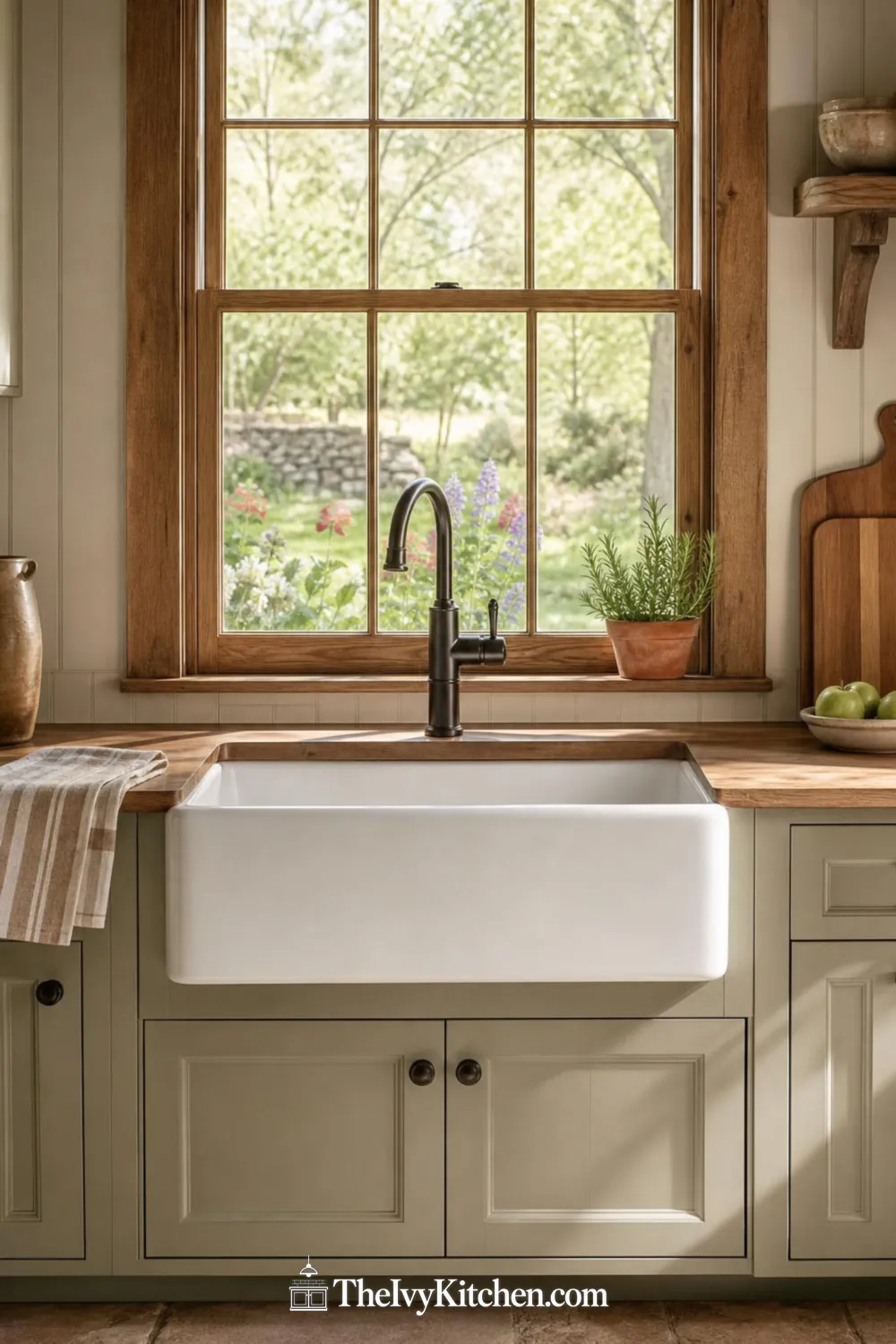
An apron-front sink brings a familiar old farmhouse kitchen feeling to a room, even when the surrounding cabinets are newer. Its exposed front gives the sink area visual weight, so you can keep the rest of the vignette simple: a modest faucet, a woven towel, and a small plant nearby.
For a renovation, choose the sink alongside the cabinet and countertop plans rather than treating it as a last-minute swap. If that kind of work isn’t on your list, borrow the mood with a vintage-style faucet silhouette and unfussy accessories around your existing sink.
4. Use a Furniture-Like Worktable Instead of a Built-In Island
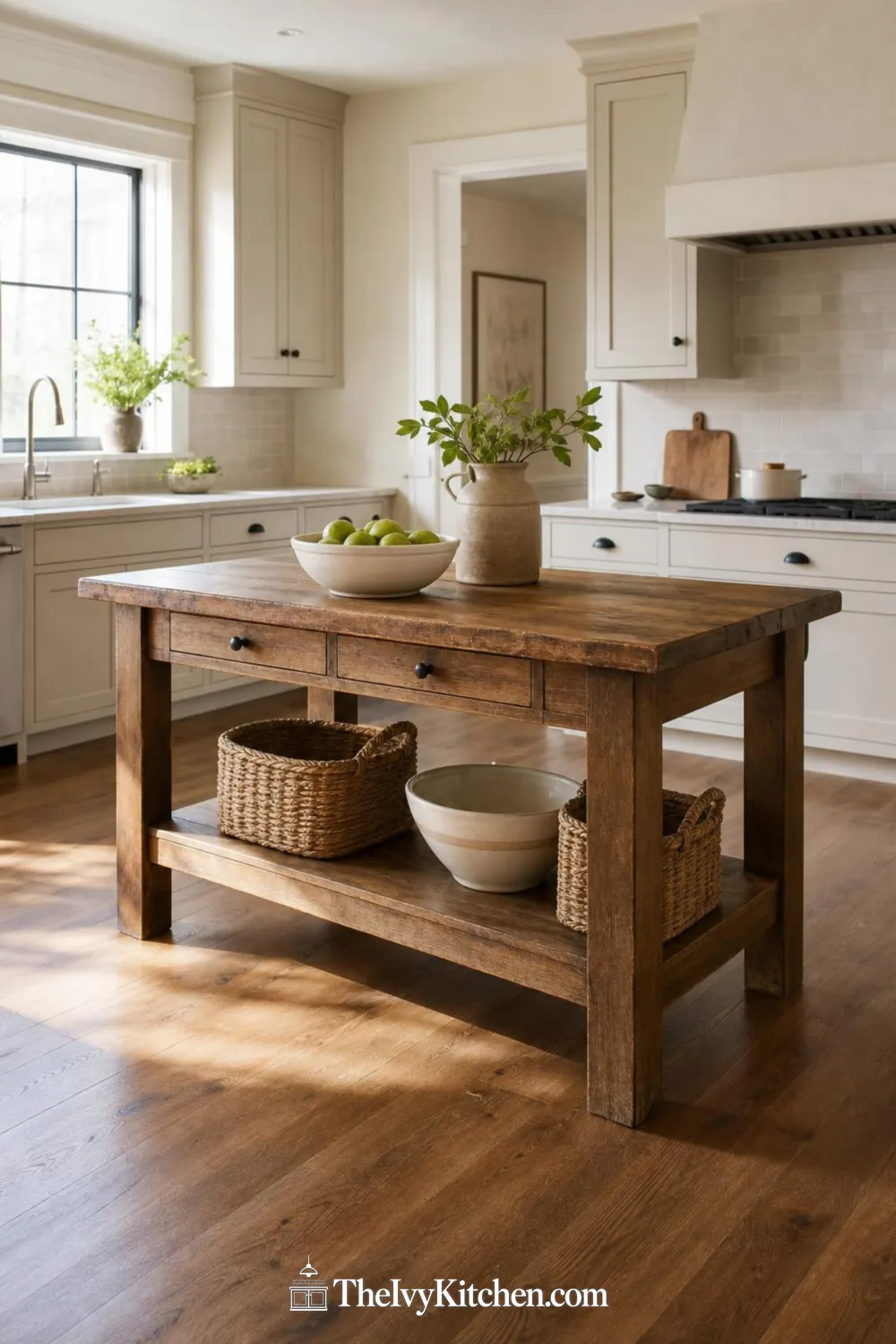
A rustic kitchen island doesn’t have to look like another bank of cabinets. A sturdy, furniture-like worktable adds open space underneath and makes the center of the room feel less fitted. A worn-looking wood finish can provide contrast in a kitchen filled with smooth painted surfaces.
Look for proportions that suit the room and the tasks you actually do there. A lower shelf can hold baskets or serving pieces, while a clear top leaves space for everyday work. Before bringing home a freestanding piece, check its condition, stability, dimensions, and how it affects movement through the kitchen.
5. Create a Breakfast Corner Around a Vintage-Style Table
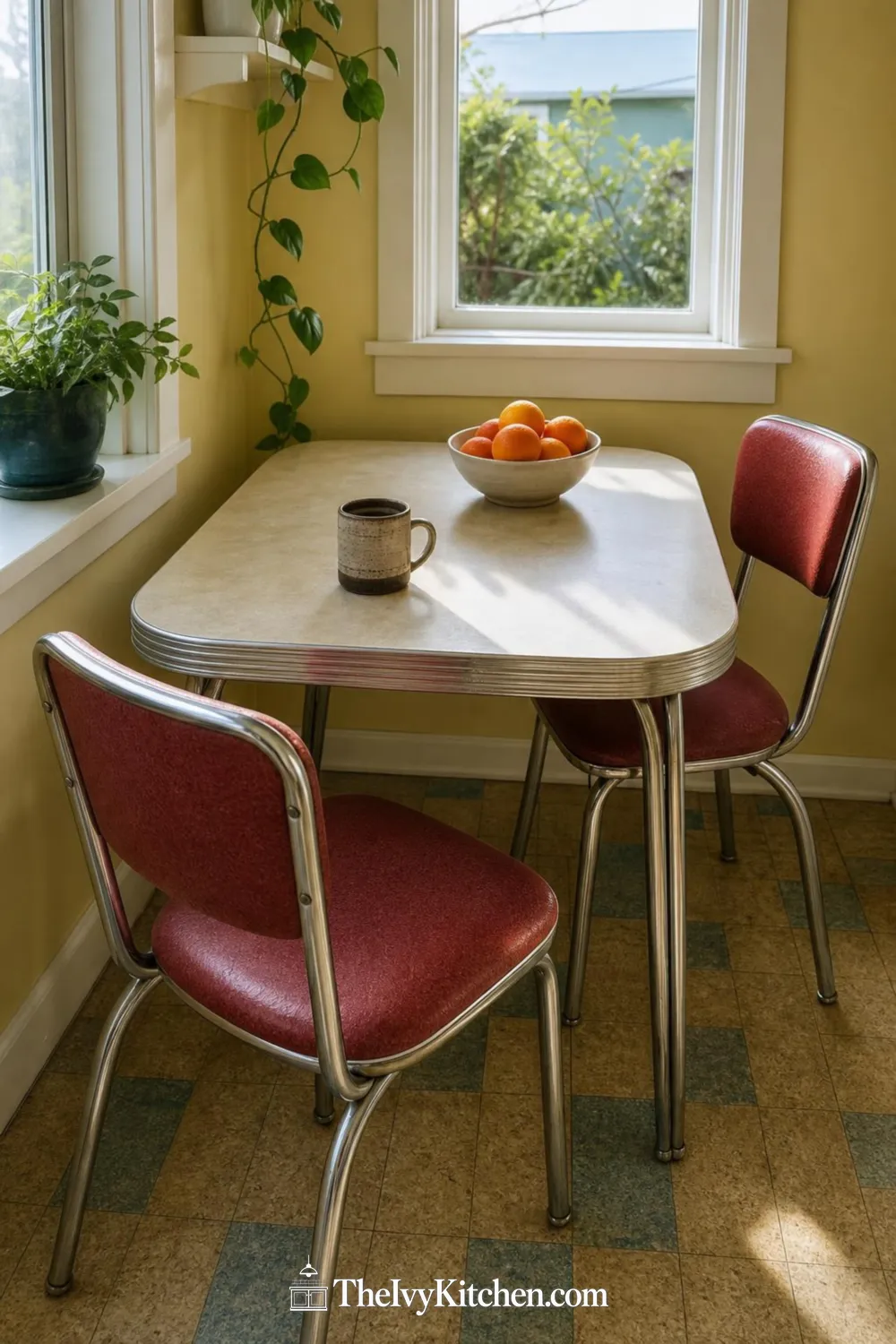
Vintage kitchen tables give a room somewhere to linger, not just somewhere to prepare food. A chrome-edged table and curved chairs suggest a cheerful 1950s direction, while a small wood table feels more country. Choose the version that connects naturally with the rest of your home.
In a compact kitchen, a round table can soften a corner filled with straight cabinet lines. Keep the tabletop mostly clear so it remains useful for breakfast, homework, or a cup of coffee. Mismatched chairs can work, too, when a shared color or similar scale gives the group a little cohesion.
6. Choose Lighting With a Distinctive Period Shape
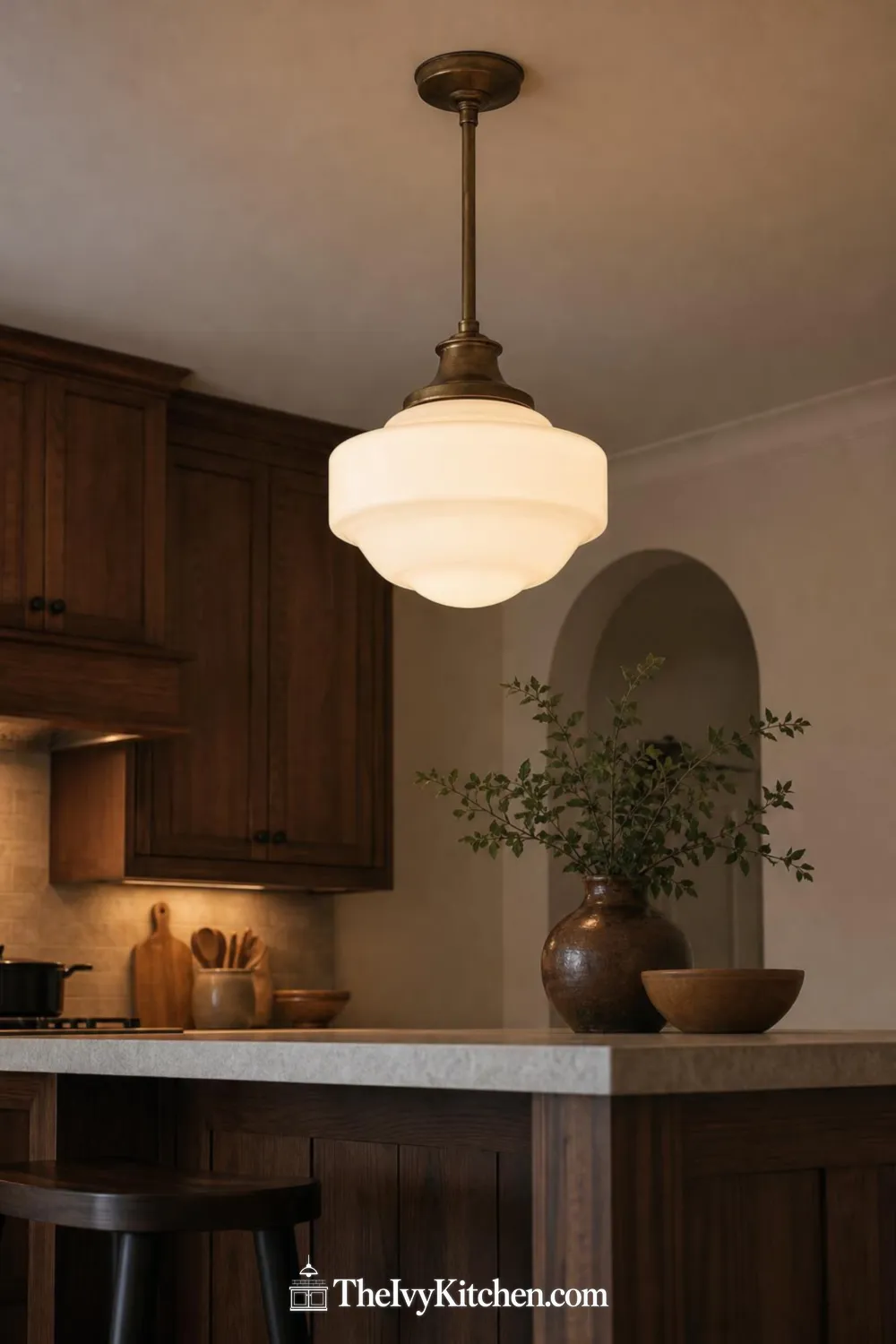
Lighting can establish a vintage mood without adding more objects to your counters. A schoolhouse-style globe feels quietly traditional, while a sculptural opal-glass pendant brings a 1960s-inspired note. Choose one clear direction rather than mixing several attention-grabbing fixture styles in the same room.
Consider how the fixture looks both illuminated and switched off, since its shape becomes part of the room all day. A new fixture with a vintage silhouette is another option when you want the appearance without sourcing an older piece. Coordinate the finish loosely with nearby hardware; everything doesn’t need to match.
7. Add Wallpaper Where It Can Act Like a Backdrop
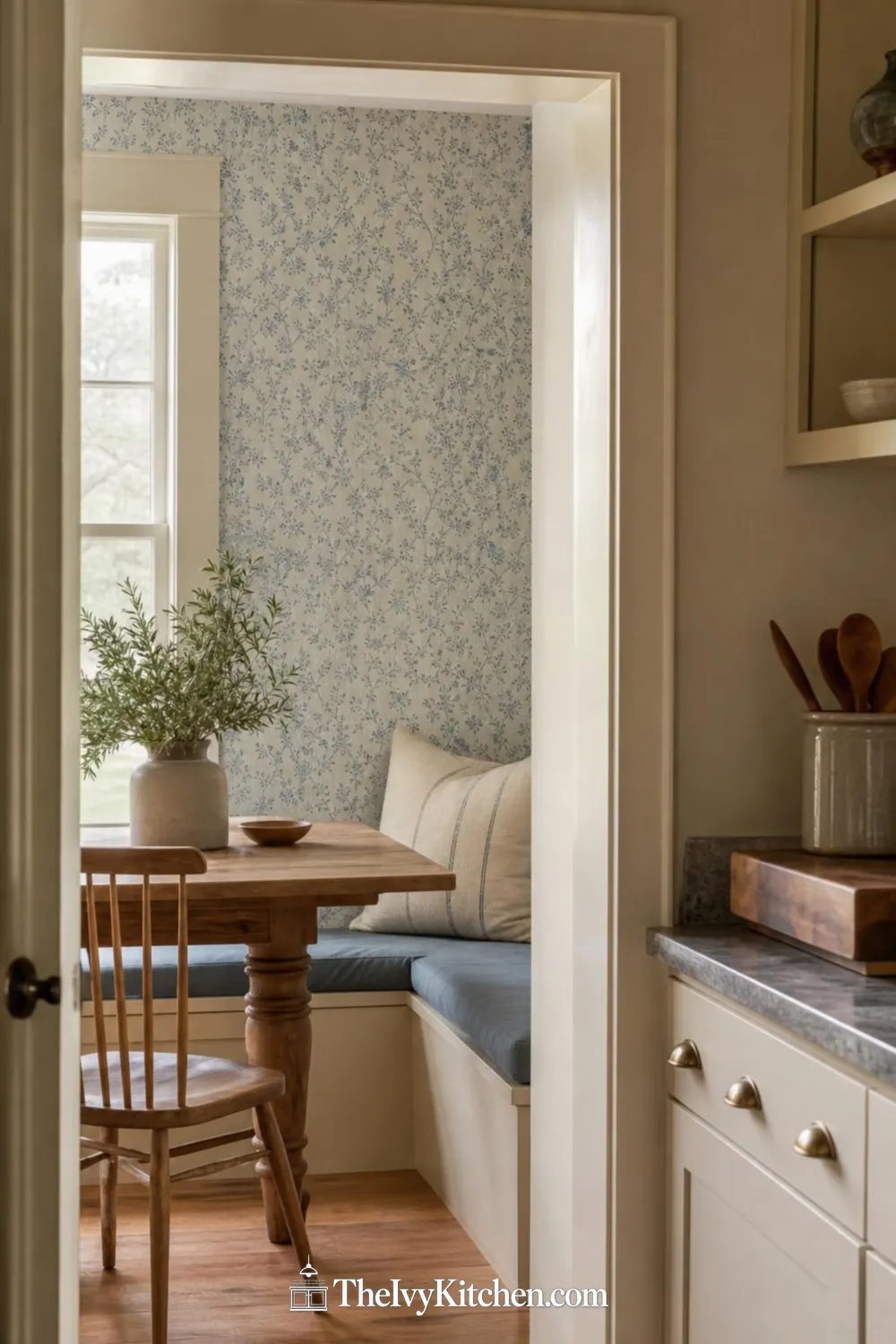
A small floral, ticking stripe, or quiet botanical wallpaper can bring vintage country character to an otherwise straightforward kitchen. Use it on a breakfast nook wall or an upper wall away from the busiest work areas. That gives the pattern a defined role instead of asking it to cover every surface.
Pull one background color from the paper for nearby paint or textiles to make the room feel connected. Before ordering, check the product’s suitability for the intended location and its care requirements. A framed wallpaper panel can offer a smaller decorative gesture when a full wall feels like too much.
8. Display Everyday Dishes in a Plate Rack or Open Hutch
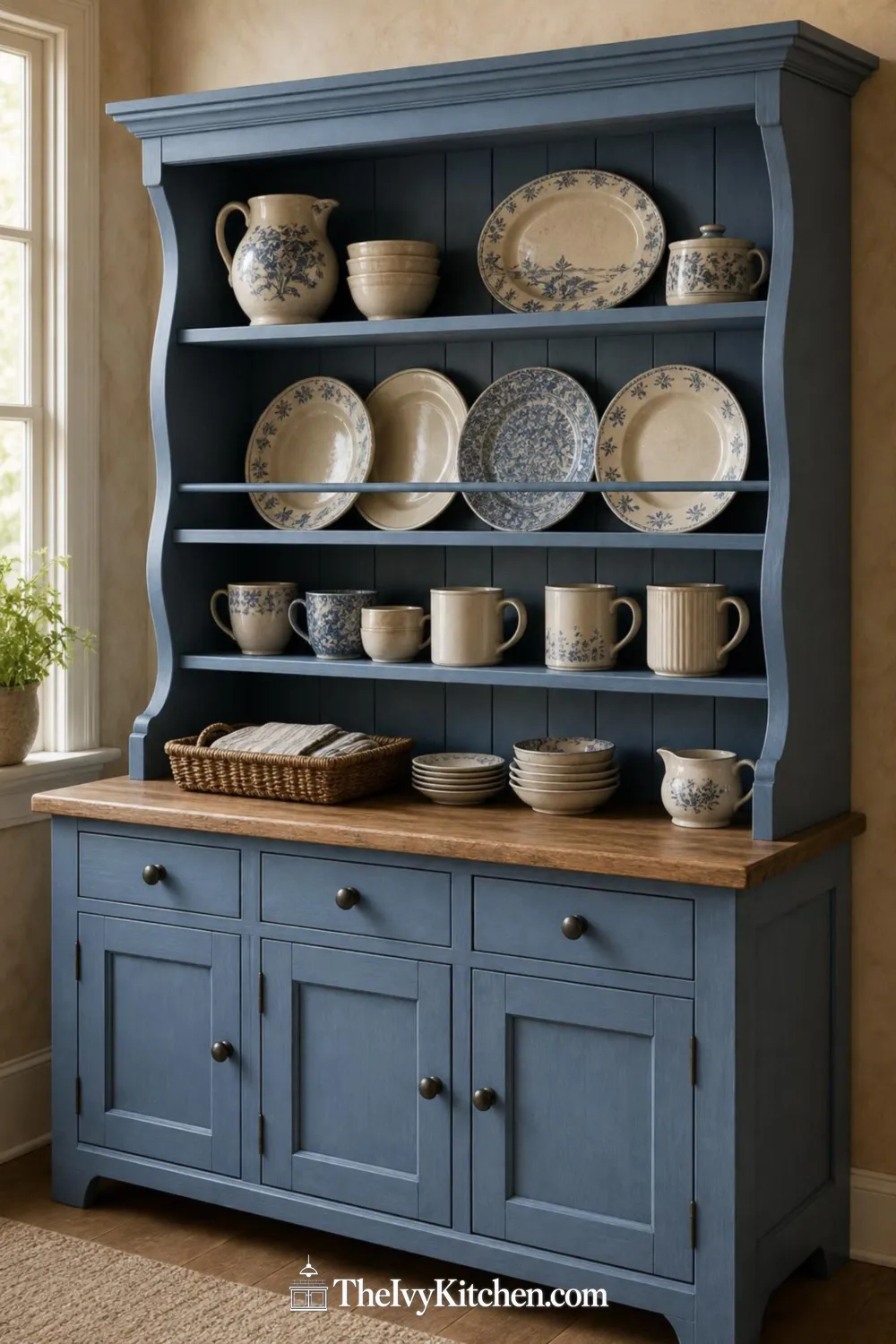
Your everyday dishes can do some of the decorating. A plate rack, open hutch, or short shelf gives patterned plates and sturdy mugs a visible home while adding the layered feeling associated with older kitchens. Pick one display area rather than scattering small collections across every available surface.
Start with pieces you actually reach for, then leave some breathing room between groups. Repeated colors help mixed patterns feel related without making the arrangement rigid. If open storage would add more upkeep than you want, a glass-front cabinet offers a similar glimpse of collected dishes with a little more separation.
9. Keep Countertop Vintage Decor Useful and Contained
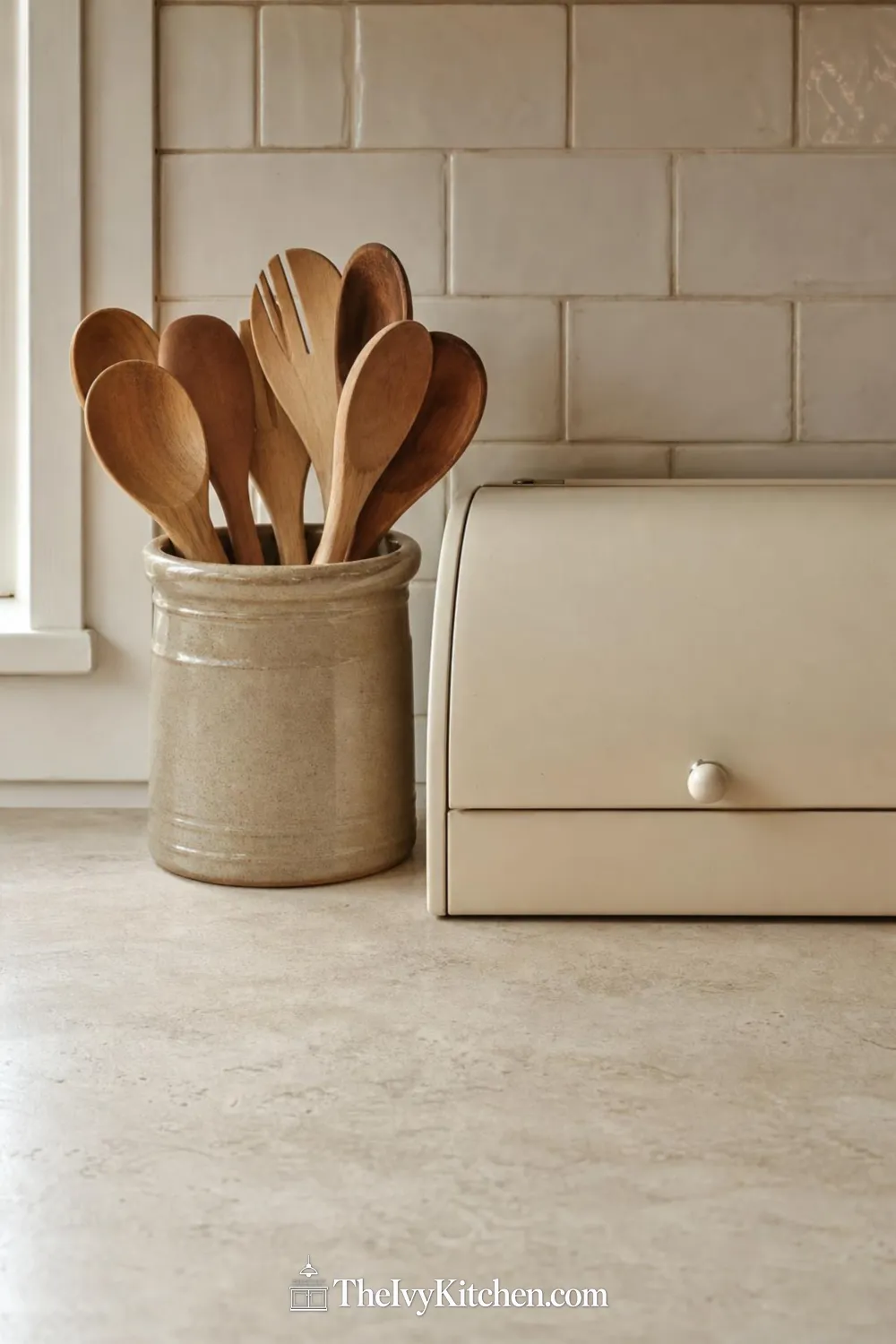
Vintage kitchen items feel more natural when they relate to what happens in the room. A stoneware crock holding wooden spoons, a bread box, or a simple kitchen scale can add character without turning the counter into a display shelf. One small grouping is often more convincing than a collection spread everywhere.
Choose pieces in a related material or color family, and leave the surrounding work area clear. Older objects with uncertain finishes or histories can stay decorative rather than handling food. You can also combine a vintage container with newer everyday tools for a modern vintage kitchen design.
10. Soften the Room With Simple Vintage-Inspired Textiles
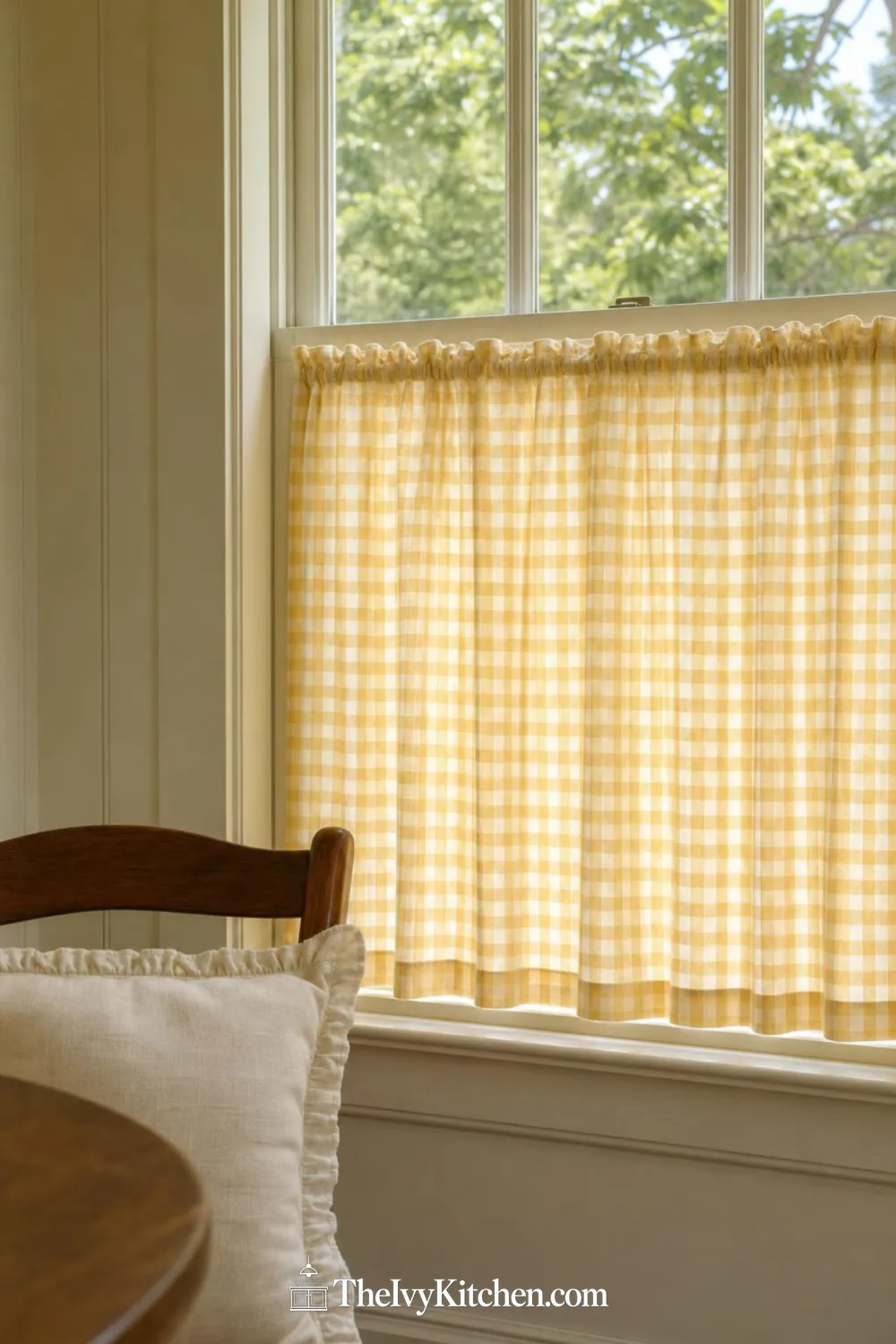
Fabric brings warmth to a kitchen full of hard surfaces. A cafe curtain at a breakfast-area window, striped tea towels, or a modest seat cushion can introduce nostalgic pattern without a large commitment. Gingham feels cheerful, while faded florals and narrow stripes offer a quieter country mood.
Choose one leading pattern and let the other textiles support it with solids or smaller repeats. Check care instructions before buying, especially for pieces that will need frequent washing. Keep decorative fabric out of active cooking areas, and use the room’s existing colors as your starting point rather than introducing an unrelated palette.
11. Let One Retro-Inspired Appliance Supply the Color
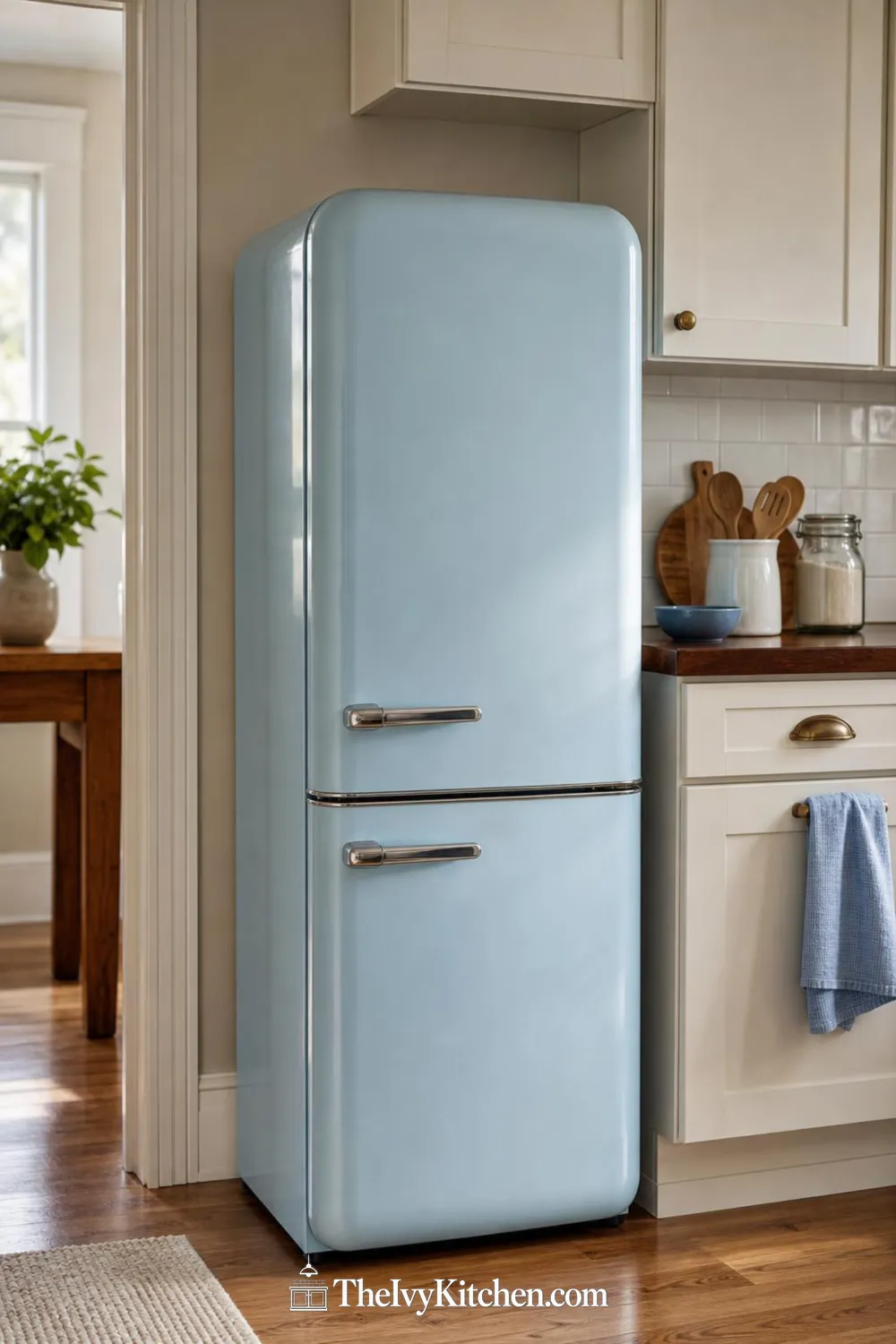
A colorful refrigerator or countertop appliance can bring a retro-inspired kitchen to life without requiring a full room of matching pieces. Soft blue, pale yellow, or muted red gives you a clear starting point for the palette. Keep the surrounding cabinetry and surfaces calmer so the color feels intentional.
Choose the appliance for its everyday usefulness as well as its appearance. For larger purchases, confirm dimensions, door movement, installation requirements, and available features before planning the room around it. You can echo its color in one towel or dish, but there’s no need to repeat it in every accessory.
Save the ideas that fit how you use your kitchen, then look for a shared color, material, or mood. Starting with one meaningful change gives you room to build character gradually, without making the whole space feel themed.