
Choosing blue kitchen cabinets involves more than finding a shade you like on a paint card. The same color can feel crisp beside white tile, softer with natural oak, or more dramatic across a wall of tall storage. Your cabinet style and the amount of blue you use matter just as much.
These 13 ideas show different ways to bring blue into a kitchen, from pale painted cupboards to a deep navy island. You will find practical suggestions for countertops, hardware, backsplashes, and color placement so you can choose a direction that works with the finishes you already have.
1. Pair Navy Shaker Cabinets With Warm Brass
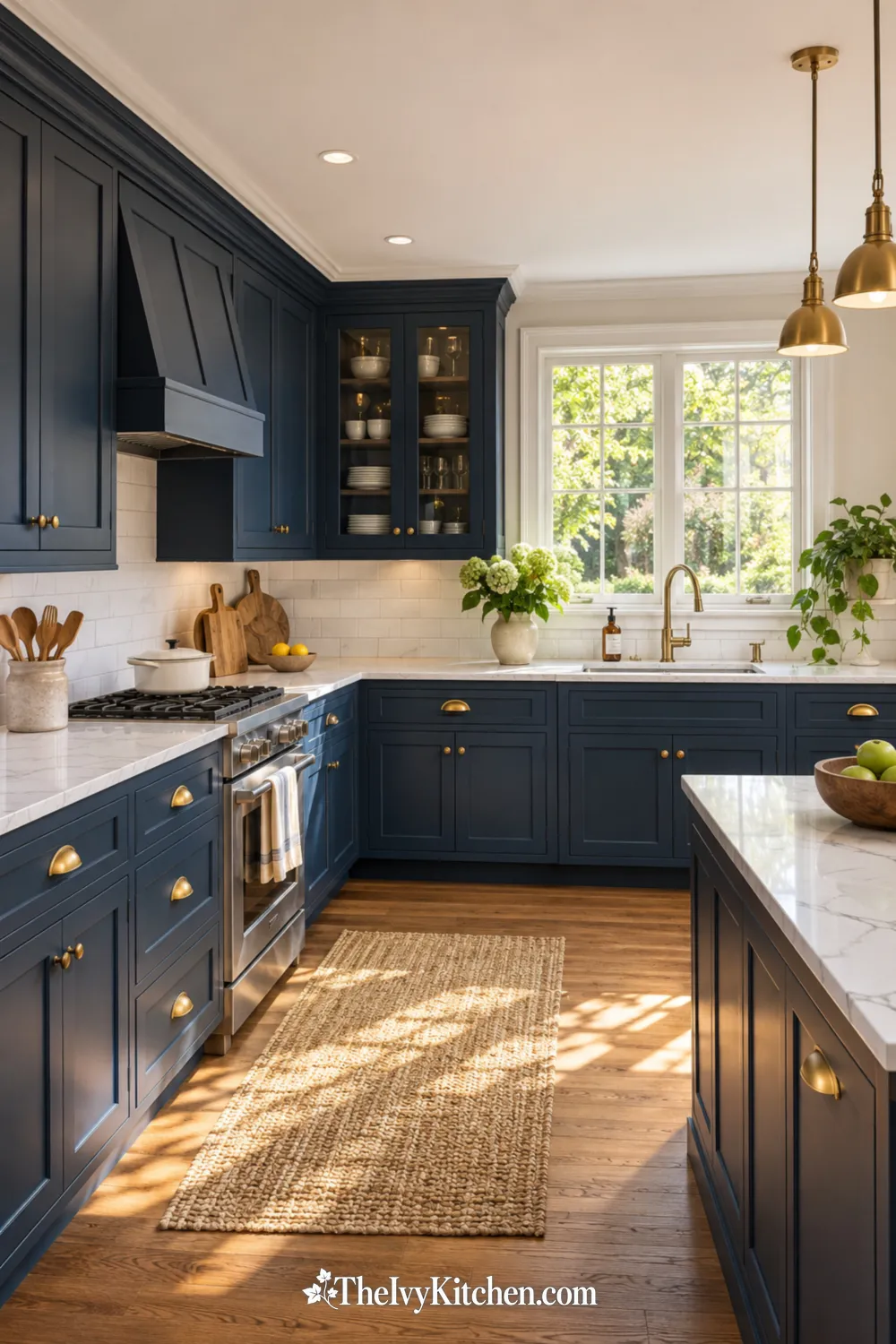
Deep navy gives simple Shaker doors a stronger outline without asking for an ornate cabinet profile. Warm brass pulls add a clear contrast, while white counters keep the work surfaces visually separate from the darker cabinetry. This combination suits a kitchen where you want the cabinets to carry most of the color.
Repeat the brass in one or two places, such as the faucet or a pendant, rather than introducing several competing metal finishes. If your floors are warm wood, bring a sample beside the cabinet color before committing. Navy can read quite differently against orange-toned oak and quieter, honey-colored boards.
2. Soften Powder Blue With Natural Oak
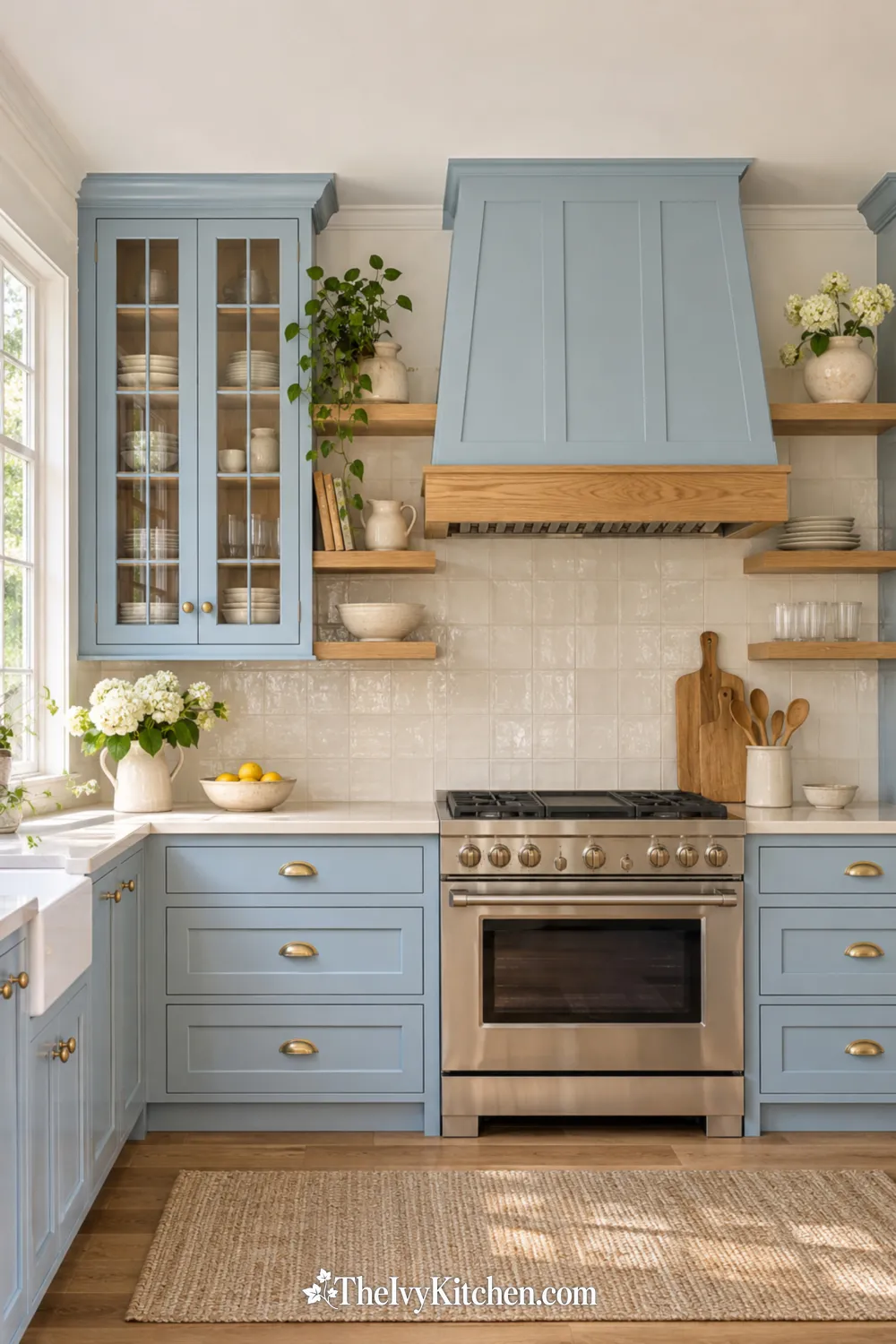
Powder blue offers color without the visual weight of a dark cabinet run. Pair it with natural oak shelves or hood trim to give the pale paint a warmer setting. Cream tile and ivory counters continue that softer palette, especially if a stark white surface feels too sharp against your flooring.
Keep the oak finish consistent across the details you can see together. A pale shelf, reddish stool, and dark walnut hood can pull the eye in too many directions. Before choosing the paint, look at a large sample beside your tile during both daylight and evening light.
3. Connect Slate Blue Cabinets With Gray Counters
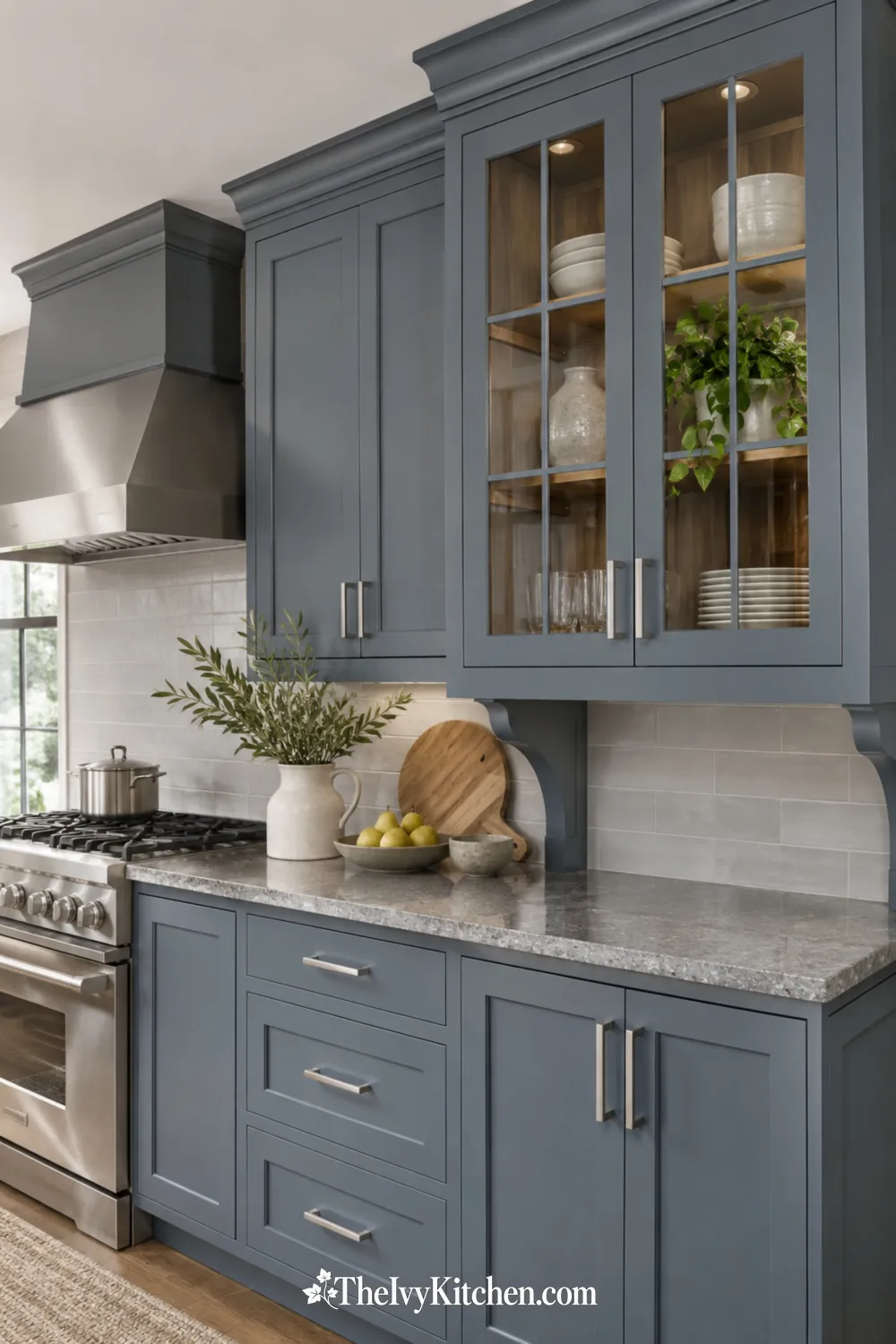
Slate blue creates a quieter bridge between blue kitchen cabinets and gray countertops. The muted color feels cohesive when the counter has cool gray flecks or a soft charcoal pattern. Brushed nickel hardware can carry the same restrained mood without adding another strong accent.
Compare the undertones rather than matching only the darkness of each surface. A counter that leans green may look different beside a purple-leaning blue. Lay cabinet, counter, and backsplash samples together before ordering. Choose a simple backsplash if the counter already has a visible pattern, so the room does not depend on several competing surfaces.
4. Give Cobalt Cabinets a Crisp White Backdrop
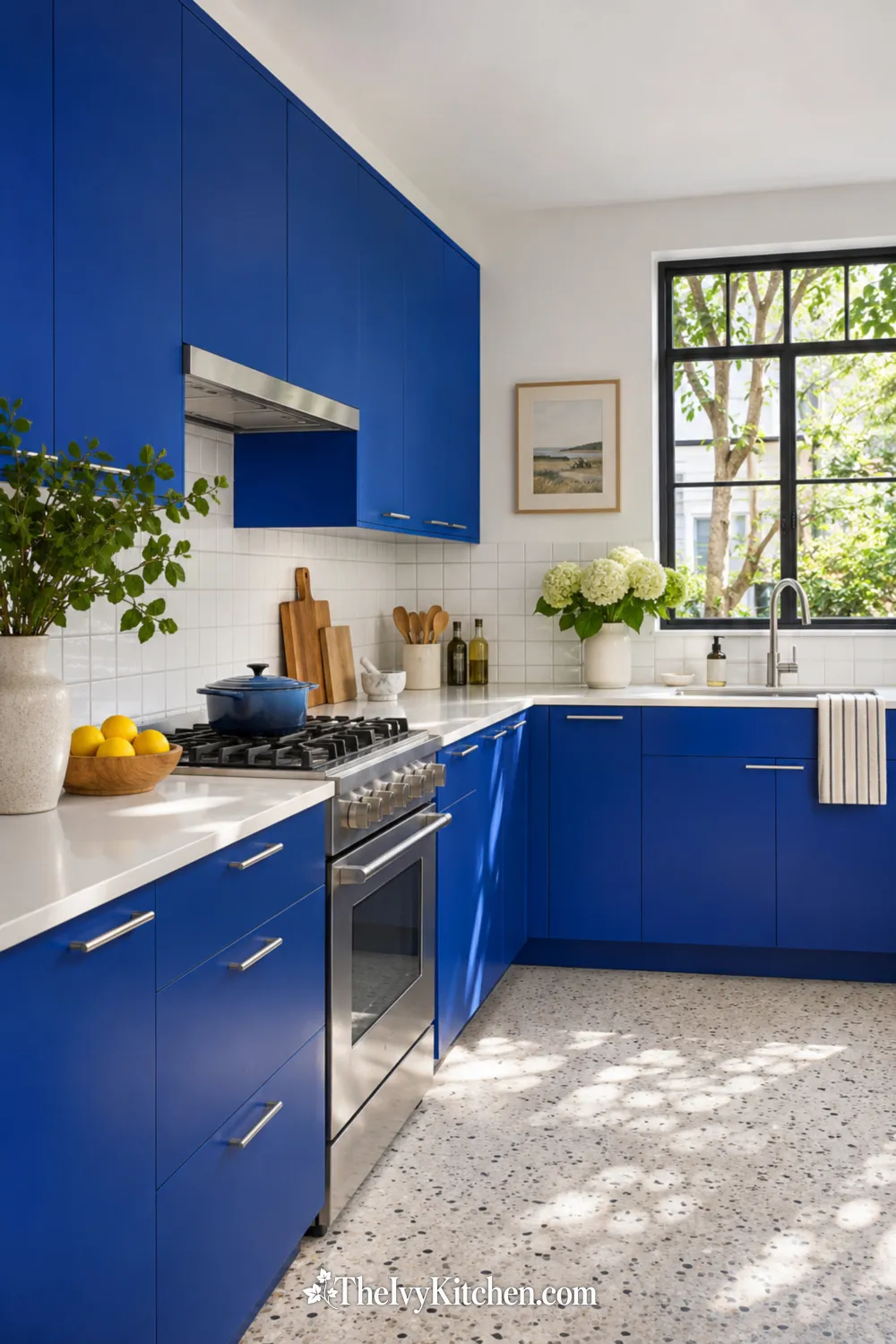
Cobalt brings a clear, saturated blue to a kitchen that can handle a stronger color statement. White walls, a plain counter, and a simple tile backsplash give the cabinets breathing room. Flat-panel doors keep the large areas of color clean and direct.
Let the cabinet paint be the busiest visual element. If you add patterned flooring, keep its colors limited so it does not compete with the blue. Check a sample on a vertical surface, where the finished doors will sit. A small horizontal paint card can be hard to judge beside a full wall of white.
5. Warm Blue-Green Cabinets With Walnut Details
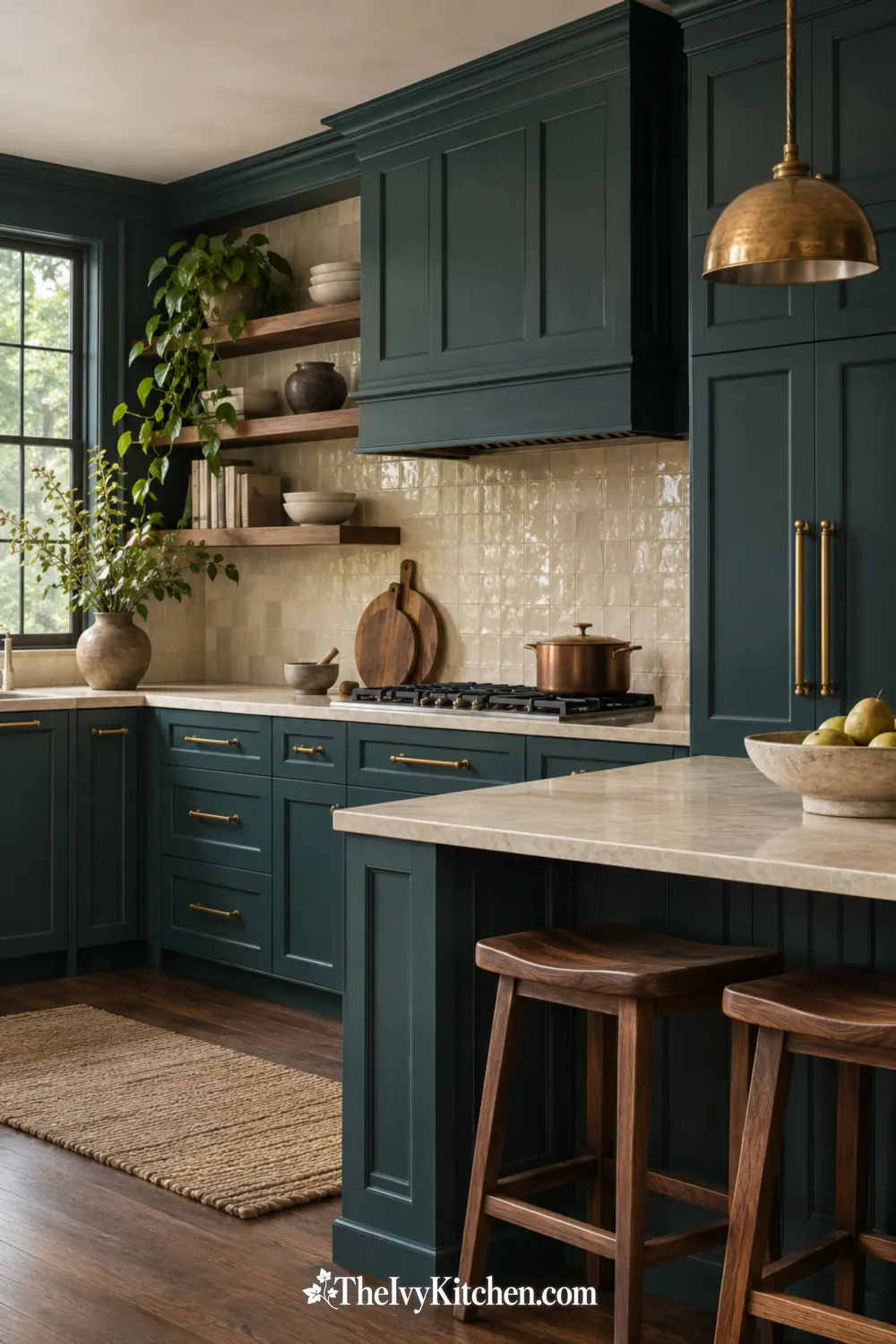
A blue-green cabinet color gives you a different direction from clear navy or pale blue. Walnut shelves and stools bring out the warmth around that cooler paint, while cream counters prevent the combination from feeling too stark. This is a useful approach when your favorite blues have a noticeable green undertone.
Keep nearby greens intentional. A single plant can look natural, but several unrelated green accessories may blur the cabinet color. Test the finish beside your actual wood sample and under your kitchen lighting. Describe the result by how it looks in your room rather than relying on the color name.
6. Put Blue on Lower Cabinets and White Above
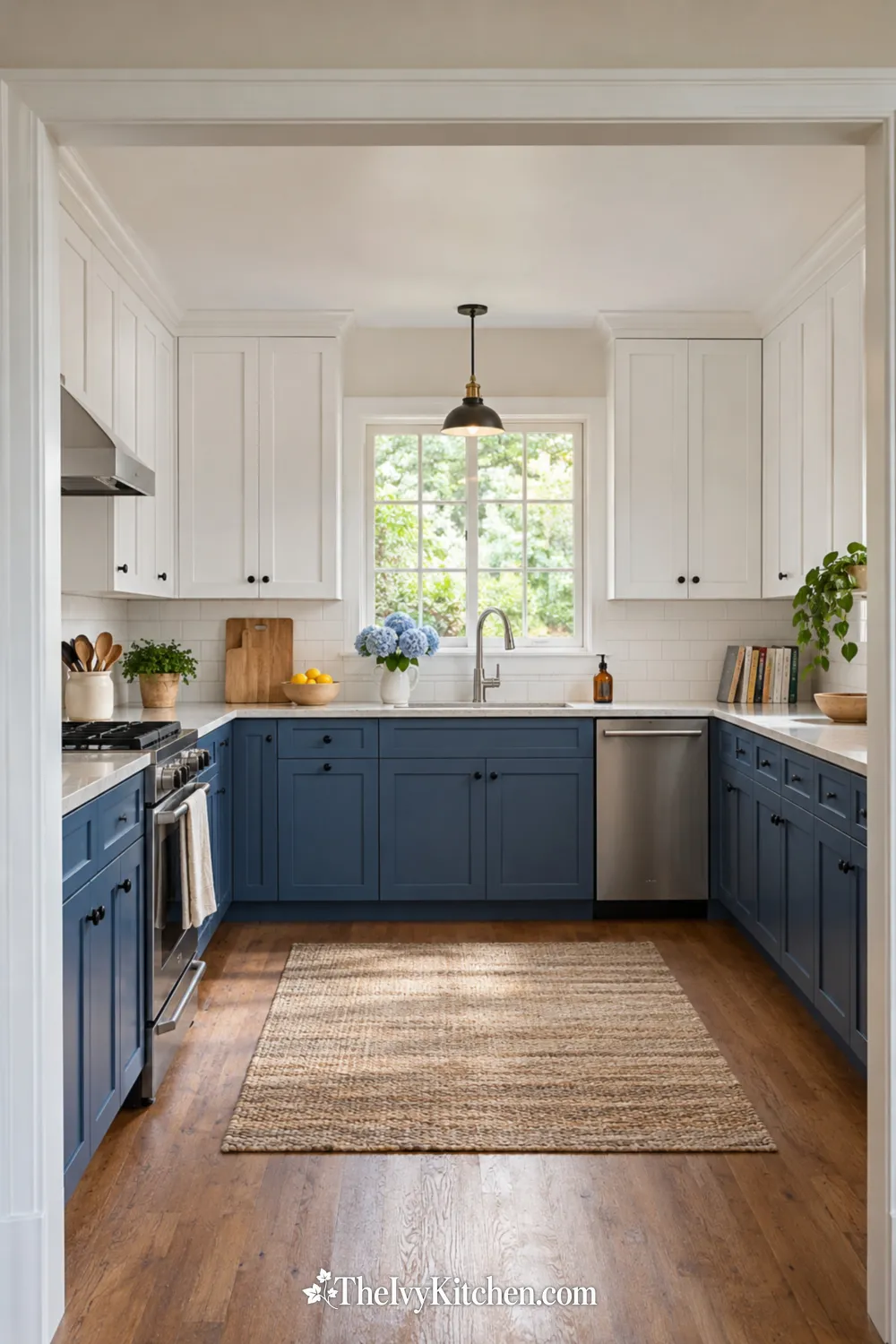
Blue bottom cabinets let you use a substantial amount of color while keeping the upper walls light. White upper cupboards blend into a white backsplash and wall, while the lower run creates a clear visual base. The split also gives you a way to work with existing white wall cabinets.
Carry one hardware finish across both colors so the kitchen still reads as a single design. Plan where each paint color stops, especially around a tall pantry or refrigerator surround. A deliberate break at a full cabinet edge looks clearer than switching colors midway through one connected section.
7. Anchor White Perimeter Cabinets With a Navy Island
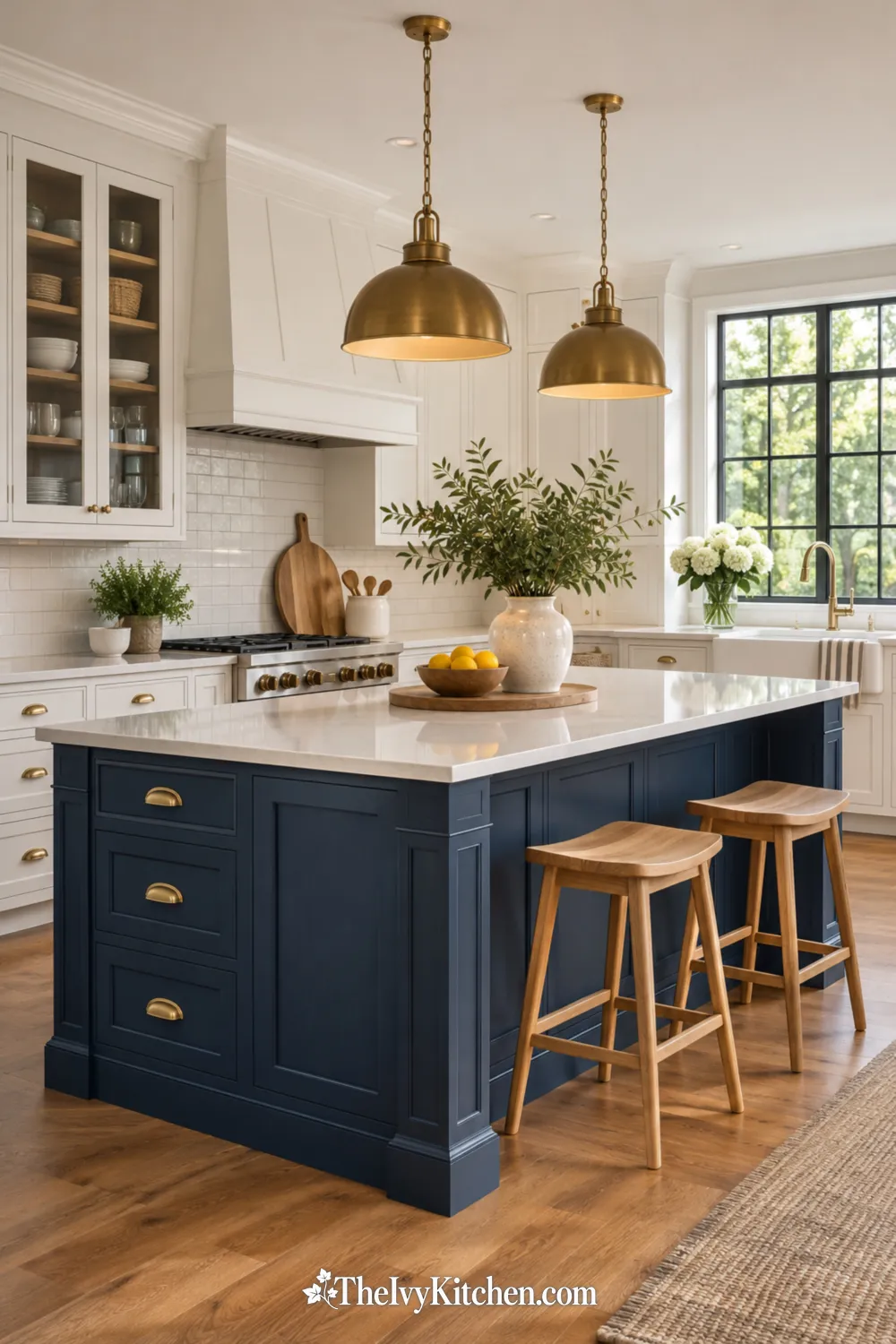
A navy island makes blue the focal point while leaving the main cabinet walls white. The contrast draws attention to the gathering area and works with many existing white kitchen finishes. A light countertop on the island keeps its dark base from becoming a solid block in the middle of the room.
Choose the island color beside both your perimeter cabinets and your floor. Slightly warm white doors may need a different blue than bright white ones. If you are adding an island rather than repainting one, confirm the layout and working clearances before using an inspiration image as your plan.
8. Mix Blue Base Cabinets With Oak Upper Cupboards
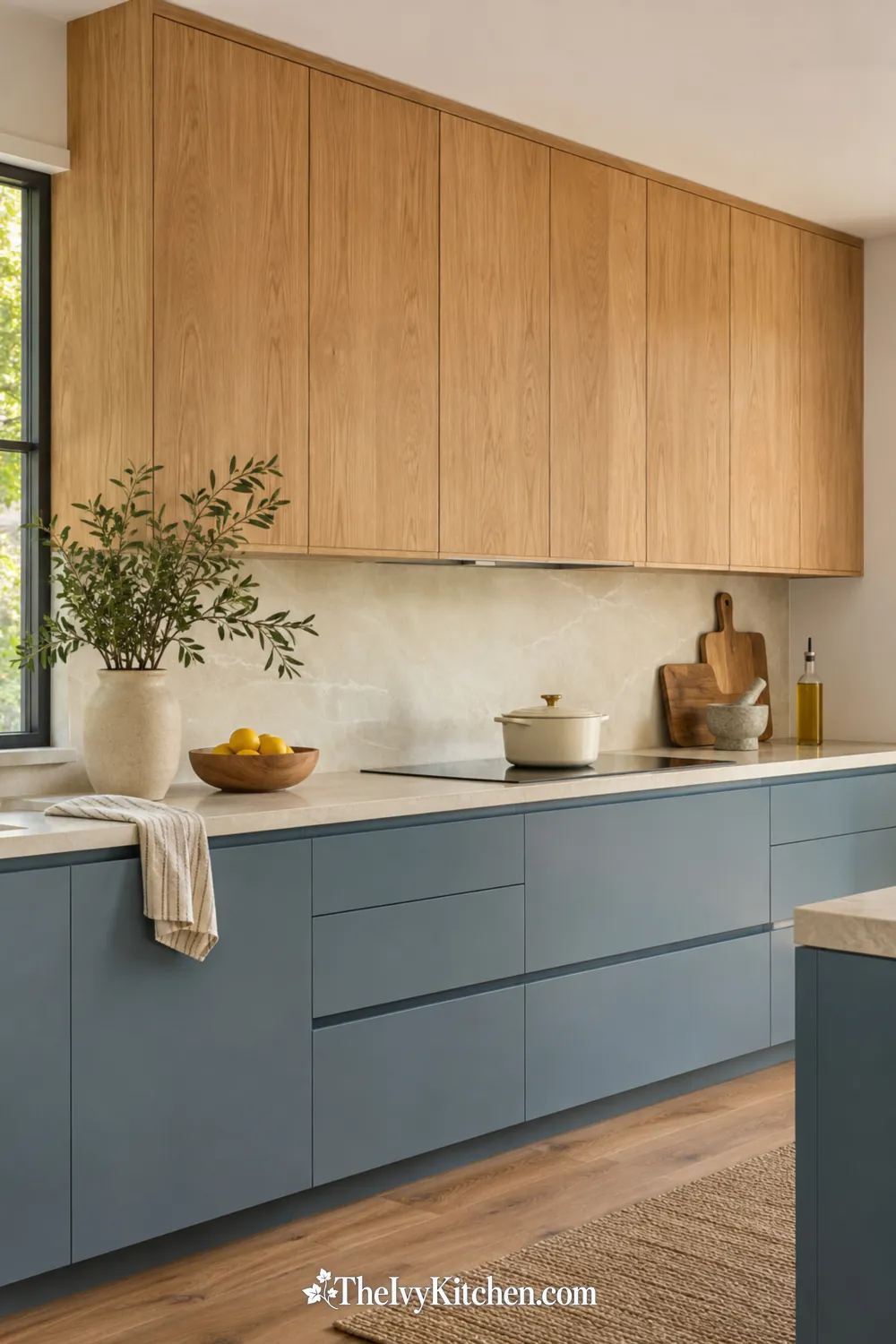
Oak upper cupboards give a two-tone kitchen a different balance from the familiar blue-and-white combination. The wood grain adds texture across the wall, while blue base cabinets provide a smooth field of color below. Simple doors help the two materials sit together without too many competing profiles.
Use a backsplash that gives both finishes some space. A quiet cream slab or plain tile can connect them without adding a third strong pattern. Compare the amount of visible wood with your flooring, too. If the floor has pronounced grain, a calmer oak cabinet finish may feel less busy.
9. Use Handleless Blue Doors for a Clean Modern Run
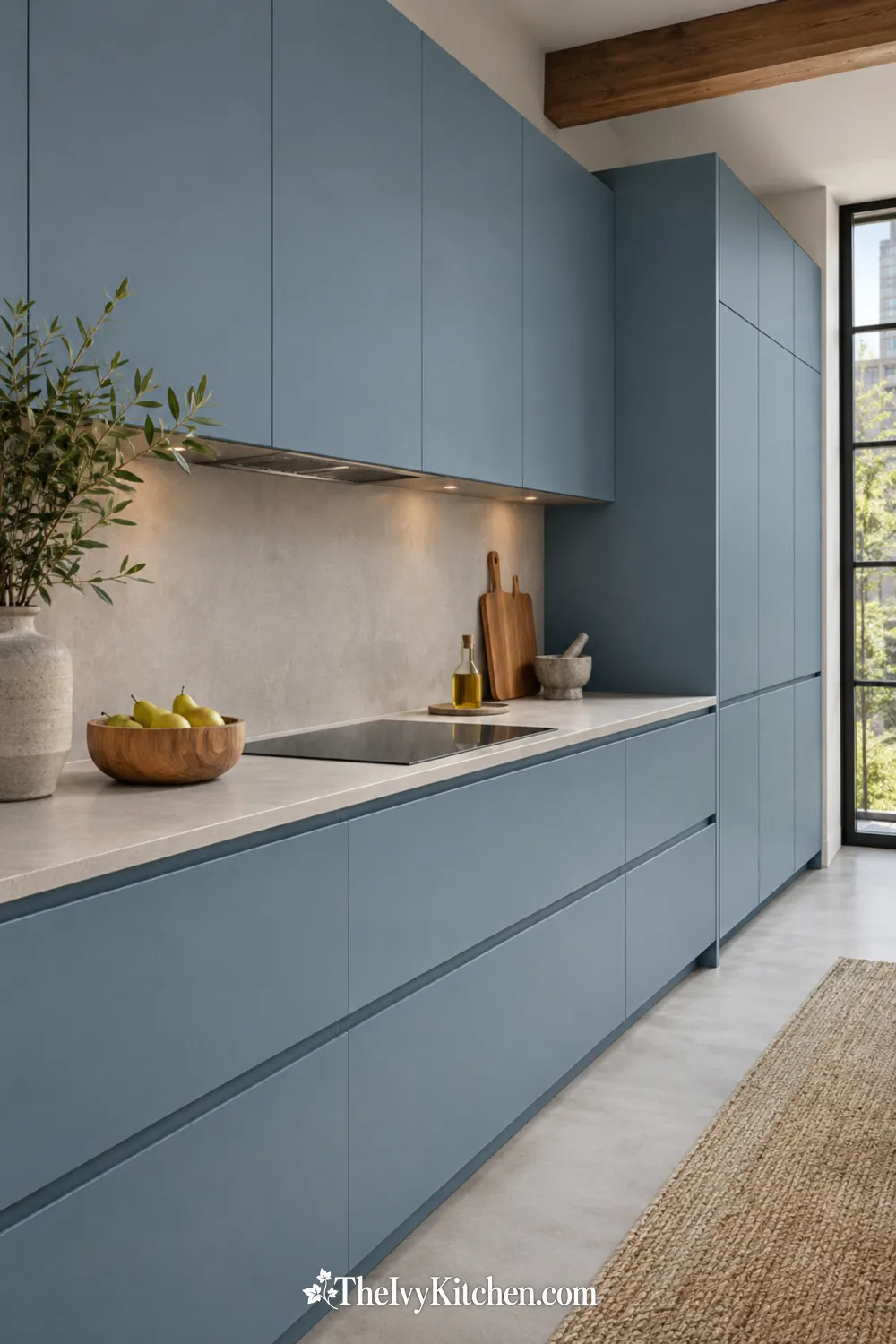
Handleless blue cabinets turn the color into a continuous surface instead of a backdrop for decorative hardware. Flat doors, integrated appliances, and a restrained backsplash support that clean look. A dusty medium blue can add character to a modern kitchen while keeping the palette controlled.
Look closely at how each door opens before ordering. Recessed rails and push-to-open fittings produce different details along the cabinet edges. Coordinate tall pantry doors with the lower cabinets so the lines remain deliberate. Keep a few everyday objects on display if you want the finished kitchen to feel welcoming rather than like an empty showroom.
10. Bring Traditional Detail to Blue Inset Cabinets
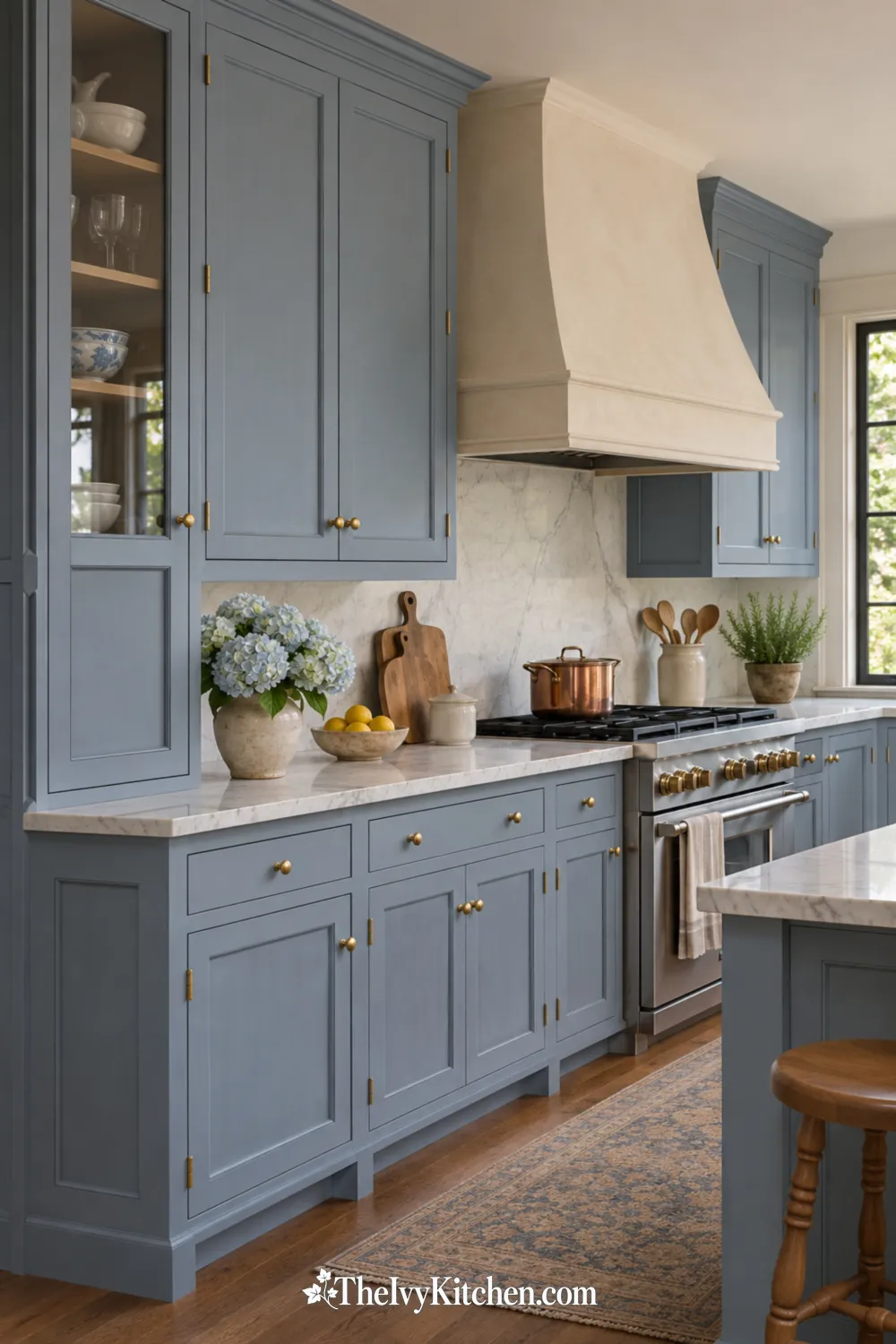
Inset doors add another layer of detail because the door faces sit within the surrounding cabinet frames. In a muted cornflower blue, that joinery gives a traditional kitchen color without losing its furniture-like character. Small knobs and a simple plaster hood keep the cabinet outlines visible.
Choose a quieter counter if you want the framed doors to remain the focus. When shopping for cabinetry, confirm the actual door construction rather than relying on a style label or an image alone. For an existing kitchen, you can borrow the color and hardware direction without assuming a paint project will change the cabinet construction.
11. Lighten a Galley Kitchen With Pale Blue Cabinets
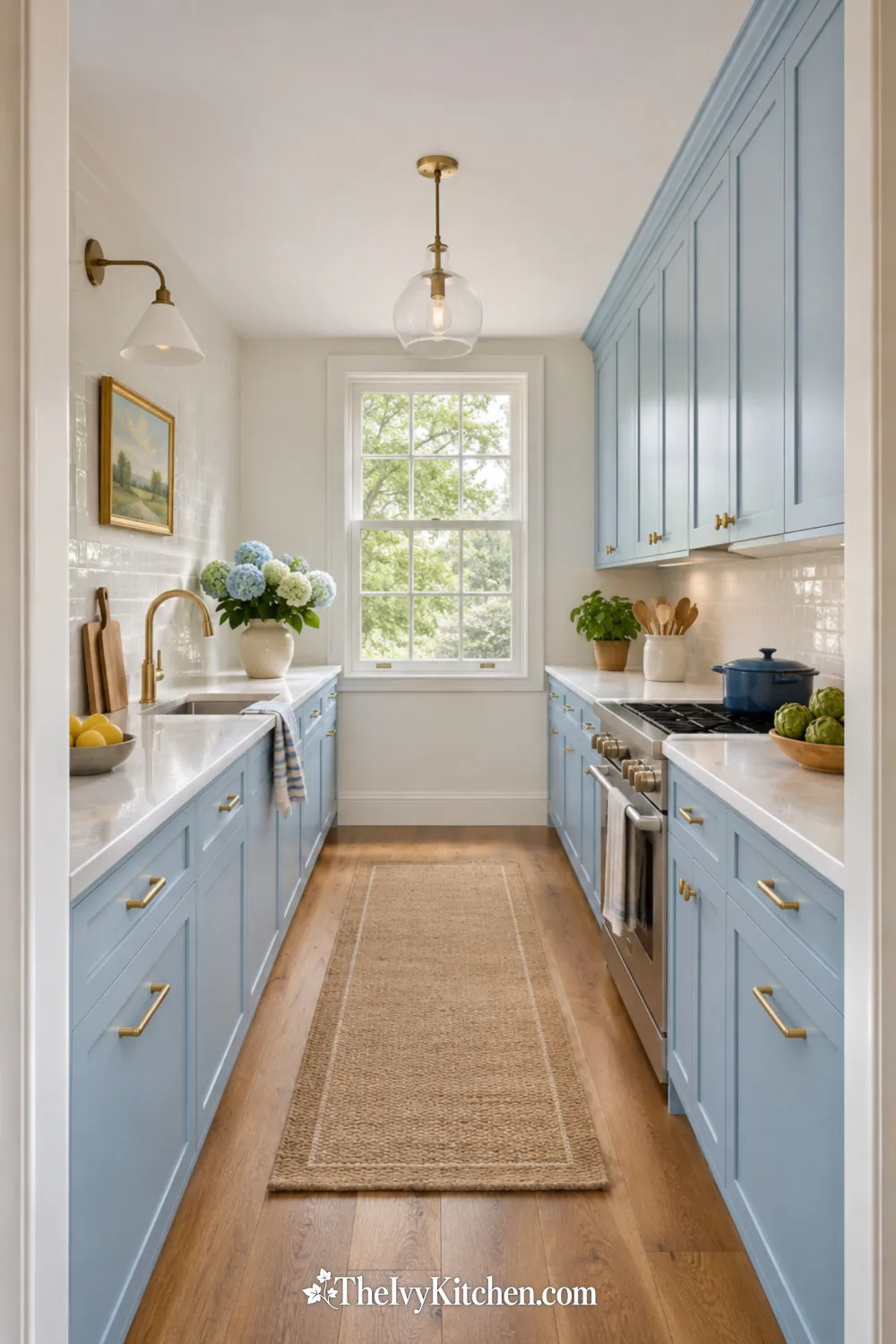
Pale blue can give a galley kitchen color while keeping the long cabinet runs visually gentle. White counters and a light backsplash continue that effect, especially when daylight comes from a window at the end. Keeping upper storage on one side can also make the opposite wall feel less crowded, if your storage needs allow it.
Treat the photograph as a color reference, then measure your own aisle and appliance openings. Avoid adding thick projecting handles where they would catch clothing in a tight passage. A consistent floor finish helps the two sides of the room feel connected.
12. Create a Blue Glass-Front Cabinet Display
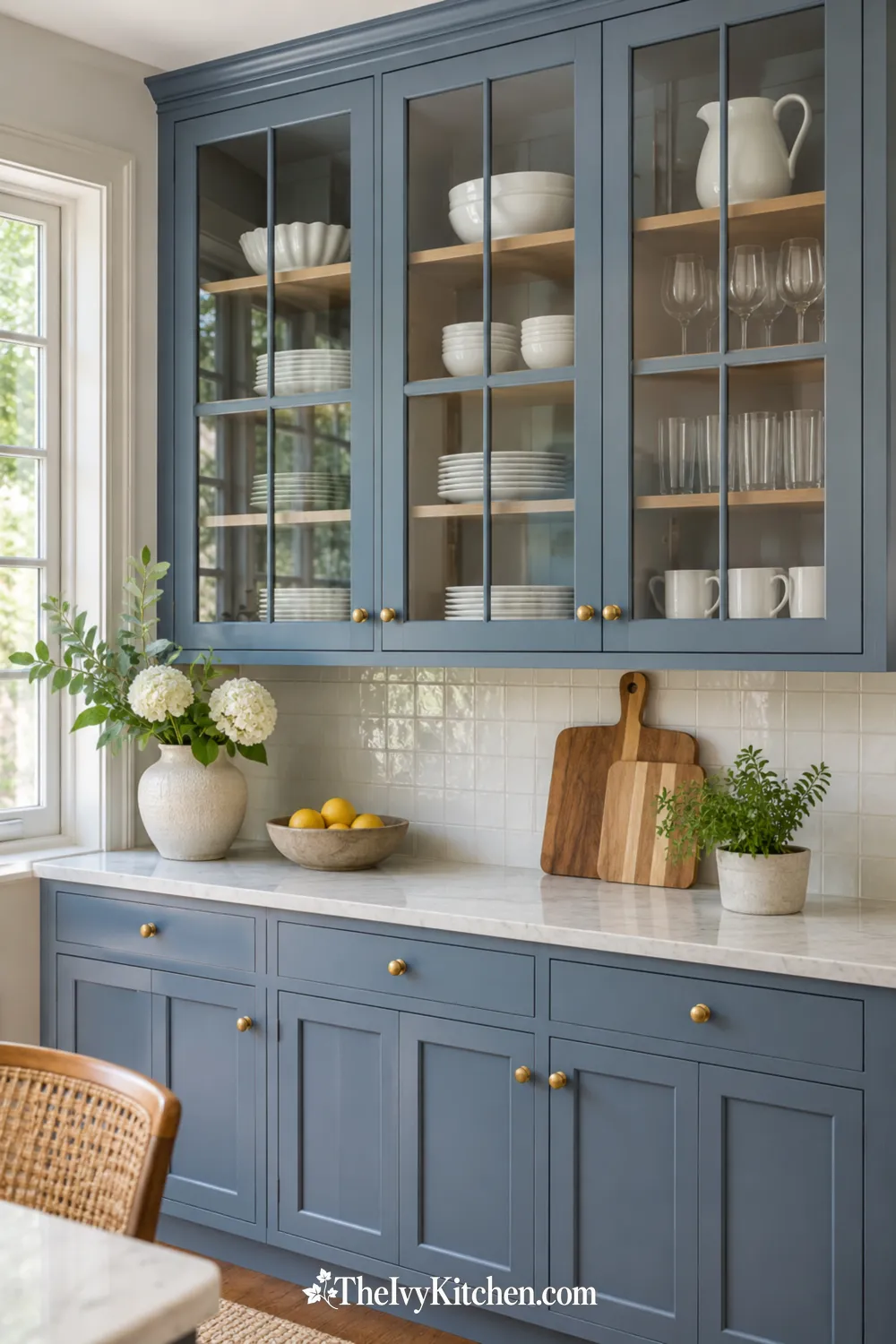
Glass-front cupboards break up a wall of blue while keeping the painted frames part of the kitchen palette. White dishes and clear glassware make a calm display behind the doors. This approach works especially well for a section of wall storage you can keep reasonably organized.
Choose the display zone before replacing every upper door with glass. One grouped section can provide the detail without putting all your storage on view. Consider whether you prefer a blue interior or a lighter cabinet lining, then sample that combination with your dishes. Keep everyday clutter in nearby closed cupboards.
13. Balance Blue Perimeter Cabinets With a Wood Island
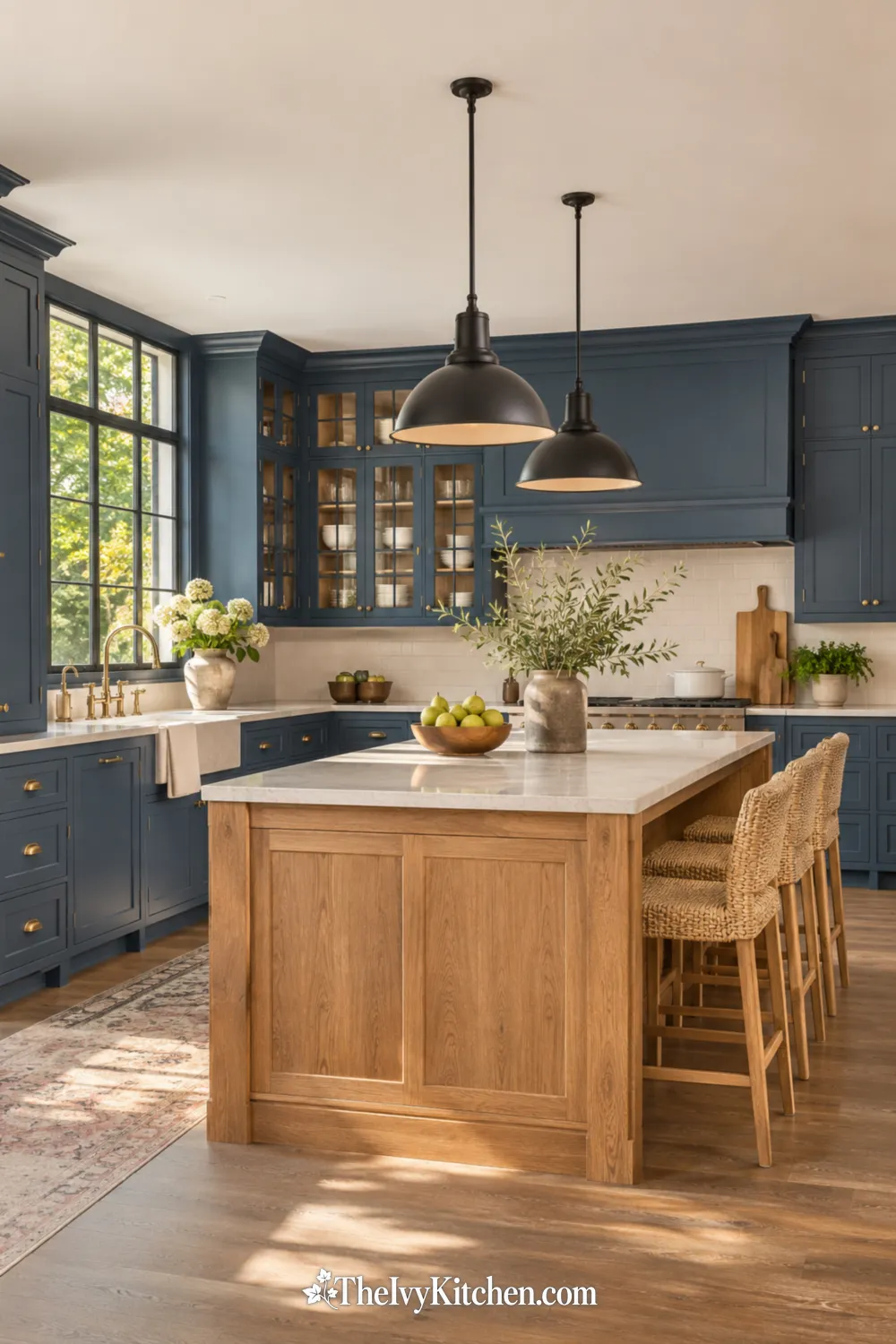
A wood island reverses the usual blue-island arrangement. Blue perimeter cabinets surround the room, while natural wood provides a warmer center. This gives you more cabinet color overall without making every storage surface match. A quiet backsplash helps the blue and wood remain the main materials.
Repeat the island wood in a modest detail, such as a stool or cutting board, instead of matching every accessory. If your floor is also wood, compare the samples together before ordering. The island and floor can differ, but their tones should look intentional beside the same blue cabinet finish.
Choose Your Starting Point
Start with the finish you are keeping, whether that is a gray counter, oak floor, or white upper cupboard. Then choose how much blue belongs in the room: a single island, the lower run, or the full cabinet layout. Save the combinations that fit your space and compare large samples beside your existing materials before making the final color decision.