
An earthy kitchen feels welcoming because its colors and materials work together without demanding attention. Think wood with visible grain, soft greens, clay tones, and stone that has a little character.
You can bring that feeling into a bright contemporary room, a traditional kitchen, or a space with rustic details. These earthy kitchen ideas cover cabinets, surfaces, lighting, and places to gather, so you can choose a direction that suits your room.
Start with the elements you already have, then look for one or two changes that connect them. A thoughtful mix often feels more settled than replacing everything at once.
1. Pair Natural Oak Cabinets With Pale Limestone
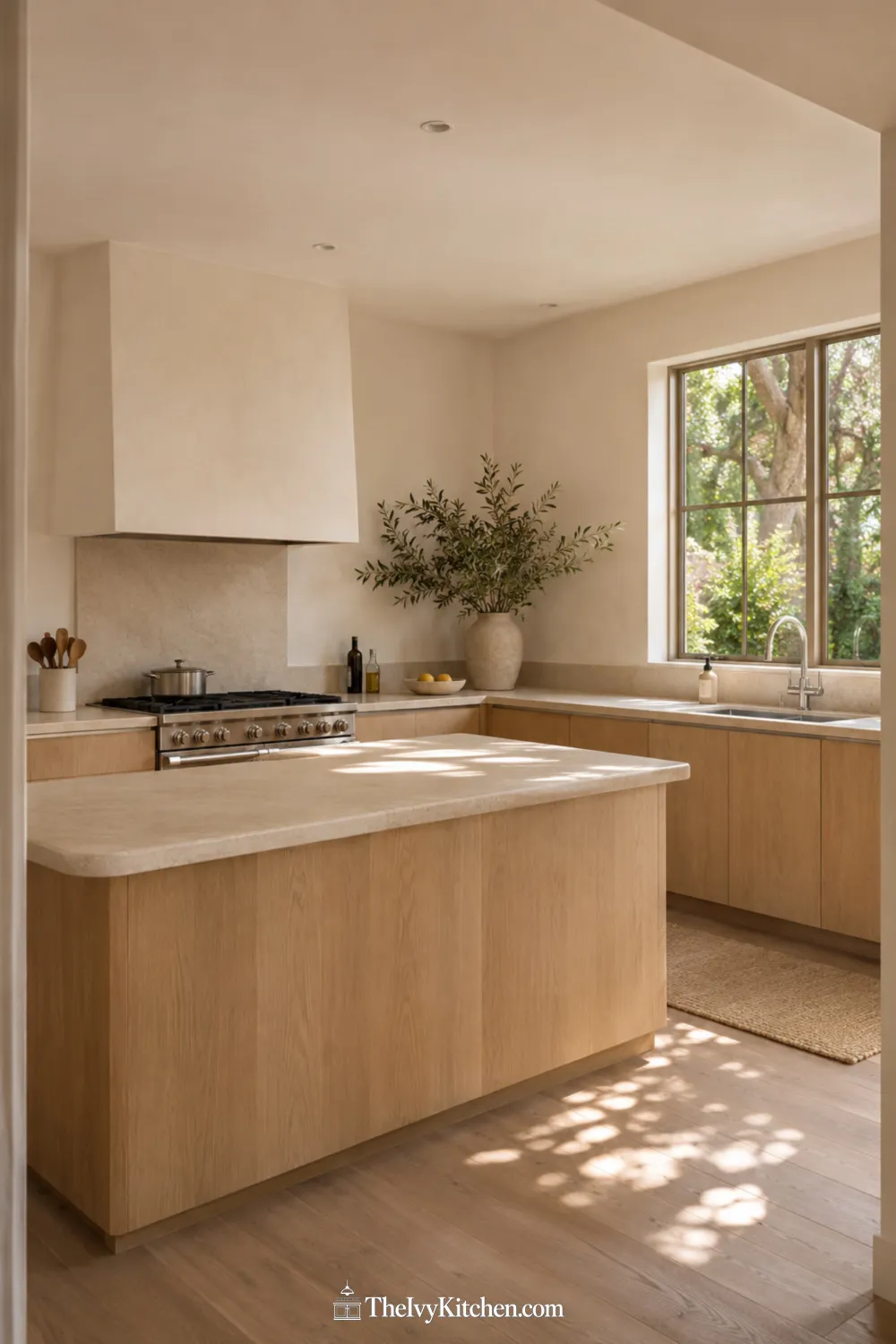
Natural oak gives your kitchen a warm foundation without relying on dark finishes. Pair its visible grain with pale limestone for a quieter contrast between wood and stone. Keep the surrounding walls creamy rather than stark white if you want the room to feel softly connected.
Compare cabinet and countertop samples together in your kitchen before committing. Look at them in daylight and under your evening lights, since the combination can feel different across the day. Ask the stone supplier about care requirements for the exact surface you choose. Simple cabinet fronts let the material mix carry the room.
2. Ground the Room With Terracotta Floor Tiles
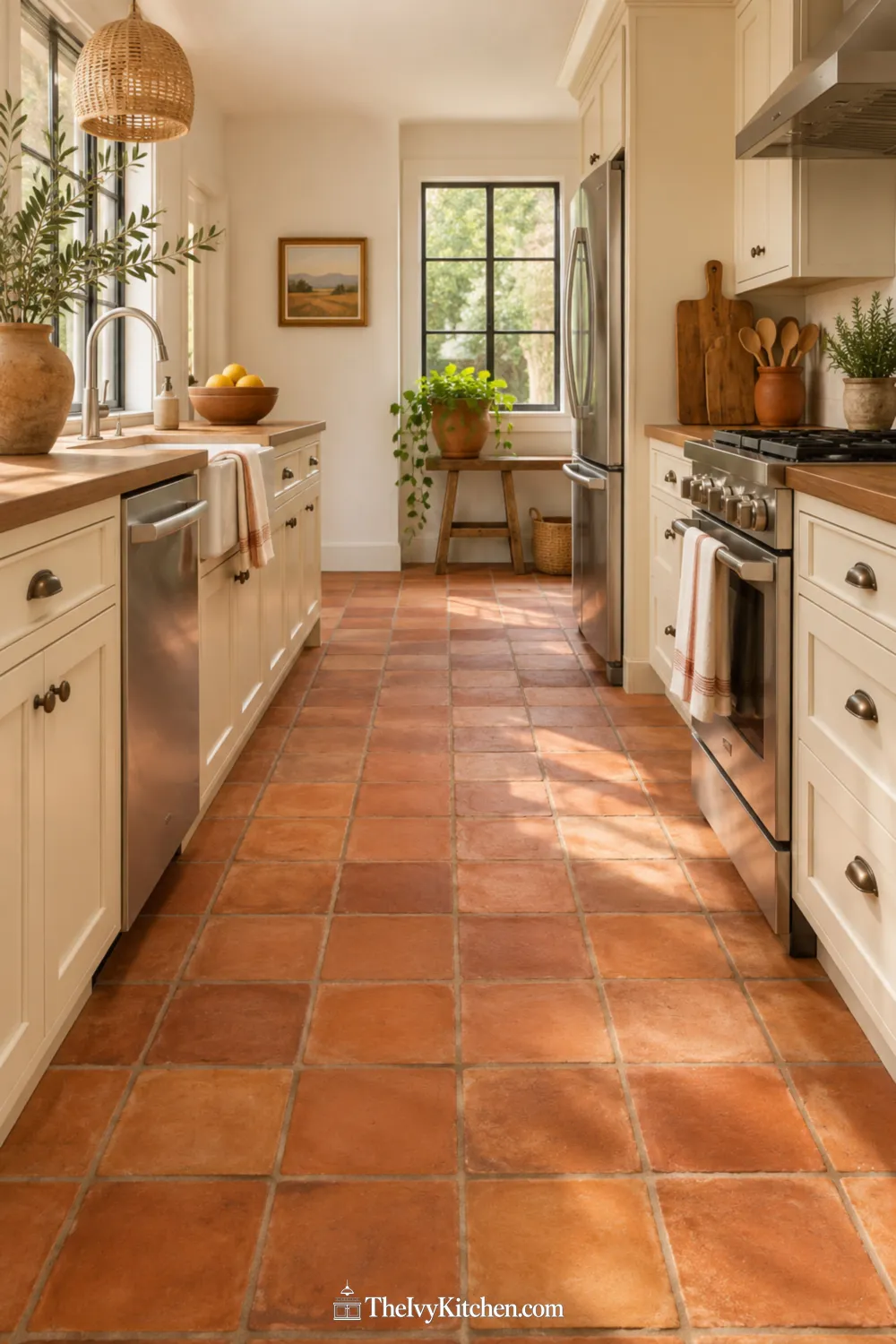
Terracotta brings a clay-colored base to a kitchen, giving even plain cabinetry a more grounded feel. Let the floor provide most of the color, then use cream cabinets and a restrained backsplash to keep the room from feeling crowded. A straight tile layout offers a calm starting point when the surface already has variation.
Bring several tile samples home rather than judging the finish from one piece. Think about how the floor will meet adjoining rooms, especially at open doorways. Check the manufacturer’s sealing and cleaning guidance for the particular tile, and choose grout with the finished color combination in mind.
3. Choose Muted Olive Cabinets for Gentle Color
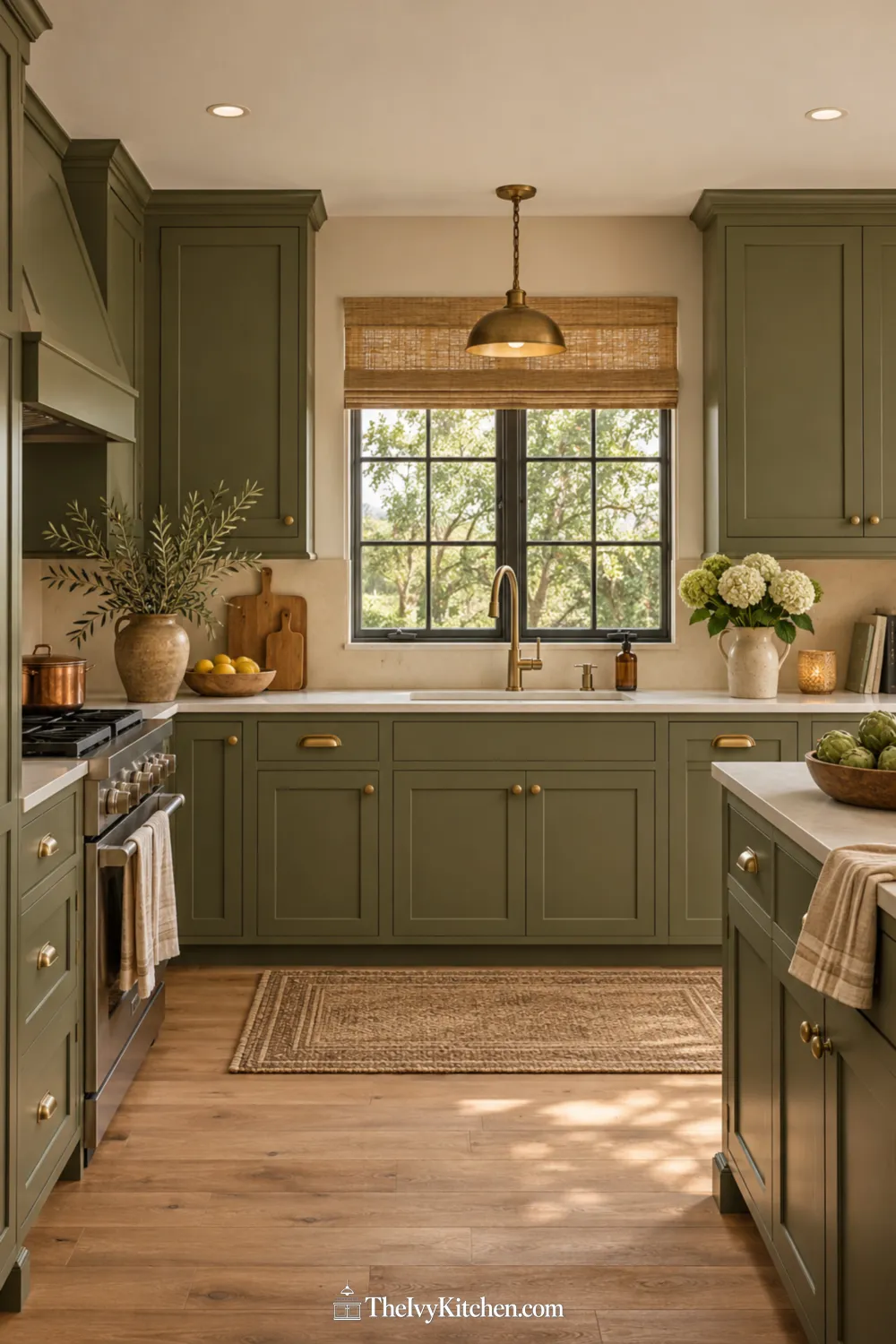
Muted olive cabinets introduce color while staying close to a natural palette. You can pair them with pale counters, warm white walls, and a wood floor for a kitchen that feels collected rather than heavily themed. Brass hardware adds another warm note without needing a long list of accessories.
Paint a large sample board and move it around the room before selecting your shade. An olive that looks soft beside a sunny window may read much darker near the pantry. Keep nearby finishes visible during the test. If your kitchen has limited daylight, compare lighter olive options before choosing a deep green.
4. Warm Up Cream Cabinetry With Clay-Colored Walls
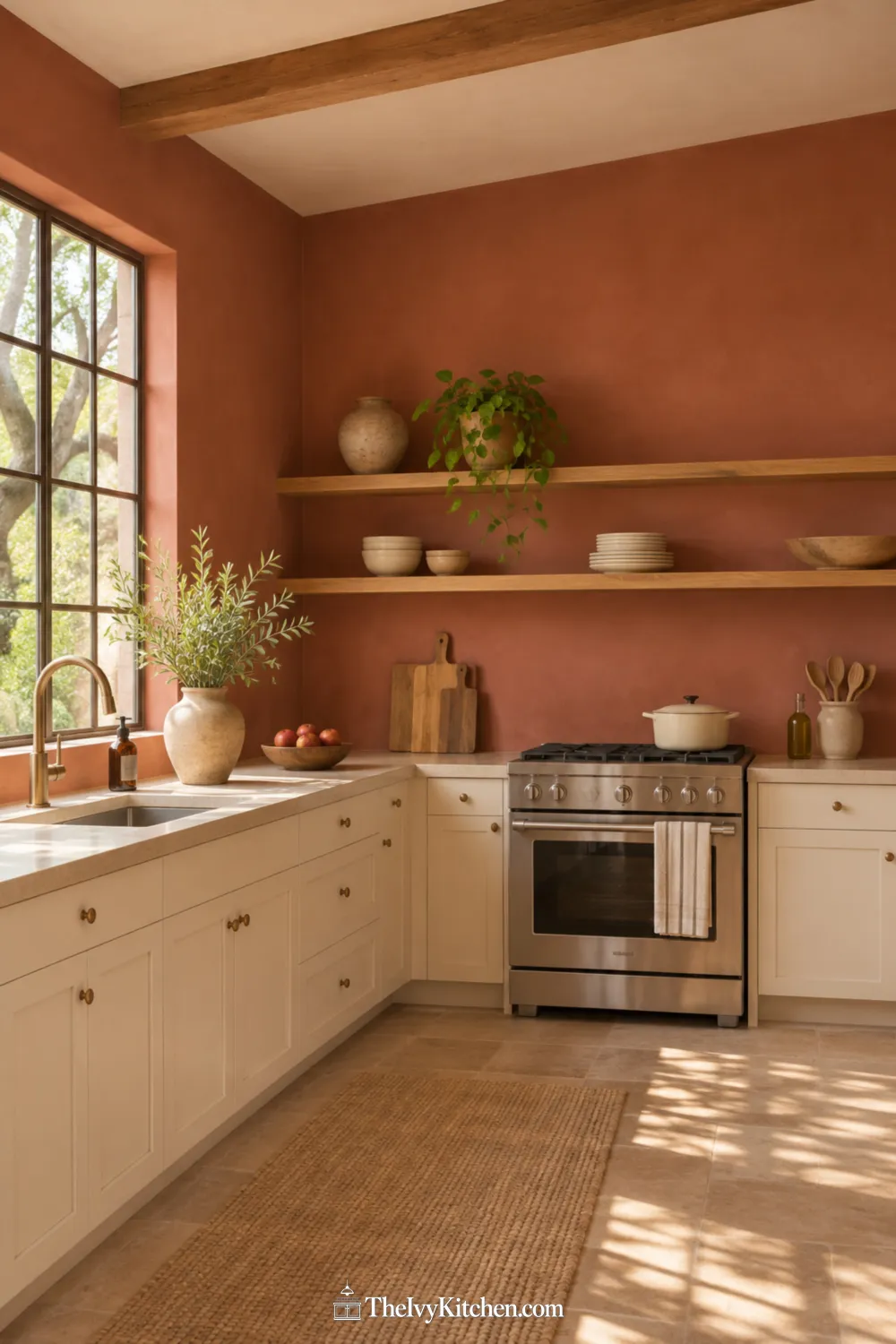
Clay-colored walls can change the feeling of a kitchen while letting existing cream cabinets stay in place. Choose a softened reddish brown rather than a bright orange if you want the color to sit comfortably beside wood and stone. Open wall sections give the paint room to register without adding more objects.
Test the shade next to your cabinets, counters, and floor, not just against a white paint card. Keep shelf styling simple so the wall color remains the focus. Use a finish suited to the location and follow its cleaning guidance, particularly around splashes and cooking areas. Repeat a little cream in pottery to connect the surfaces.
5. Anchor a Light Kitchen With a Walnut Island
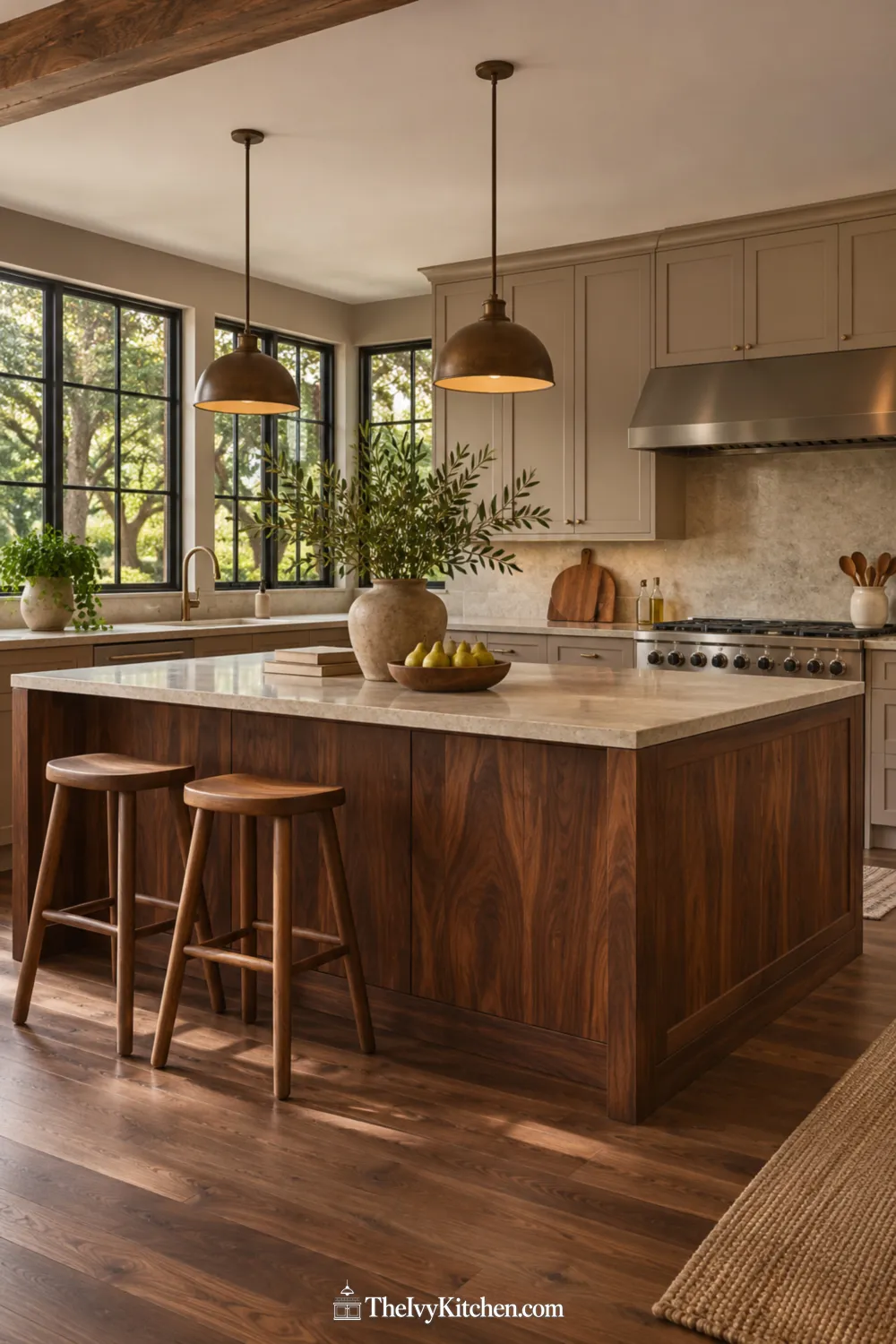
A walnut island introduces a deeper wood tone without making every cabinet dark. Against light perimeter cabinetry, its grain becomes a clear focal point and gives the center of the room more visual weight. A pale countertop helps connect the island to the surrounding surfaces.
When planning the island, check how doors, drawers, appliances, and seating will work together. Mark out its footprint before settling on dimensions, and have the layout checked by your kitchen professional. Choose stools that tuck in comfortably when unused. Keeping the island top mostly clear lets you appreciate the wood while preserving a useful place to prepare food.
6. Add Character With Reclaimed Wood Shelves
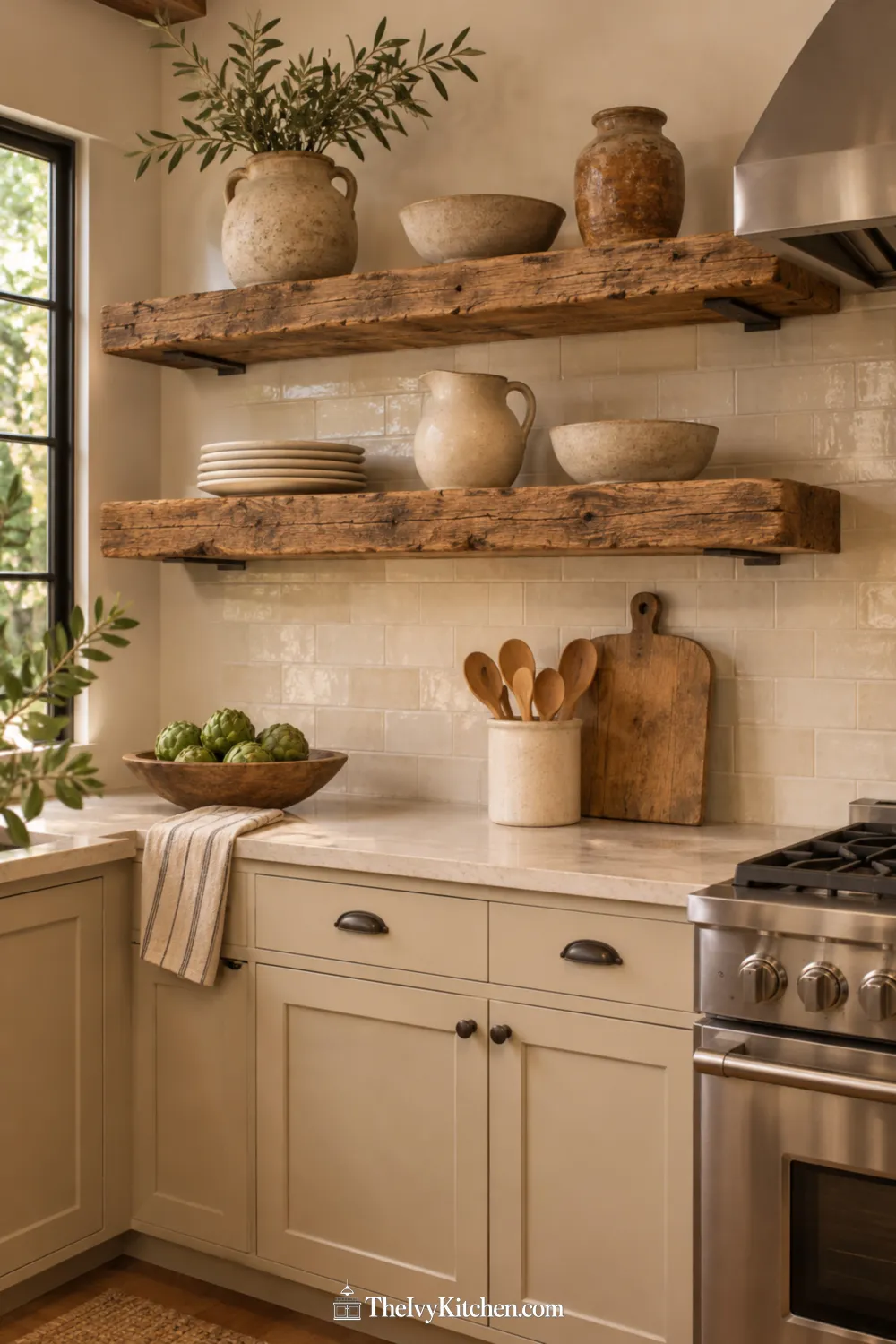
Reclaimed wood shelves bring irregular grain and a weathered finish into a kitchen that otherwise feels smooth and uniform. Use a small section for dishes you reach for often, plus a few pieces of pottery in similar colors. Leaving open space between objects helps the timber remain visible.
Choose sound material with a finish appropriate for its intended use, and have the supports matched to the wall construction and expected load. Keep frequently used plates within comfortable reach. Open shelves also leave their contents exposed, so plan for regular cleaning. A limited display usually feels warmer and easier to maintain than filling every inch.
7. Balance Warm Wood With Dark Soapstone Counters
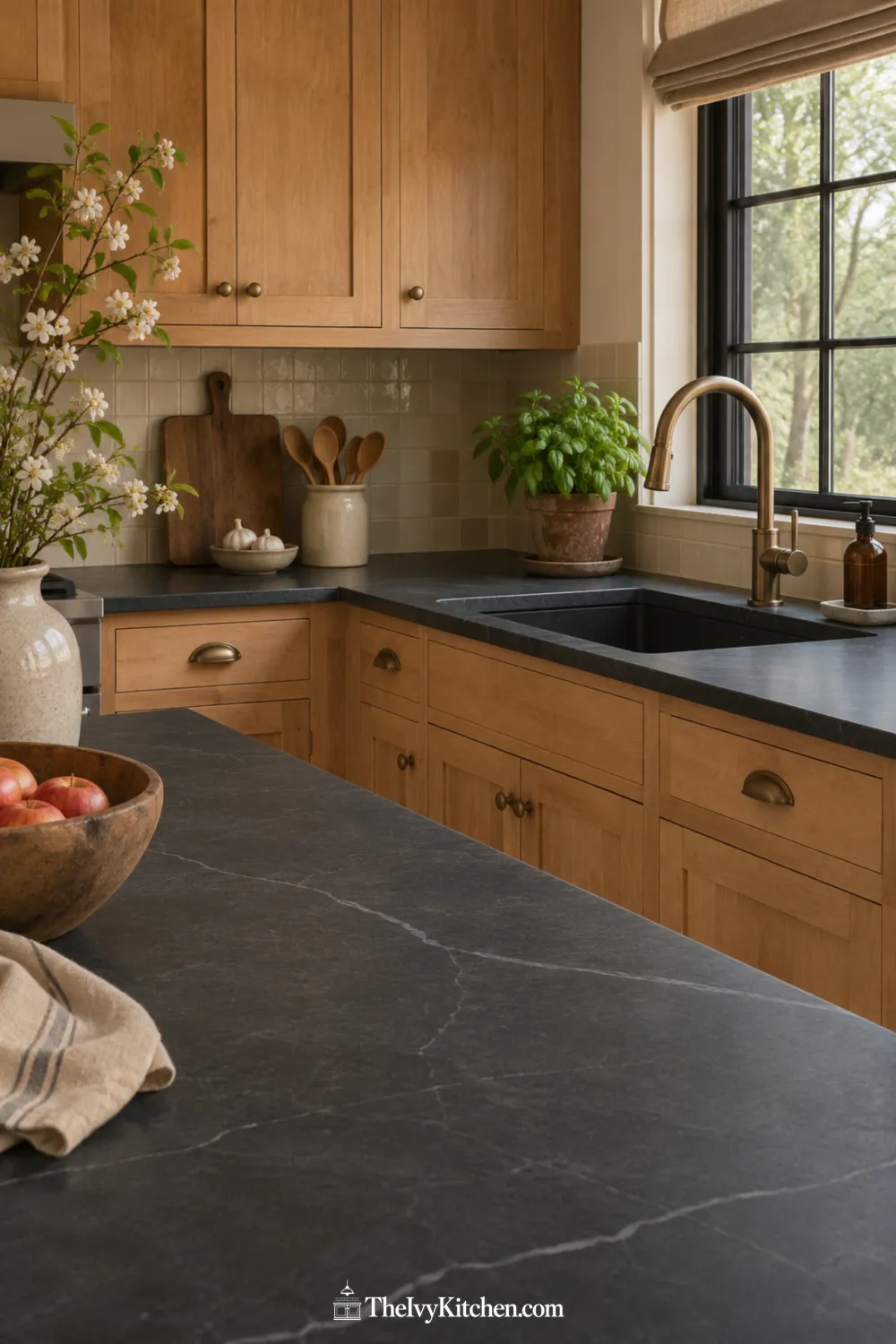
Dark soapstone creates a gentle contrast with warm wood cabinetry, especially when the stone has subtle veining rather than a busy pattern. Keep the backsplash lighter so the counters form a grounded band through the room. A simple sink area gives the surface space to show its natural variation.
View the exact slab or a representative sample before you decide. Ask your fabricator how the selected stone may change in appearance and what care routine they recommend. Compare the counter with your cabinet finish in both bright and shaded corners. Repeat the dark tone sparingly in hardware or lighting to make the combination feel intentional.
8. Let a Travertine Backsplash Supply the Texture
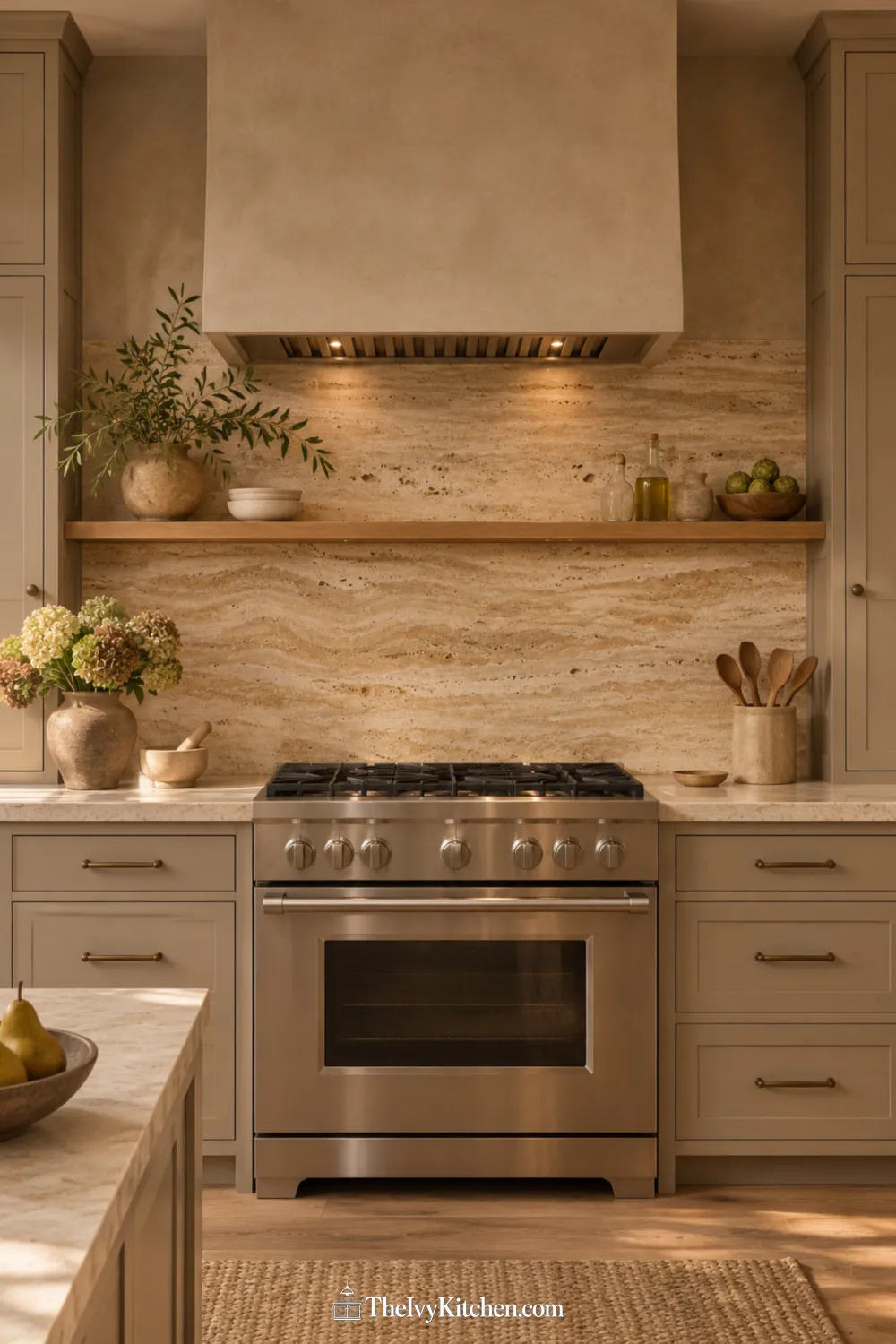
A travertine backsplash can give a kitchen texture without introducing another strong color. Its beige tones work comfortably with mushroom cabinets, pale counters, and small touches of oak. A broad stone section behind the range makes the material easier to appreciate than several competing finishes in the same area.
Look at the stone’s variation across the actual pieces you plan to use. Discuss filling, finish, sealing, and cleaning with the supplier before installation, especially near cooking splashes. Keep the surrounding details restrained so the backsplash has a clear role. A slim nearby shelf can add warmth without covering the stone’s most distinctive areas.
9. Make an Exposed Brick Wall Part of the Palette
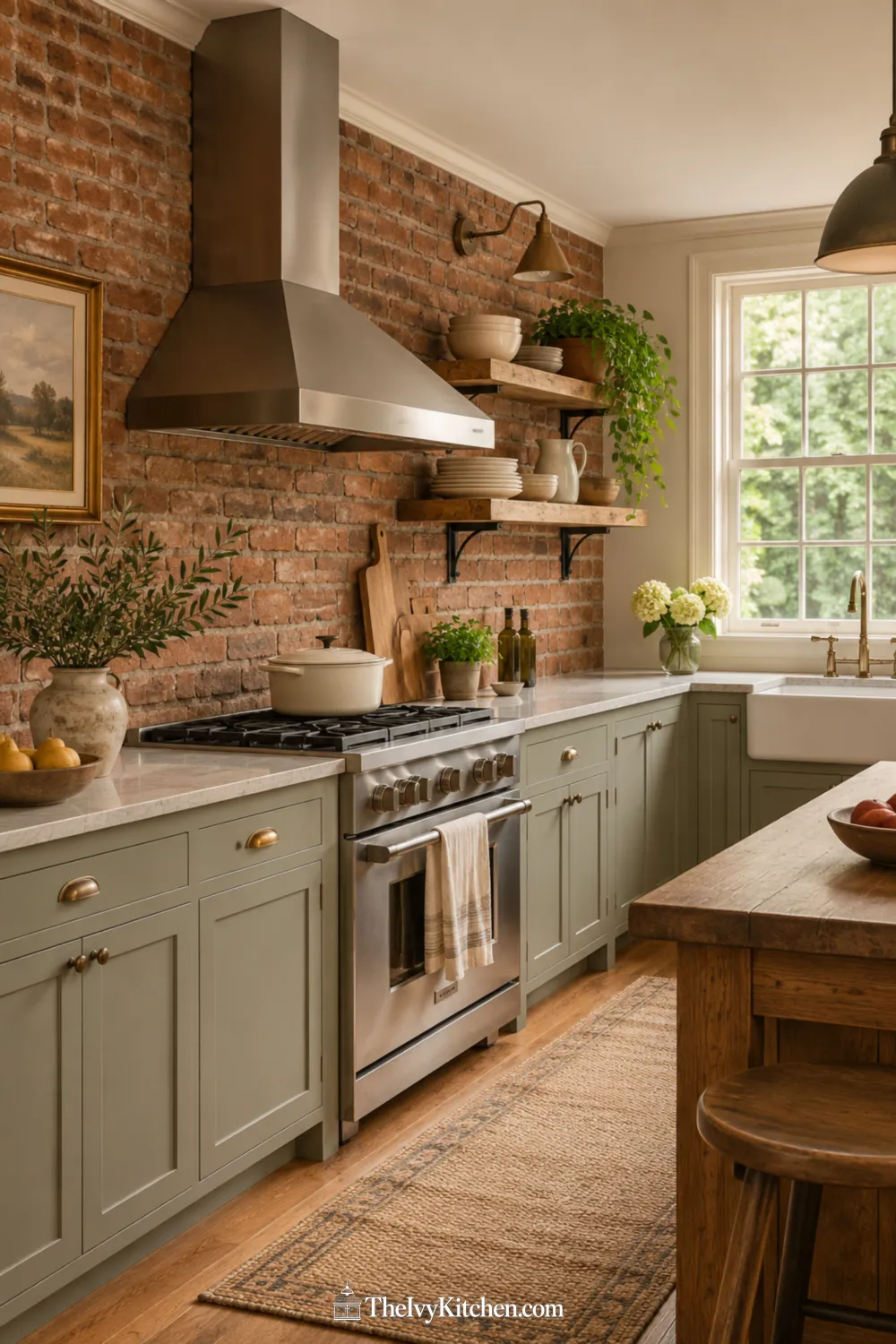
An exposed brick wall gives you an existing color palette to work from. Pull its softer brown, clay, or muted red notes into nearby wood and textiles, then let quieter cabinets balance the texture. Sage-gray or cream cabinetry can sit comfortably beside brick without trying to match every variation.
If your home already has exposed masonry, assess its condition before building a design around it. Ask a qualified professional about loose material, appropriate cleaning, and any treatment needed for the location. Keep extra rustic accessories to a minimum. The wall already supplies plenty of character, so simple counters and lighting help the kitchen feel settled.
10. Soften an Island With Woven Pendant Lights
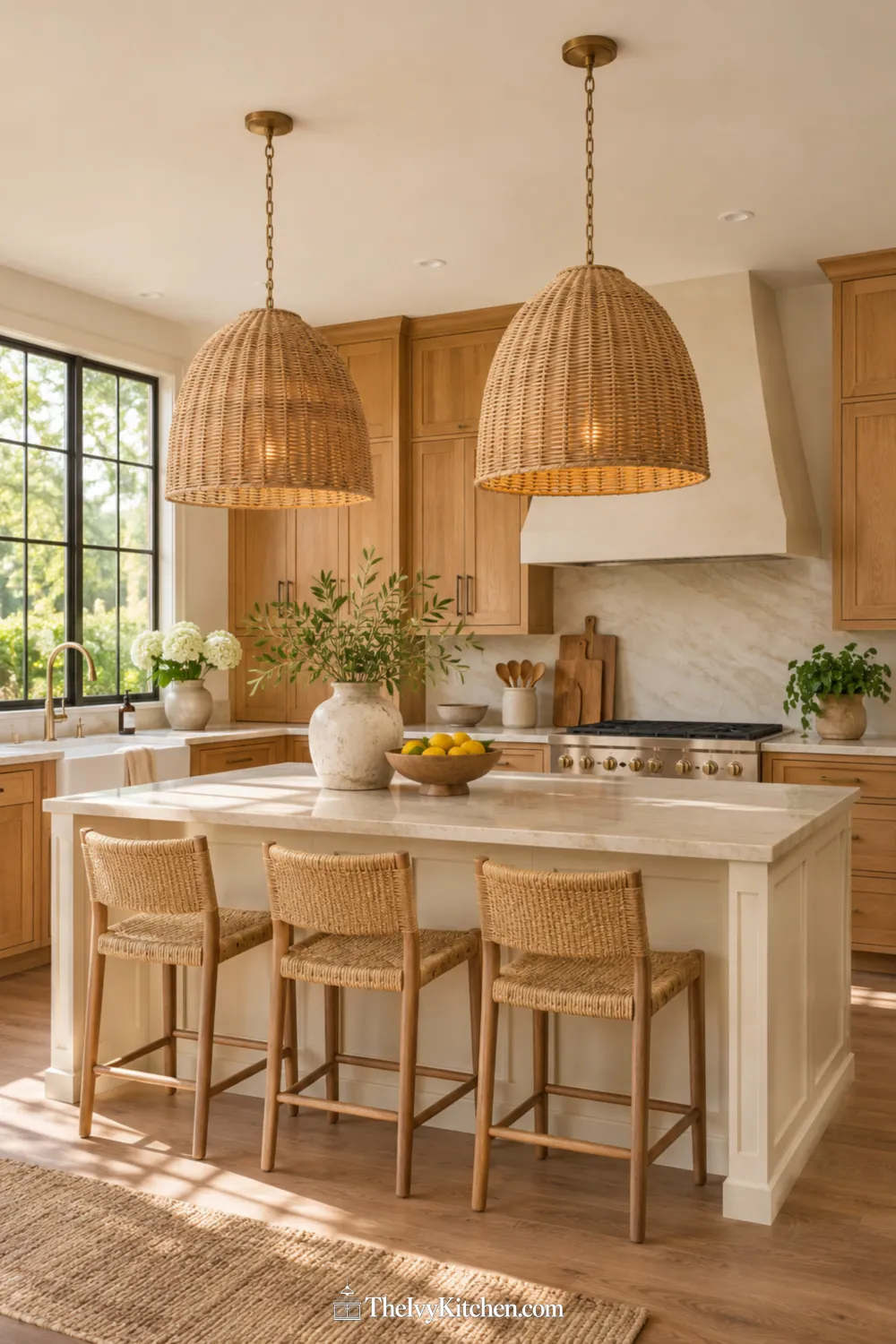
Woven pendant lights add a softer texture above hard kitchen surfaces. Their open weave works well with wood cabinetry and a cream island, giving your eye a break from straight lines and polished finishes. Choose shades that feel related without needing every basket or chair in the room to match.
Check the fixture’s suitability for its location and use the manufacturer’s installation guidance. Have an electrician confirm placement, clearance, and the right setup for your ceiling. Think about the view across the island while seated as well as standing. Keep practical task lighting in the plan so decorative pendants are one part of a useful lighting scheme.
11. Bring Living Greenery to a Sunny Herb Ledge
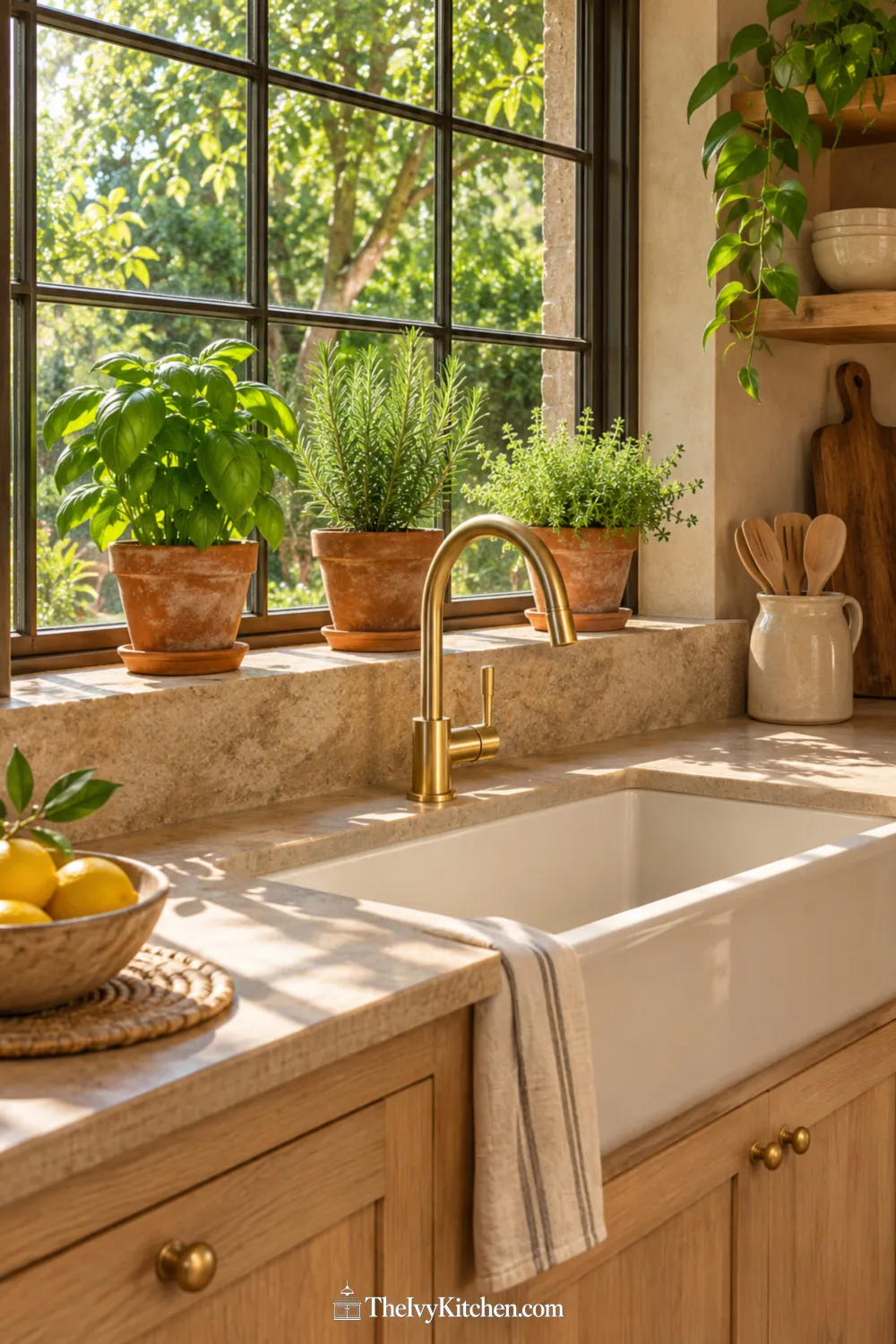
A sunny kitchen window can hold a small collection of herbs that brings living green into your everyday view. Group a few individual pots along a deep sill rather than crowding the entire counter. Terracotta containers connect the greenery to an earthy palette without needing extra decorative objects.
Choose herbs for the light your window actually receives, and check the needs of each variety before grouping them. Use containers with suitable drainage and protect the sill from standing water. Leave enough room to open the window and use the faucet comfortably. Start with a manageable collection so watering and trimming fit naturally into your routine.
12. Create a Quiet Focal Point With a Plaster Hood
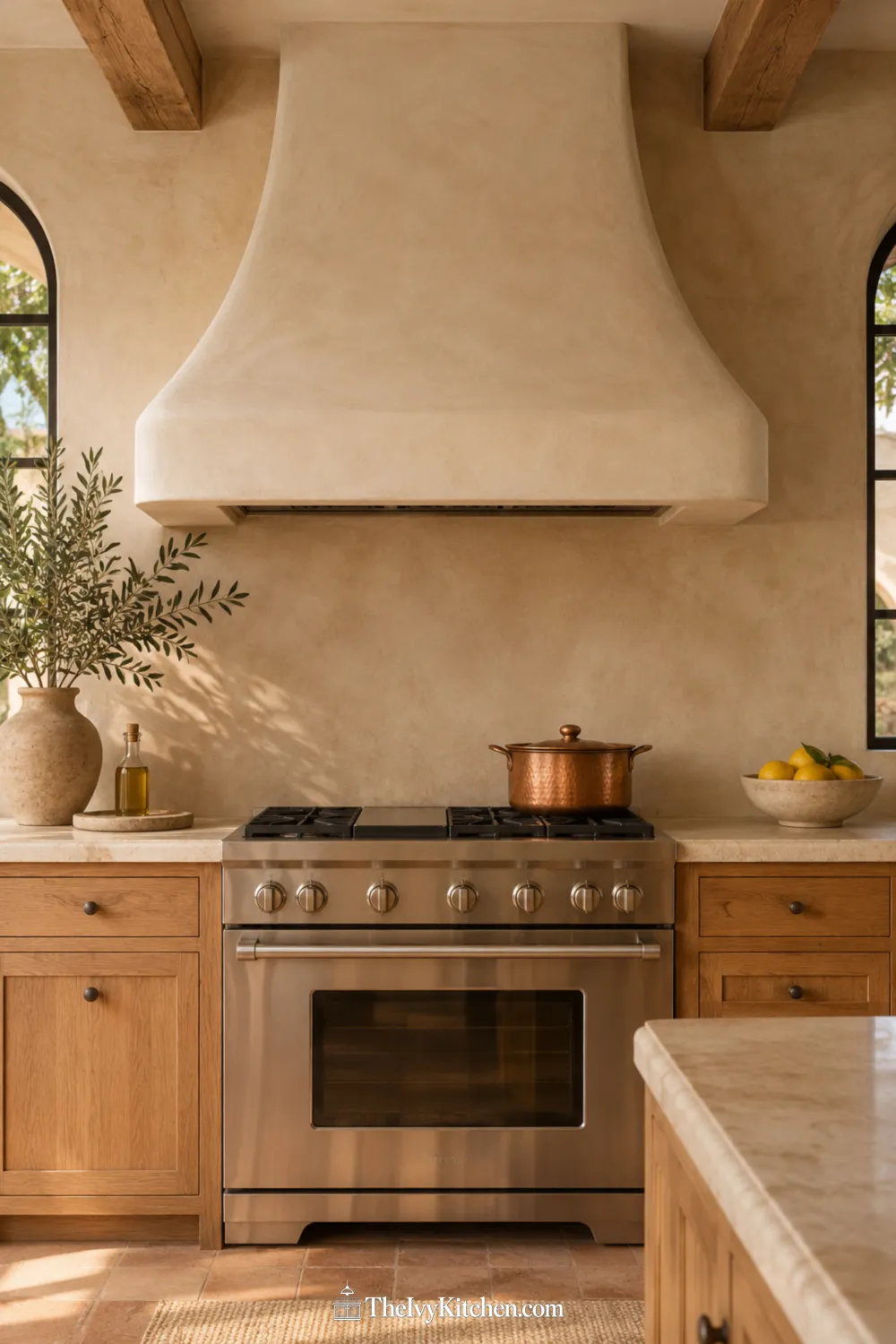
A sculpted plaster hood creates a different kind of focal point from exposed metal or a busy tile pattern. Its broad, soft shape can connect cream walls with oak cabinets and pale stone counters. Keep nearby accessories low and simple so the silhouette remains easy to read.
Treat the visible finish and the working ventilation equipment as one coordinated design. Have the hood, liner, clearances, and ducting planned by qualified professionals for your cooking setup. Ask how the chosen finish should be cleaned around grease and steam. A warm cream shade can help the hood blend into the room while its shape provides the interest.
13. Build Warmth Around a Wood Breakfast Nook
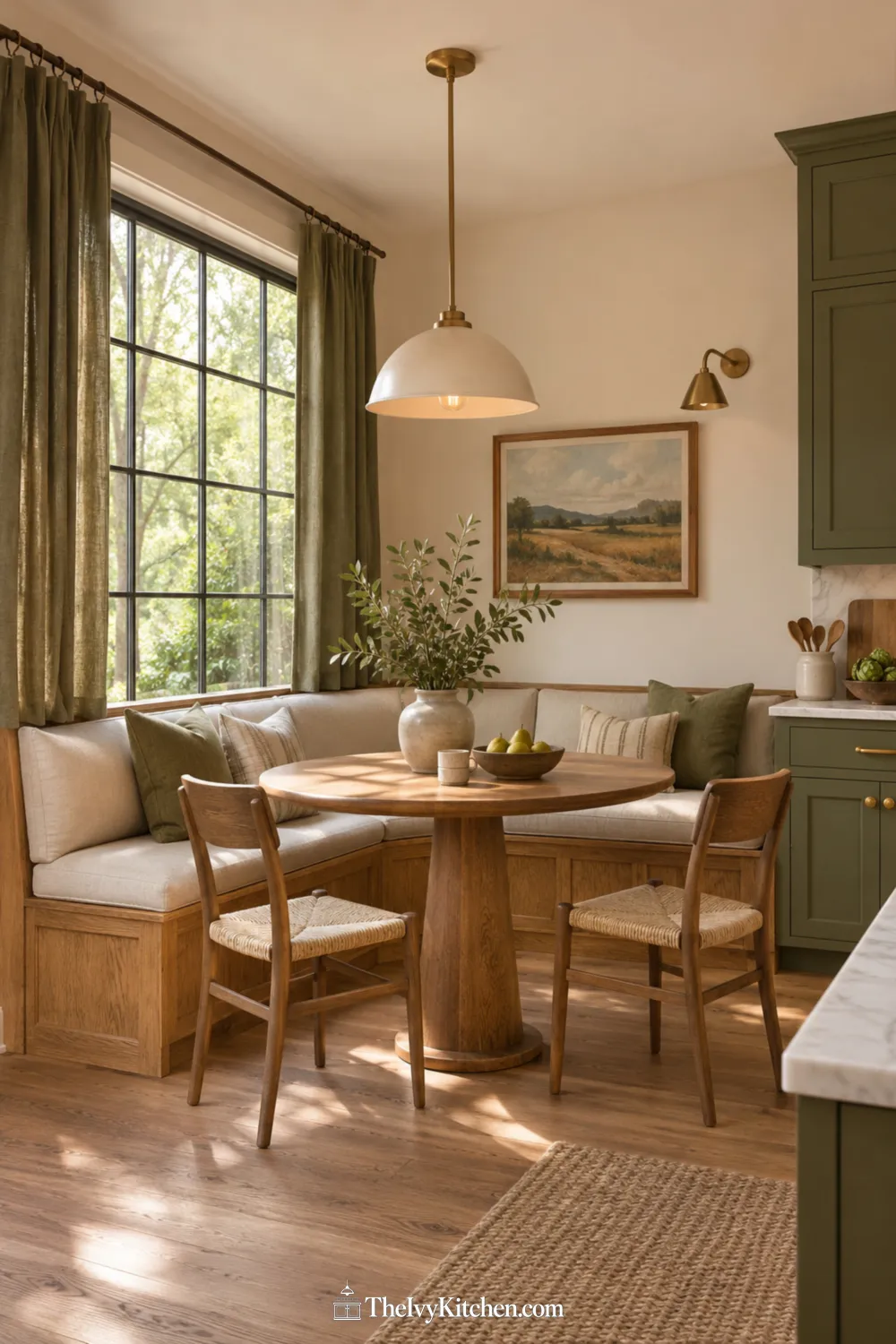
A wood breakfast nook makes the earthy look feel connected to how you use the kitchen. An L-shaped bench, a round table, and oatmeal cushions create a place to pause without needing a separate dining room. Olive curtains can repeat a natural color already used elsewhere in the space.
Before adding a built-in bench, check the table height, seat depth, and room needed to slide in comfortably. Leave nearby cabinet doors and walkways usable when people are seated. Choose removable cushion covers suited to everyday spills. Keep the tabletop simple so the nook remains available for breakfast, homework, or a conversation while dinner comes together.
Bring Your Earthy Palette Together
Start with the part of your kitchen that feels least connected to the rest of the room. That might mean warming up the walls, bringing in wood, or choosing lighting with more texture. Keep your existing surfaces in view as you compare samples, and repeat a few colors rather than adding a new finish everywhere. Save the ideas that suit your space, then use them to build a kitchen that feels comfortable to cook in and welcoming to share.